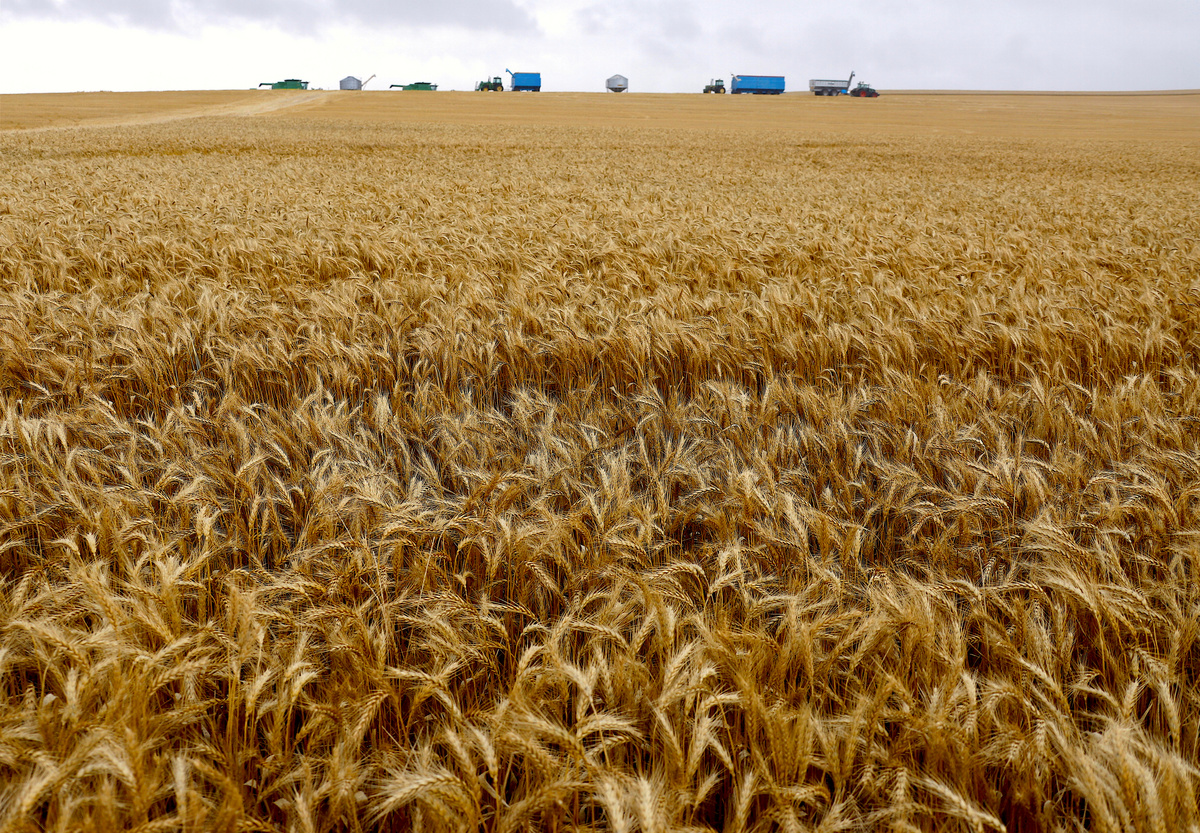
SYDNEY (Reuters) - Australia's wheat production is expected to jump 38 percent in 2019/20 from the just completed drought-hit season, but only if farmers receive desperately needed rain, the country's chief commodity forecaster said on Tuesday.
In its first official wheat output estimate for the coming season, the Australian Bureau of Agricultural and Resource Economics and Sciences pegged production of the country's largest agricultural crop at 23.9 million tonnes.
This would be roughly in line with the 10-year average of 24.4 million tonnes, and well up on 17.3 million tonnes in 2018/19 when output fell to the lowest in a decade after severe drought wilted crops.
However, the bureau warned that Australia - the world's fourth-largest wheat exporter - may yet experience another season of poor production.
"Winter crop plantings, which typically begin in April and represent 25 percent of the total volume of farm production, require sufficient and timely rainfall," it said.
The bureau also forecast a near 20 percent rise in the area given over to the country's largest agricultural crop after wheat plantings fell to at least a 20-year low in 2018/19.
Australia's east coast drought left soils so dry that many farmers kept fields empty to avoid large-scale crop losses, while others who did sow crops produced grain that was suitable only for use as animal feed.
With hot, dry weather forecast to persist over at least the next three months, analysts have warned another below average crop in the 2019/2020 season could be seen.
Australian farmers begin sowing crops in late April, typically after heavy rains. Farmers could sow into dry fields, but would be reliant on favourable weather in the next few weeks.
Australia's dry weather is also expected to force cattle graziers to cull more animals at near-record levels as pasture wilts, keeping global prices under pressure.
Australian beef production hit a record high last year, and while the size of the national herd has fallen near an all-time low, the bureau forecast production in 2019/20 at the third highest on record.
(Reporting by Colin Packham; editing by Richard Pullin)