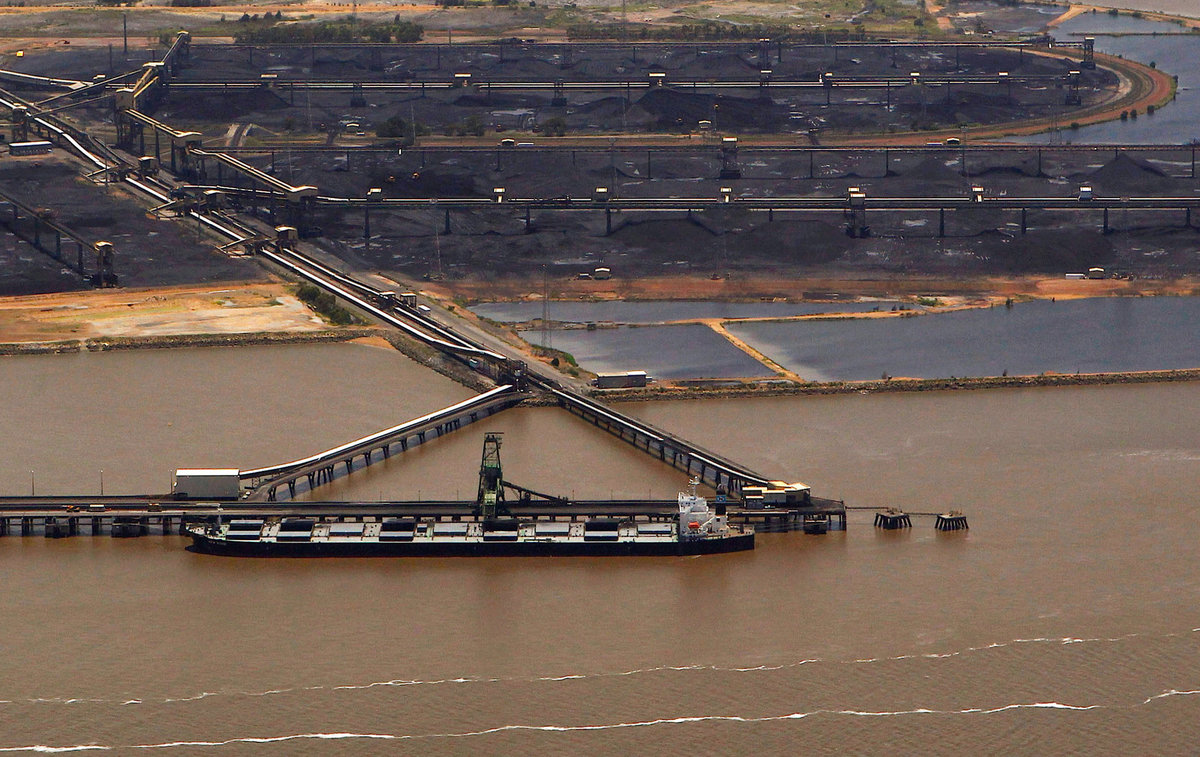
SINGAPORE (Reuters) - Prices for thermal coal for export from Australia's Newcastle terminal have jumped nearly a fifth since mid-May and are at their highest since April, with mining outages tightening supply amid strong northern hemisphere summer demand.
Dam restrictions in China following excessive rains are also reducing hydropower capacity there, including at the world's biggest power station, forcing utilities to ramp up output at coal-fired utilities.
The tightening market has in the last few weeks driven an 18-percent rise in Newcastle spot cargo prices <GCLNWCPFBMc1>, seen as a benchmark for Asia's physical coal market. They last closed at $84.20 per tonne, their strongest level since April 20.
Deutsche Bank said in a note that the climb in coal prices came on the back of factors including weather-related mining outages in producers such as Indonesia and South Africa, as well as an Australian strike in June that briefly hit output.
"Strikes in the Hunter Valley in Australia (in June) may have given coal prices a boost in the near-term ... Heavy rains and flooding in Indonesia are restricting production and constraining exports ... At Richards Bay port in South Africa, poor weather has prevented loadings and decreased vessels leaving the port," said the German bank.
Meanwhile, huge rainfall in China has forced the world's biggest power station, the around 20,000 megawatt (MW) Three Gorges dam, to reduce its capacity by 6,000 MW to ease pressure from the downpour. [L3N1JV1OE]
"The scale of shutdown is quite unprecedented," said Li Rong, power analyst with consultancy SIA Energy.
Other hydro dams were also affected, bringing the total capacity reduction to 13,500 MW.
Traders said that it would take the equivalent of at least a dozen large fossil fuel or nuclear power stations to make up for the hydro restrictions.
Similar rainfall last year helped trigger a large coal price rise which took many in the market by surprise and which was compounded by sudden output restrictions on Chinese miners, forcing utilities to turn to imports to meet their demand.
Weather data in Thomson Reuters Eikon shows that accumulative precipitation levels have surged far above the seasonal norms in most of China's southern, southwestern, eastern, and central provinces, where almost all the country's large hydro dams are located.
China's northern provinces, by contrast, are experiencing unusually dry and hot weather, which has pushed up power demand in that region, traders said.
Despite the current run, coal markets remain well supplied in the long term, and that this could weigh on prices down the line.
"The recent strength in coal price may not last as the coal market becomes more balanced in 2017," Deutsche said.
(Reporting by Henning Gloystein in Singapore; Additional reporting by Aizhu Chen in Beijing; Editing by Joseph Radford)