The skull of an Australian first world war soldier who died of terrible facial wounds sustained on the European western front, before his head was removed and displayed in an American medical museum, has been buried in France with the rest of his remains.
Guardian Australia first highlighted the disturbing case of Sydney-born Private Thomas Hurdis, who died in an American battlefield hospital from wounds he sustained during the 1917 Battle of Polygon Wood in Belgium.
Hurdis’s skull was eventually put on public display at the Mütter Museum at the College of Physicians in Philadelphia, where a museum explainer read: “This Australian soldier’s skull has extensive damage caused by bullet wounds sustained in the Battle of Passchendaele (or Third Ypres, Battle of Polygon Wood) in the first world war. He was shot on September 28, 1917. Most of the damage was caused by a lead bullet that entered the mouth and passed through the palate and right eye. Shrapnel destroyed the ascending ramus of the right jaw, and another bullet, visible here, struck the left frontal sinus.
“Philadelphia opthalmologist and surgeon WT Shoemaker treated this soldier at a battlefield hospital in France. This soldier survived his initial injuries and treatments. But, five days after his injuries, blind and disoriented, he pulled out the bandage materials in his mouth that packed the wounds. He bled to death.”
The museum website made clear that Shoemaker had donated the “adult skull with ballistic trauma” to the museum in 1917.
The next of kin – a single mother who also lost another son to the war – was not consulted. Hurdis’s descendants only discovered the truth about what had happened to his remains after the Guardian put a series of questions to the museum and informed Australia’s ambassador to the United States, Joe Hockey, about the situation.
Hockey moved swiftly, via the Australian defence attache to the US, to contact the museum, make inquiries about the skull and have it removed from display.
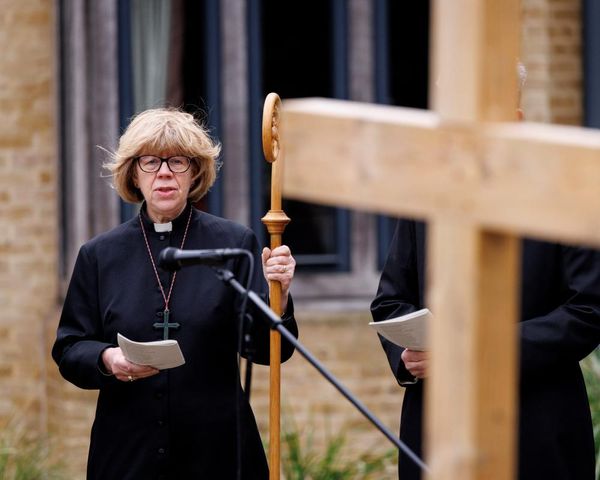
The minister for defence personnel, Darren Chester, announced on the weekend that Hurdis’s skull has been interred with his substantive remains at Mont Huon military cemetery in Le Tréport, France.
In a statement Chester said: “In late 2017, the partial remains of an Australian soldier were reported by a member of the public to be held in the collection of the Mütter Museum in Philadelphia. These were found to be those of Private Hurdis who died from his wounds while under the care of United States medical teams following the Battle of Polygon Wood, Belgium.
“His partial remains were cared for in accordance with protocols and approvals of the time, until 2017. Following a request, the remains were collected by the head of Australian defence staff in Washington and then moved to the Commonwealth War Graves Commission’s recovery unit in France. With the kind support of the museum, the partial remains have now been interred with his substantive grave. This re-unification occurred on 20 July 2018 in a ceremony conducted by Australian defence force personnel, with family of Private Hurdis in attendance.”
Meanwhile, body parts of thousands of Indigenous Australians remain in collecting institutions in Australia and overseas.