Lightning may soon strike the same place twice after a team of Australian scientists developed new thunderbolt taming laser technology.
Their pioneering laser tractor beam has the potential to control the path of lightning as it comes to earth, researchers at The Australian National University and UNSW Canberra say.
With further development, the discovery may reduce the number of bushfires started by lightning, which caused many of Australia's devastating 2019-20 blazes that killed 34 people.
The tractor beam can be fired over long distances and allows for precision control of a lightning bolt, physicist Vladlen Shvedov says.
"We can imagine a future where this technology may induce electrical discharge from passing lightning, helping to guide it to safe targets," he said.
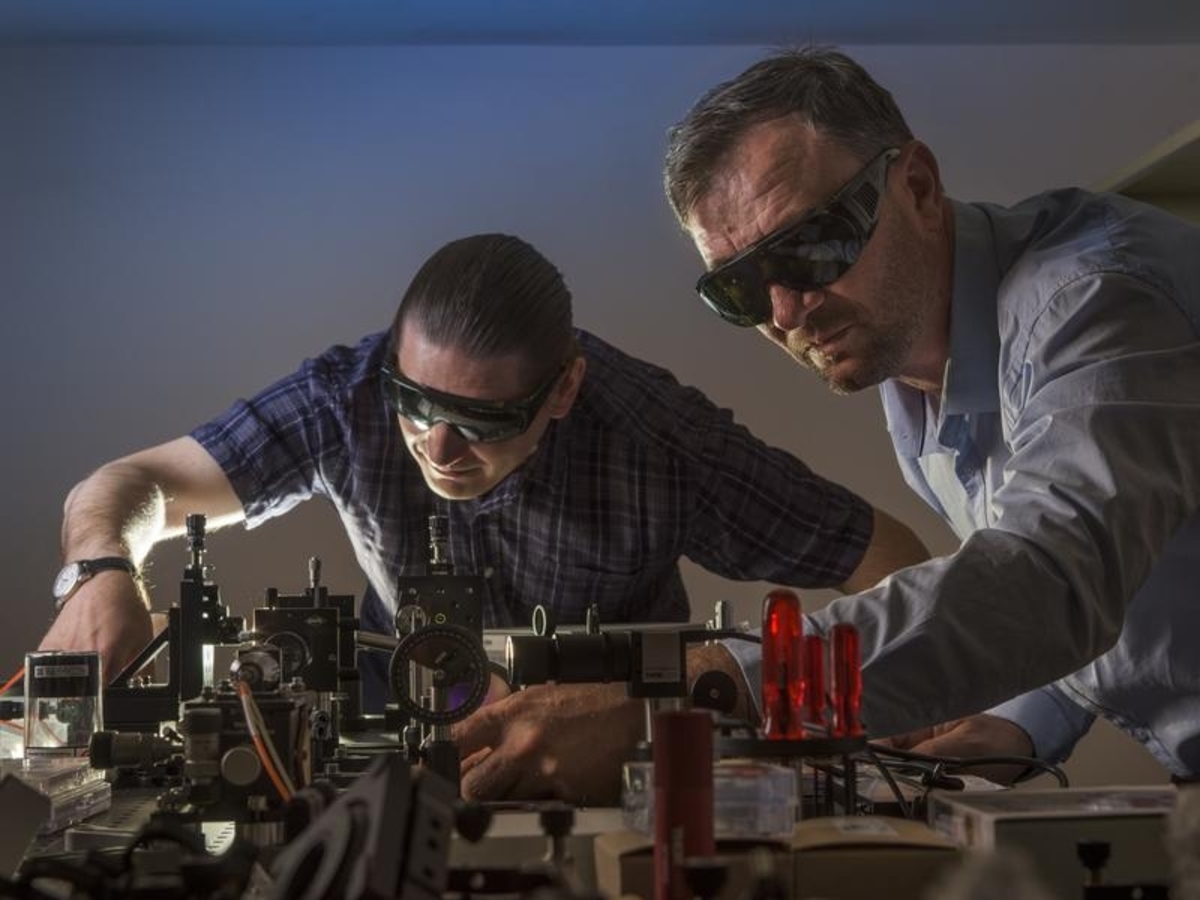
An international team of scientists used a laser beam to trap and heat graphene microparticles in the air and create a path so electrical discharges could flow to a specified target.
"The experiment simulated similar atmospheric conditions to those found in real lightning," Dr Shvedov said.
Heating the graphene microparticles in the vortex beam meant the team only needed an ordinary low-intensity laser to guide the electrical charge.
The breakthrough means controlling lighting may soon be much cheaper, safer and more precise than any previous efforts.
The development also has the potential for micro-scale control of electrical discharge in medicine and manufacturing applications.
"We have an invisible thread, a pen with which we can write light and control the electrical discharge to within about one tenth the width of a human hair," researcher Andrey Miroshnichenko said.
"The medical applications include optical scalpels for the removal of hard cancerous tissue to non-invasive surgery techniques," he said.
"We are really at the start of learning what this completely new technology might mean."
The team's research was published in Nature Communications on Thursday.