SYDNEY (Reuters) - Australian retail sales surged past all expectations in November as consumers splashed out on Apple iPhones and Black Friday promotions, a major boost for an economy that had been struggling with sluggish spending.
The local dollar jumped almost half a U.S. cent to a three-month peak of $0.7882 <AUD=D4> as the strength countered concerns consumers had lapsed into a near-permanent depression.
Thursday's figures from the Australian Bureau of Statistics (ABS) showed retail sales jumped 1.2 percent in November from October, when they rose a solid 0.5 percent.
That was three times the market forecast and the steepest gain since early 2013.
Sales were up 2.9 percent on a year earlier at a record seasonally adjusted high of A$26.38 billion ($20.77 billion). Gains were led by a hefty 4.5 percent rise in household goods and a 2.2 percent increase for other retailing.
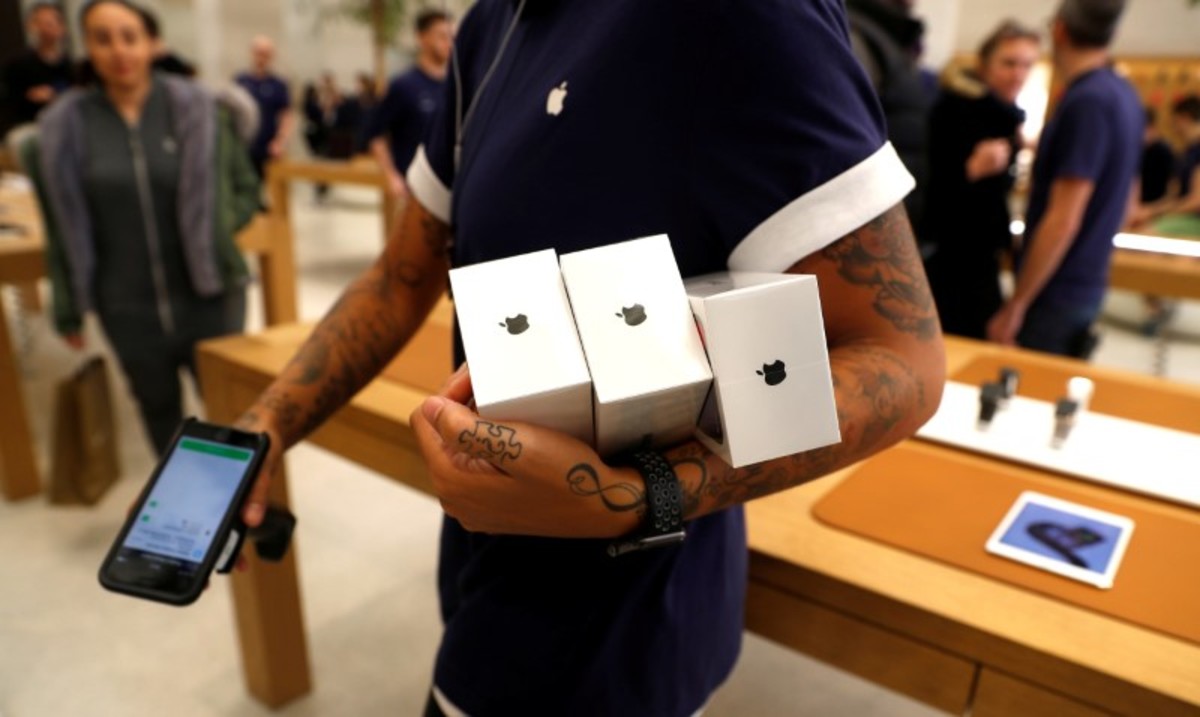
"Seasonally adjusted sales in both these industries are influenced by the release of the iPhone X and the increasing popularity of promotions in November, including Black Friday sales," the ABS said in a note.
Consumer spending has been under pressure from record-high household debt and sluggish wage growth, one reason the Reserve Bank of Australia (RBA) is in no rush to raise interest rates from record lows.
Futures markets <0#YIB;> slightly narrowed the odds of a hike in rates this year following the sales data and now imply around a 50-50 chance of a move by August. A rise from 1.5 percent is fully priced in by December.
The revival in sales burnished the outlook for gross domestic product growth in the fourth quarter, given household spending accounts for 58 percent of annual economic output.
Household consumption had expanded at its slowest pace since 2008 in the third quarter, marring an otherwise respectable annual growth outcome of 2.8 percent.
"The underlying consumer may be more resilient than we previously assumed," said Diana Mousina, a senior economist at AMP Capital.
"There may be an upside risk that the Australian consumer may not act as such a large drag on the economy in 2018 as the consensus is currently assuming."
THE COMING OF AMAZON
The data also showed rapid growth in online sales, which are only expected to take a bigger share as Amazon fully set up shop late last year and is rapidly expanding its offerings.
The ABS measure of online sales surged 22 percent in original terms in November to A$1.51 billion.
National Australia Bank estimates consumers spent A$24 billion online in the year to November, with annual growth running atop 14 percent.
Anecdotal evidence from traditional retailers suggest they also had a better December holiday season than first feared, while surveys found a marked brightening in the consumer mood.
A survey from ANZ and Roy Morgan out this week showed confidence had improved to the best since late 2013. Notably, those saying they were "better off" financially picked up to 35 percent, helping offset concerns about slow wages growth.
($1 = 1.2702 Australian dollars)
(Reporting by Wayne Cole; Editing by Paul Tait & Shri Navaratnam)