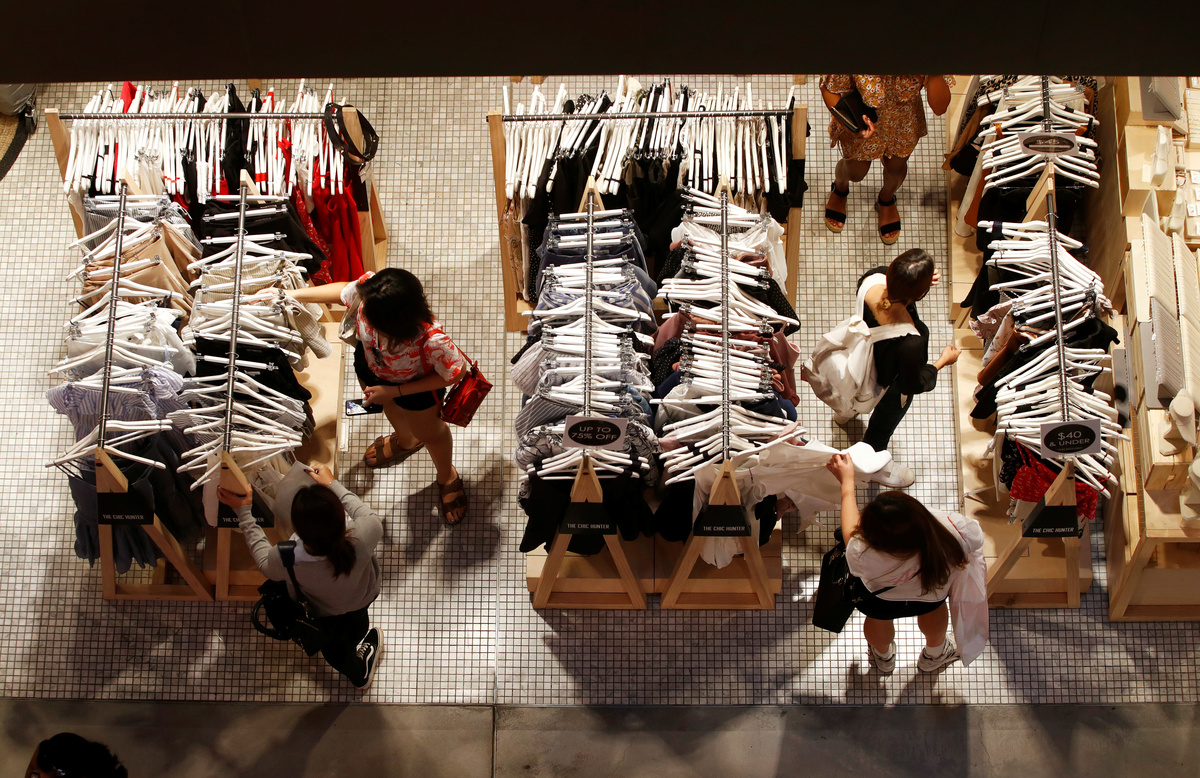
Australian retail sales slumped in April after a record surge the previous month as widespread restrictions to curb the spread of the coronavirus hit demand for clothing, travel and dining out.
The Australian Bureau of Statistics (ABS) reported on Wednesday its preliminary estimate of retail sales plunged a seasonally adjusted 17.9% in April, its biggest ever, from an 8.5% jump in March.
The figures showed heavy falls in every industry, with turnover in clothing, and cafes, restaurants and takeaways around half the level of April 2019.
The final estimate of sales is due on June 4.
Reflecting the dour consumer mood, National Australia Bank's cashless retail sales index, which measures debit card, credit card and other cashless spending on NAB platforms, fell 5.3% in April.
"The hole blown in discretionary retail is unlikely to be filled any time soon," NAB Group chief economist Alan Oster said.
"With our latest economic forecasts pointing to unemployment at 11.7% by mid-year and remaining above pre-crisis levels over the next 18 months, consumers are unlikely to have a great deal of discretionary spending power."
Strict social distancing rules began in mid-March, forcing many businesses to close. While some restrictions have eased this month it will be a while before activity fully returns.
"More fiscal stimulus will probably be needed to put the Australian economy back closer to pre-crisis levels," Oster added.
Australia is facing its biggest ever fall in economic activity and its first recession in 30 years.
To cushion the economic blow, the Reserve Bank of Australia (RBA) slashed interest rates to a record low 0.25% in March and launch an unlimited quantitative easing programme. The federal government is also splashing cash, including a A$130 billion ($85 billion) wage subsidy scheme.
(Reporting by Swati Pandey; Editing by Muralikumar Anantharaman and Lincoln Feast.)