SYDNEY (Reuters) - Foreign exchange analysts have plotted an uneventful course for the Australian and New Zealand dollars, according to a Reuters poll, expecting the currencies to tread water this year and edge up only a tiny bit over 12 months.
The survey of up to 44 analysts predicted the Aussie <AUD=D4> at $0.7575 in one-month, $0.76 in three months, $0.7700 in six months and $0.7800 over a one-year horizon.

The Aussie is currently hovering near a six-week top at $0.7652.
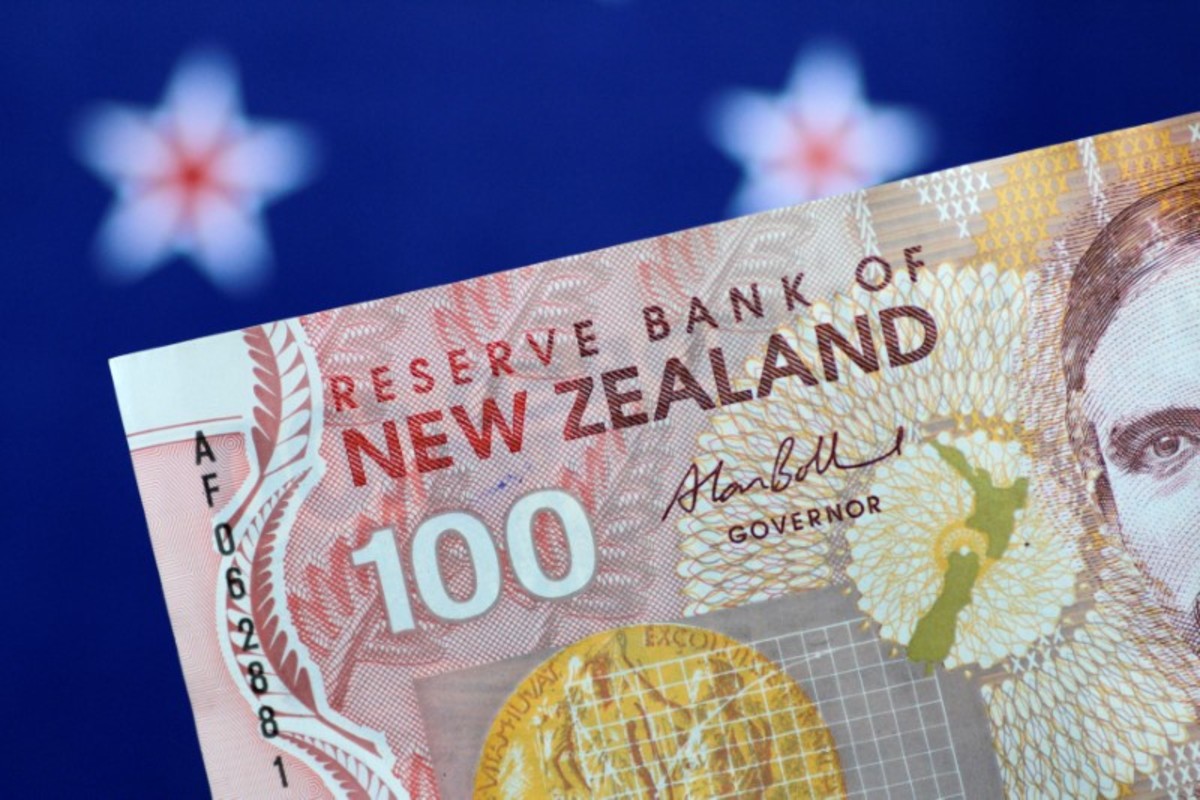
The analysts also predicted small future moves for the kiwi, which currently sits near a one-month top of $0.7038.
The median forecast put the currency at $0.7000 in one month, three months and six months while it is seen ticking up to $0.7200 in one year.
The antipodean currencies have had a whirlwind year so far as the U.S. dollar has pulled up on stronger-than-forecast economic indicators in recent weeks.
Fears of a tariff dispute between China and the United States have also weighed on the currencies. A trade war is particularly bad for open, export-dependent economies of Australia and New Zealand which are heavily reliant on China to buy their wares.
The uncertainty might explain the wide range in the forecasts from as low as $0.6600 and as high as $0.8500 for the Aussie on a one-year horizon.
While the median forecasts were narrowly spread, there was far more variety at the extremes, with the highest prediction for 12-months out at $0.7800 and the lowest at $0.6000.
"The AUD is set to remain in an unusual spot," ANZ analysts said in a monthly forex note last week.
"The signal being sent by the two major drivers - rates and commodities - remains bifurcated and unlikely to converge in the near term."
Prices of iron ore - Australia's biggest export earner - are almost flat so far this year, despite a more than 16 percent jump last month.
Easy monetary policies in Australia and New Zealand at a time when the U.S. Federal Reserve is on a tightening path further adds to the bearish case for the antipodeans.
The Reserve Bank of Australia (RBA) has left rates at a record low 1.50 percent since August 2016 and has given a clear signal that policy will remain easy for a while yet.
The story is not a lot different in New Zealand where the country's central bank has held rates at an all-time low 1.75 percent and only last month indicated the next move could be lower.
"Further, with no major moves forecast in either rates or commodities, neither are likely to emerge as a dominant driver for the AUD," the ANZ analysts said.
(Editing by Shri Navaratnam; Editing by Kim Coghill)