Nighty night
Thank you so much for your most excellent company for debate night, let’s close our coverage for now with a summary.

-
Malcolm Turnbull and Bill Shorten met at the National Press Club for their second head-to-head of the campaign at the National Press Club.
- It was a strange affair, taking about half the allotted time to get into stride, then the conversation felt constrained by the format.
- I scored the encounter a draw, on the basis that neither candidate screwed up, and neither managed a particularly compelling break through moment.
- There was evidence that both sides are refining their core messages. The Coalition wants to make the economic conversation to be about ‘we are the people with a plan for growth’ Labor has no plan for growth – Labor is now angling to rebut this by saying growth isn’t desirable if it’s unfair, which is a line with a prospect of cut-through.
- There was also evidence of Malcolm Turnbull attempting to construct a way back to the self that many voters will recognise in a manner that’s consistent with the objectives of the campaign. Bit of a pivot there, interesting to see how that develops.
Enough for tonight, we’ll be back bright and early on the morrow. Have a lovely evening.

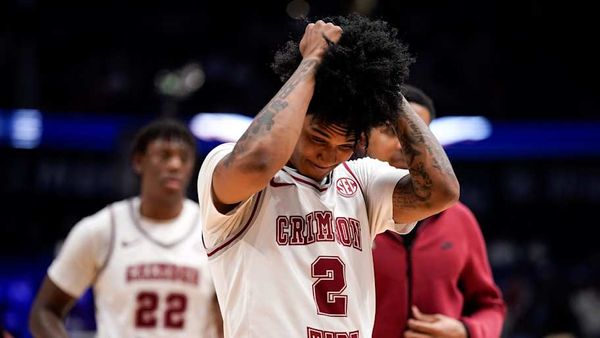
Picture of the night. Magic Mike Bowers. Take a bow.

It’s a funny thing about preparation. It was clear that all the prep did allow both leaders to sharpen a couple of their answers, and to adjust their messaging in places where it was beneficial to add a human dimension, or a personal story. It did, in the end, improve the communication of both leaders, once they got clear of the mind bog, which took the best part of thirty minutes.
The preparation for Turnbull allowed him to present glimpses of his old self – the ‘I paid a high price for climate leadership’ would have been workshopped behind the scenes within an inch of its life, but it sounded clear, and it sounded like him. Shorten too found his voice on the rebuttals on border protection, and in the story he’s now trying to tell about growth – you can’t have growth without fairness. I think that was all strong for Shorten, and it bodes well for the coming weeks on the hustings.
You can’t blame the prep for strangling the conversation, it did aid it in a way. I think if the debate had gone into a second hour, it could have actually been a cracker.


Updated


Updated


It’s hard to say why that encounter was so limiting, but it really was limiting. As I get a moment to share some pictures and exhale I’ll share some more thoughts.
Very quick first thoughts: an hour in quicksand, ending in a draw
Well, only one thing to say initially – that was a deeply weird hour.
Initially, the two leaders couldn’t get out of their own road. Nerves, second guessing, spouting buzz words.
Then the format well and truly strangled them. I think both leaders will feel that was unfulfilling from a campaign perspective. I can’t imagine voters would have learned a great deal.
It’s hard to declare a winner from that encounter because it was like an hour spent in quick sand.
My view is a draw, but with that said, I suspect that Bill Shorten will be relieved by the questioning tonight, which could have been a lot trickier for him than it was in truth. Yes, much of the debate was spent in economy territory and in border protection territory, and conventional wisdom says the Coalition wins when that’s the case, but I thought Shorten kept his feet in both areas.
Two versions of growth
And we are already into closing statements.
Malcolm Turnbull says only the Coalition has a plan for growth.
The reality is Labor has a plan for spending, it has a plan for higher taxes, it does not have anything to say about growth. It has nothing to say that will deliver stronger growth. Every element of our plan does that. And that secures the opportunities for every Australian. It secures our future. It enables us to remain a high-wage first-world economy with a generous social welfare safety net. Without that strong economy, we can’t pay for any of the promises that are being debated in this election. The foundation, the fundamental basis, of everything we are considering tonight and over the next five weeks must be strong economic growth. We have a plan and our opponents do not.
Bill Shorten:
The Labor view is that you can’t separate economic growth into one column and fairness in the other. To have sustainable growth you need to have fairness. By contrast, Mr Turnbull’s only plan is a great big spending giveaway of $50bn to corporations.
As someone who has paid a high price for acting: Turnbull
Q: If I could turn to a policy where you like to differentiate from each other which is coming back to climate change. Isn’t it true that when your safeguards mechanism kicks in prime minister there will actually be very little difference between your climate change policy and Labor’s, and do the two of you agree that what we actually need to achieve on climate policy on the next term of government is bipartisanship?
Malcolm Turnbull says he believes in the science, and has paid a high price for that belief.
My view is, as somebody who is committed to action on climate change and who has paid a high price for my commitment to that issue, for my commitment to global action in the past, my commitment is to ensure that Australia meets the target we agreed to in Paris and when the global community agrees to higher targets, as I have no doubt it will, that we will meet them, too. But I believe we should move with the global community rather than taking unilateral action that will not influence global action.
Bill Shorten says there is a price to not acting as well as a price embedded in acting.
Malcolm, whatever happened to the old Malcolm Turnbull on climate change? You were so impressive when you were leading on climate change. Now you’re just implementing Tony Abbott’s policies.
Things get testy.
Bill Shorten:
In terms of what he said about the Labor party there’s a big difference between me and Mr Turnbull. I genuinely lead my party whereas your party genuinely leads you.
Malcolm Turnbull:
Well, again, it’s another cheap shot from Bill tonight.
Bill Shorten:
The facts are on the scoreboard.
'Shame on you Mr Turnbull ..'
Q: What’s your plan to stop 1600 people staying indefinitely on Nauru or Manus when clearly resettlement options in third-world countries or developing nations is unattractive to many of these detainees. And will you rule out letting any of these detainees come to Australia?
Malcolm Turnbull says the Coalition is committed to ensuring that “they are treated humanely and have the opportunity to return from whence they came, to the countries they came from, or be resettled in other countries.”
But they will not come to Australia.
Bill Shorten he would send the immigration minister immediately to “sit down with the United Nations High Commission for Refugees, to work through how we can have regional resettlement which stops people being kept in indefinite detention.”
Andrew Probyn points out that John Howard allowed people to settle in Australia despite talking tough about border protection.
Malcolm Turnbull says times are different. People smugglers use social media, modern technology to distribute their message. The reality is that every time there is a change in the debate here, they are out there marketing and saying: “Look, there’ll be an opportunity.”
Turnbull says you can’t trust Labor not to cave to the people smugglers.
Bill Shorten:
Shame on you Mr Turnbull for what you just said.
Shame on you for giving the people smugglers any hope they could be back in business. I have made it very clear what the Labor government would do. We would defeat the people smugglers. We accept the role of boat turnbacks as we should because we don’t want to see the people smugglers back in business. Mr Turnbull is playing with fire when he says that somehow Labor would be a better deal – and he shouldn’t say that because he just conceded in his own remarks that the people smugglers are efficient and watching every bit of the debate.
Q: Both of you are raiding superannuation nest eggs ... can you give people a guarantee that there’ll be no change to superannuation in the next parliament?
Malcolm Turnbull:
Yes, I certainly can.
Then he goes into the budget superannuation changes, he says they are fair, hitting the high end and helping people on lower incomes.
Malcolm Turnbull:
So it’s going to be a fairer system, a fairer system, and once those changes are implemented, they will stay that way.
Bill Shorten says he’ll give a guarantee that there will be no retrospective changes to superannuation. He says the government has made retrospective changes, and that’s poison to confidence in the super system.
(So Shorten didn’t give a guarantee of no further changes in the next parliament, just for the record.)
Turnbull says the government’s changes are not retrospective.
Onto boats now.
Laura Tingle persists with Labor and tax as a proportion of GDP.
Q: The question was is there a ceiling of what you think – where tax can go as a proportion of the GDP. The coalition said 23.9%. You advocated higher tax as part of the budget repair job. How high can tax go under Labor?
Bill Shorten says Labor is determined to put downward pressure on tax as a proportion of GDP, and the final figures will be released during the course of the campaign.
Same old Liberals, just give tax cuts to the top end of town and let the rest of the people make do with not much at all.
Updated
Q: Gentlemen, I put it to you both that neither of you have a medium-term health and education funding plan. You, prime minister, suggested the states be given the power to levy their own income tax, then you suddenly dropped that plan. You, Mr Shorten, you proposed spending some of the $50bn that the prime minister proposes spending on company tax cuts, which looks more like a spending plan than a funding plan. Why should voters believe either of you, that you have a plan for health and education funding?
Malcolm Turnbull says Labor has no plan for growth.
There is no plan for growth. There is not one measure that will deliver stronger economic growth or deliver more jobs. And every element of my plan will do just that.
Bill Shorten says the government is spending a huge amount of money on business tax cuts. He says funding education is a plan for growth.
Shorten is asked about hospitals funding. He says he doesn’t intend to release that tonight. He declines to say whether or not he’ll return all the money cut during the Abbott government’s first budget.
Bill Shorten:
But what I can promise Australians right here right now is we will put more funding into hospitals than Mr Turnbull has promised.
Q: Gentlemen, when this election was called three weeks ago you both said it would be about trust and Mr Turnbull you particularly urged us to trust you on the economy and Mr Shorten you urged us to trust you on health and Medicare. But how can the people of Australia trust either of you when you, Mr Turnbull deposed a sitting prime minister and you Mr Shorten deposed not one by two?
Bill Shorten says Labor has learned the lesson of disunity. He says you can trust Labor on core values: Medicare, schools, climate change.
Bill Shorten:
I never thought when Malcolm Turnbull became prime minister that I’d be debating Tony Abbott on climate change. All of the climate change policies of the government are essentially Mr Abbott’s policies. You can trust Labor on fair taxation and to provide more action on home affordability and you can certainly trust Labor to ensure that women in our society get an equal go.
Malcolm Turnbull thanks Shorten for the name calling, but he’d rather talk about a strong economy and education.
Moderator Chris Uhlmann says since 2007 the last prime minister to finish a full term was John Howard.
Q: So, can both of you understand that the people of Australia actually want an answer to this question this evening. How can they trust you through the course of the next term?
Turnbull says he’s a known quantity. Shorten says you can trust him on Labor values.
Q: And trust that you’ll still be there at the end of a term if things get hard?
Bill Shorten:
Earlier on I specifically answered Ellen’s question. I said the Labor party has learnt from that difficult period and we have demonstrated more unity of purpose than we have in a very long time. We have learnt our lesson.
I know I’m reporting now, not commenting, but these two men are currently prisoners of all the people who have been prepping them for tonight’s debate. They are both second guessing themselves far too much. Hopefully they will get into stride.
'I’m a person who stood up for the fair go my whole working life.'
Q: Who are you Bill Shorten?
Bill Shorten:
I’m a person who stood up for the fair go my whole working life. I’m a person who has been in the workplaces of Australia standing up for people, ensuring there are cooperative enterprises, making sure people are well paid and companies are successful in their business. This is the way I look at Australia.
'I stand where I have always stood'
First question is where have you gone, Malcolm?
Q: Mr Turnbull, last September voters were expecting a leader who was going to move politics more to the centre and a leader who would get the country going again. Many feel that you have subsequently abandoned what you believe in and that nothing much has happened since you became prime minister. What do you say to those voters and, most importantly, will they see a different Malcolm Turnbull if you win your own mandate to the one that they see now?
Malcolm Turnbull gives his personal story.
I come to this role as prime minister and as a member of parliament not from a career in politics, working as a staffer or working for a trade union. I came here to parliament at the age of 50 after a career that had many roles including many in business. Often in partnership with my wife, Lucy, my wife of more than 36 years, and together what we have done is built businesses, made investments, created jobs. We understand what makes the economy hum.
Then into the talking points.
Journalist Laura Tingle thinks she hasn’t got an answer. Where have you gone, she persists, on issues like climate change?
Turnbull says he stands where has always stood.
I stand where I have always stood, recognising that we must take action as a global community to reduce our greenhouse gas emissions to protect our environment for our children, our grandchildren and the generations that come thereafter.
Bill Shorten: tonight I want to talk to you
The Labor leader is a bit constricted in his voice at the opening. Bill Shorten wants to speak to you, the Australian people about Labor’s positive plans. He’s clearly nervous. Shorten is hammering a couple of themes in his opening: fairness, Labor’s plans are affordable, we are about the future, Malcolm Turnbull is trickle down man, I’m fairness man.
Malcolm Turnbull opens the debate: I have that plan
The prime minister squares his shoulders, and smiles, and belts out of the blocks with the stump speech.
Malcolm Turnbull:
These are times of enormous opportunity and .. uncertainty.
Fists are pumping as Turnbull advises us all not to change horses in mid stream. He’s the man with the plan.
Malcolm Turnbull:
I have that plan. My government has set out a national economic plan, every single element of which will create stronger economic growth and more and better jobs for Australians in the future. And that is not just a list of statistics. We measure the economy in numbers and percentages and growth figures. But where it counts is with every single Australian’s life and their opportunities.
Stump plus an element of the personal.
Body language is interesting at the outset. Malcolm Turnbull is rocking side to side. A lot of nervous energy.
Nearly ready for kick-off now. I’m not going to waffle on endlessly with preamble. Obviously this event is important for both leaders because as I noted at the opening, tonight marks the beginning of the campaign proper. A lot of people will consume the outcome of tonight even if they don’t watch it.
I suspect the format tonight will benefit Malcolm Turnbull, but let’s see. My aim now will be to give you a clean report of proceedings for the next hour, then I’ll give you my verdict at the end. Buckle in, here we go.
House rules on tonight’s debate. This list will give you a glimpse of the pedantry of the campaign directors. Getting these events up and running would make the average person’s head explode. You can trust me on that.
- The debate will open with a three minute opening statement by both leaders.
- The moderator will ensure both leaders are given equal treatment and time.
- The moderator will conduct a discussion allowing both leaders to pursue the major issues that will affect the 2016 election campaign.
- As directed by the moderator, the panellists will ask questions to each leader in turn.
- Answers to questions will be up to a maximum of two minutes by each and up to a maximum of one minute rebuttal for each.
- The moderator may ask for clarifications on a question or to seek more information from one or both participants.
- There will be strict time limits on answers.
- The moderator will immediately intervene to prevent either leader from interrupting the other while speaking.
- The moderator may direct the executive producer to mute the microphone of the non-speaker to ensure questions are answered without interruption.
- The debate will finish with the moderator asking a general question to both leaders in order to allow them to sum up for a maximum of three minutes.
- The leader who makes the first opening statement will be the first to make a closing statement.
- A coin will be tossed to determine who will make the first opening statement.
.@TurnbullMalcolm has arrived at the National Press Club for the #leadersdebate #ausvotes https://t.co/nAmmhRjtxn
— Sky News Australia (@SkyNewsAust) May 29, 2016
Both leaders have arrived at the venue.
The very lengthy Sky run in has produced the insight that the Cabinet secretary Arthur Sinodinos has been playing Bill Shorten during the debate prep for the prime minister. In the politest possible way Sinodinos has told the program he’s advised the prime minister not to answer questions (Sinodinos noted Turnbull’s tendency to be intellectually honest in an apologetic way); and to hold off on the MalSplaining™ Lawyers always want to explain things, he’s noted, somewhat ruefully.
Sky News has been broadcasting a marathon lead in to tonight’s festivities – it has been going for hours, and when I say hours, I mean hours. At the moment the Sky panel is working over the shadow immigration minister, Richard Marles, on temporary protection visas and other issues that I strongly suspect will get an airing in tonight’s debate. It’s completely beyond the control of Marles that he is sitting in a position that makes it look like he’s on fire. He’s sitting in front of one of those gas fires at the press club that are fashioned to resemble wood fires, so it looks like flames are licking his coat. What a time to be alive.
Updated
As election coverage gets more constant, the big set piece events don’t seem to have the pull they used to have. As my colleague Lenore Taylor notes in a debate preview piece, Australia’s three free-to-air commercial television stations are not carrying tonight’s face-off (House Rules, The Voice and Masterchef Australia take precedence on those channels).
And there’s no worm. “The controversial “worm” (an on-screen line tracking a group of swinging voters’ positive or negative sentiments to what is being said in real time) has died due to the lack of commercial TV interest.”
The worm has turned. Yes, I will stop now. Best for all of us that I do.
What a splendid Sunday evening
Hello good people and welcome to our live coverage of the second debate of the election campaign from the National Press Club in Canberra. Does it get any better than peak politics on a Sunday night? Let me think about that for a moment. [Thinking.] No, I think not, so let’s dance joyfully like there is no tomorrow.
Once our interpretive dance of joy has ebbed, let’s consider the import of this evening. I conceptualise tonight as an important campaign transition point – as of this coming week, we are basically out of the warm-up period and into a normal length election campaign. It seems fitting to mark that transition point than with a head-to-head between the prime minister and the alternative prime minister.
Tonight’s election debate is the second head-to-head of the campaign, but this debate is not a “people’s forum” format. The moderator will be the ABC’s political editor, Chris Uhlmann, and the leaders will be quizzed by a three-person press panel: Laura Tingle from the Australian Financial Review, Andrew Probyn from the West Australian and Ellen Whinnett from the Herald Sun. The panellists will ask questions of the leaders in turns, with answers allowed to run to two minutes.
The Labor leader, Bill Shorten, was widely considered to have won the first election debate in Windsor in western Sydney, but a couple of things about that victory. It was a roving microphone event, with voters asking questions, not journalists, and Shorten prevailed in that encounter for two reasons: the questions from the voters favoured his campaign issues, and he read the mood of the room better than his opponent.
Tonight is a different format, and journalists will likely probe both leaders about their campaign weak spots rather than ask questions designed to elicit information in the same way an undecided voter would frame a question to a politician. The difference in the two objectives isn’t about journalistic gotcha versus voter information gathering – although it might look like that to viewers sitting at home. The journalistic objective, be it in an interview, or be it part of an election debate panel, is to try to make sure political leaders are accountable. To fulfil that objective, journalists tend to lock on to things about the various campaign manifestos that don’t make sense, or are internally contradictory.
Before we get under way tonight you’d have time, if you are so inclined, to listen to this week’s episode of our campaign podcast, Australian Politics Live. Anticipating tonight, we decided to make this week’s episode all about election debates and live coverage of campaigns. We were joined for our discussion this week by the moderator of tonight’s event, Chris Uhlmann, and by Sky News political editor David Speers, who both reflect on their approaches to debates and campaign town halls: how to prepare, how to keep the conversation moving, when to double down as moderator, the importance of listening and watching the body language.
If you’d like to hear that conversation you can find it here.
Chris and David also had a chat on Sky this afternoon about this evening. Here’s an excerpt of that.
.@CUhlmann tells @David_Speers 'people are sick of the rote lines we hear over & over' Watch the debate on Sky 7.30 https://t.co/r0w7CaZdD3
— Sky News Australia (@SkyNewsAust) May 29, 2016
With an hour to go until kick off, let’s press on into our evening. Mike Bowers is in position down at the NPC, ready to document every nano-movement, and tonight’s comments thread is open for you business.
If the thread’s too bracing for you, we are up and about on the twits – he’s @mpbowers and I’m @murpharoo. If you only speak Facebook you can join my daily forum here. And if you want a behind-the-scenes look at the day and the campaign as a whole, give Mike a follow on Instagram. You can find him here.
Forget date night. Who needs that? Here comes debate night.
Updated