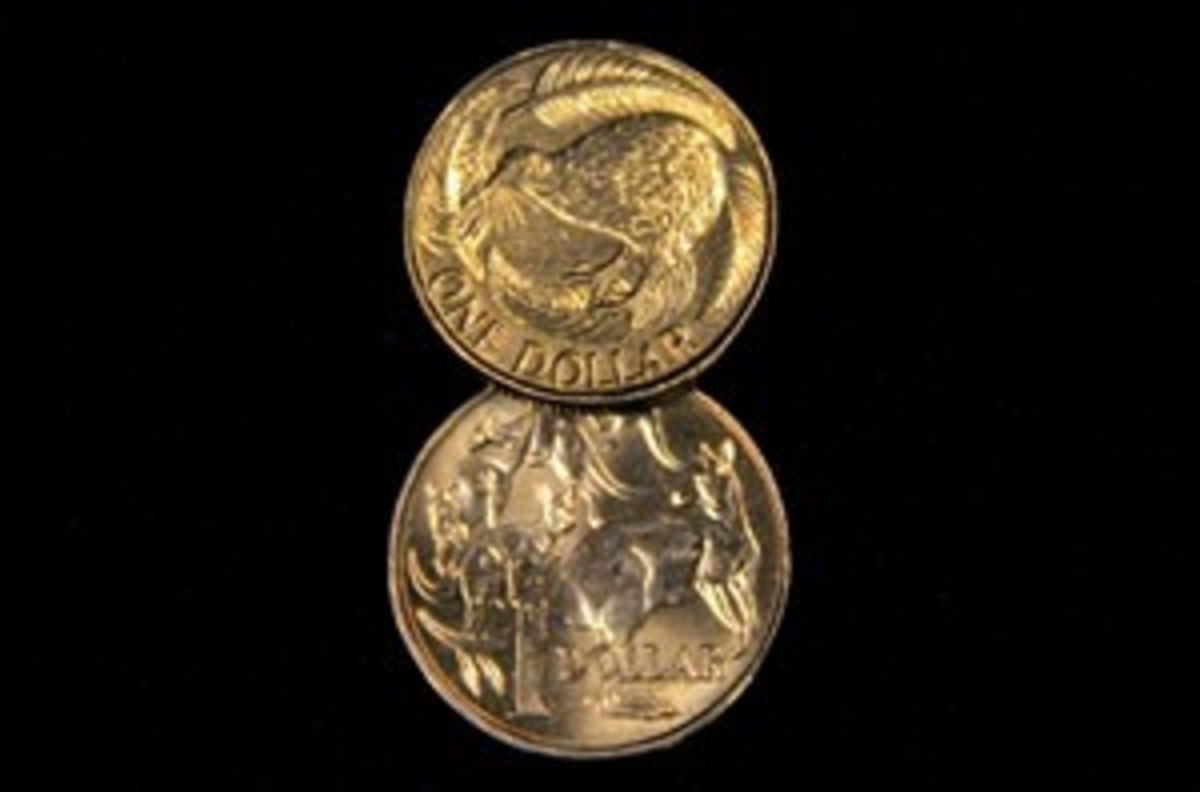
SYDNEY (Reuters) - The Australian dollar rose above one-year lows on Thursday helped by solid economic data while its New Zealand cousin inched higher after three straight sessions of declines.
The Australian dollar <AUD=D4> was last up 0.4 percent at $0.7522. It went as deep as $0.7473 earlier this week to hit the lowest since mid-2017.
The Aussie is set for a third straight weekly decline after heavy losses earlier in the week.
But the sentiment turned somewhat after data from the Australian Bureau of Statistics (ABS) showed a better-than-expected jump in the country's trade surplus for March while that of February was revised higher. [nS9N1R101A]
Since the start of 2017, Australia has suffered a monthly trade deficit only twice.
Separate data showed approvals to build homes jumped 2.6 percent in March compared with forecasts of a 1 percent increase. While the series is volatile month to month, approvals to build houses have surged more than 10 percent from a year ago.
"The construction sector will be a key driver of the economy in 2018/19 together with exports," said Craig James, chief economist at CommSec.
"The Reserve Bank is hoping for economic growth near 3 percent in both 2018 and 2019 and today's data supports this view."
The Reserve Bank of Australia (RBA) held cash rates at a record low 1.50 percent for a 21st straight meeting and signalled the need for policy to remain stable for a while. [nS9N1NE00A]
But it hopes a stronger pick-up in economic activity could revive wages growth and inflation, which could put an end to the longest spell of inaction by the central bank.
In New Zealand, the local dollar <NZD=D4> was up 0.3 percent at $0.7012, just a shade above a more than four-month trough of $0.6985 touched on Wednesday.
The kiwi dollar has fallen in nine out of the last 10 sessions and is poised for its third straight weekly decline.
The recent losses for the antipodean currencies have come as the greenback surged broadly amid higher U.S. Treasury yields.
The U.S. Federal Reserve is expected to go for two more rate hikes when central banks in Australia and New Zealand have predicted a stable outlook.
The Fed held rates in a widely expected move at its two-day policy meeting that ended on Wednesday but sounded confident about the economy. [nW1N1R300O]
Its rate-setting committee said inflation had "moved close" to its target and downplayed a recent slowdown in economic and job growth, saying activity had been expanding at a moderate rate and job gains, on average, had been strong in recent months.
New Zealand government bonds <0#NZTSY=> edged up, sending yields about half a tick lower.
Australian government bond futures were mixed, with the three-year bond contract <YTTc1> flat at 97.770. The 10-year contract <YTCc1> eased half a tick to 97.185.
(Editing by Jacqueline Wong)