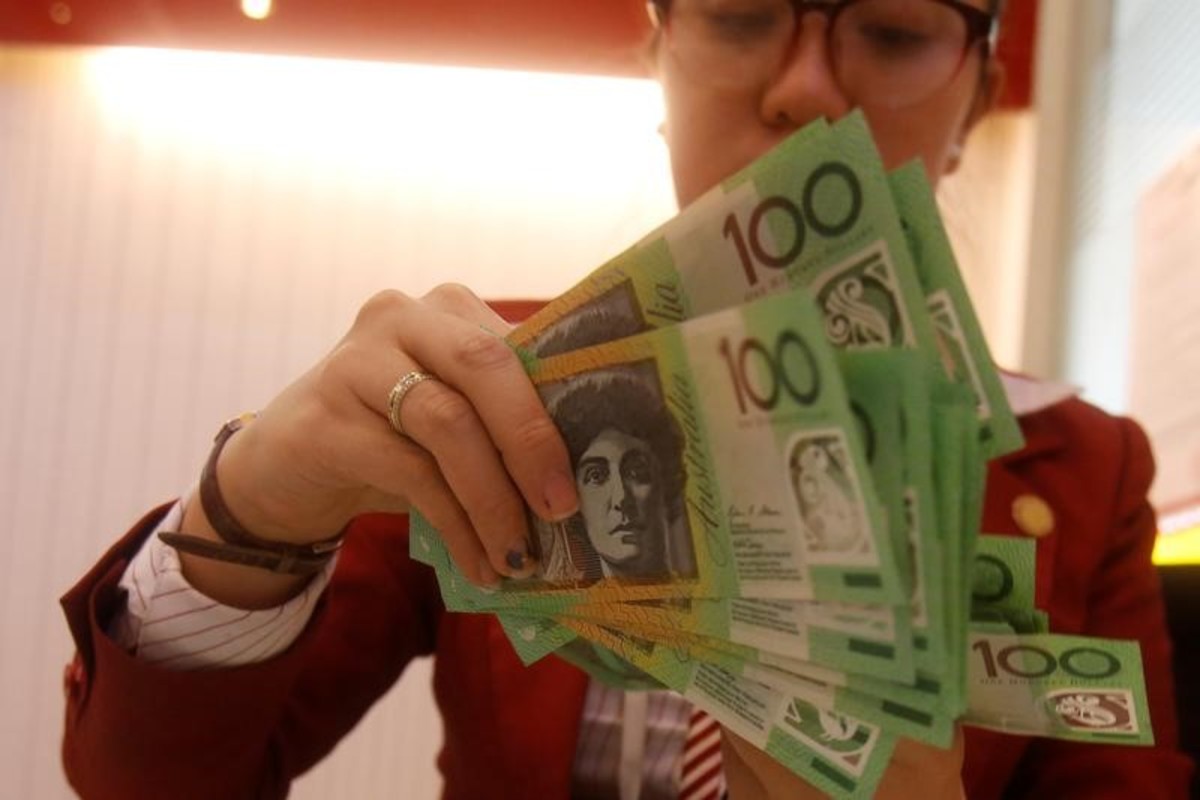
SYDNEY (Reuters) - The Australian dollar extended losses to touch a 3-week trough on Friday, hurt by falling metals and iron ore prices, while its New Zealand cousin drifted further away from the 1-1/2 month peak touched earlier this week.
The Australian dollar <AUD=D4> went as low as $0.7908, a level not seen since Aug.31. For the week, it has fallen 1 percent and was on track for its worst weekly showing since early July.
The losses were led by a 1.2 percent drop on Thursday, the Aussie's biggest one-day decline in 4-1/2 months, following comments from the country's central bank governor that were less hawkish than some had anticipated.
Investors were pricing in a rate hike in Australia as early as mid-2018 after some major central banks moved to dial down stimulus in recent weeks.
But Governor Philip Lowe wrongfooted hawks by saying the Reserve Bank of Australia (RBA) does not have to follow a global rush to raise interest rates as policymakers was watching heavily indebted households carefully. Falling prices of commodities, in particular iron ore - Australia's top export earner - and a downgrade of China's credit rating by S&P did not help either.
China is Australia's leading trading partner and the Aussie is often considered a liquid proxy for yuan.
Chinese steel prices, and consequently the prices of the iron ore and coking coal with which it is produced, slid to multi-week lows on Friday and were set to post their steepest weekly losses in months.
The downgrade of China's long-term sovereign credit rating on Thursday soured investor sentiment towards commodity futures, with base metals lead, nickel and zinc sold off as well.
The New Zealand dollar <NZD=D4> was down 0.2 percent to $0.7289 on jitters ahead of a hotly-contested general election on Saturday.
The kiwi was flat for the week, upsetting two straight weekly gains.
A win for the ruling National Party would cheer investors who favour continuity and support National's vow to keep the small trading economy open to foreign investment.
"The outcome of this Saturday's election could influence the outlook for the economy and monetary policy over the next couple of years," said Paul Dales, Sydney-based chief economist at Capital Economics.
The election outcome is, however, unlikely to influence a policy decision by the Reserve Bank of New Zealand next Thursday where it is expected to keep rates steady at 1.75 percent, Dales added.
New Zealand government bonds <0#NZTSY=> rose, sending yields about 3 basis points lower across the curve.
Australian government bond futures edged higher, with the three-year bond contract <YTTc1> up 2 ticks at 97.810. The 10-year contract <YTCc1> climbed 4 ticks to 97.1800.
(Reporting by Swati Pandey; Editing by Eric Meijer)