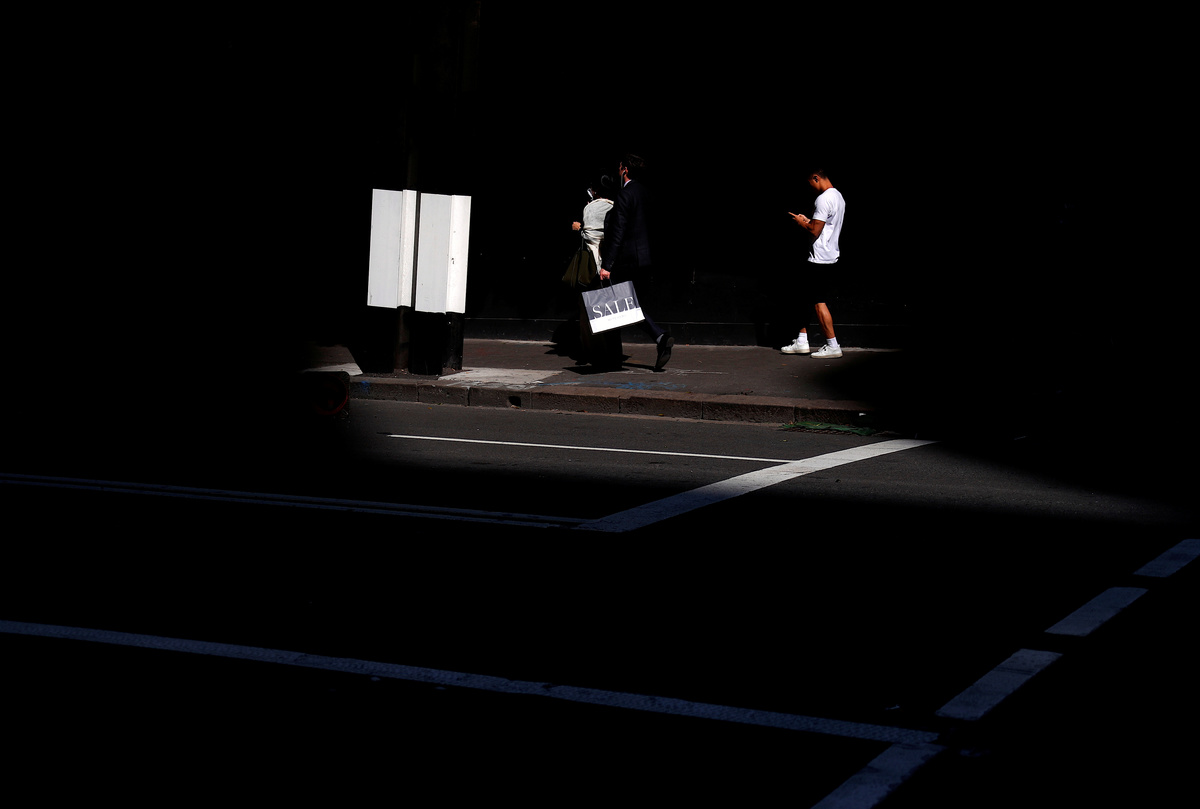
SYDNEY (Reuters) - Australian consumers turned decidedly gloomier this month, shrugging off two cuts in interest rates and a modicum of stability in falling house prices in a sign of further strain on an already struggling economy.
A measure of Australian consumer confidence released on Wednesday slumped 4.1% in July to a two-year low following a 0.6% fall in June.
The Melbourne Institute and Westpac Bank <WBC.AX> index of consumer sentiment skidded 9% from a year earlier to 96.5, meaning pessimists just outnumbered optimists.
The dismal data is one in a recent series of disappointing readings on the economy that could prompt another rate cut by the Reserve Bank of Australia (RBA) and pile pressure on the government to provide more fiscal support, economists said.
Consumers are critical to Australia's A$1.9 trillion economy ($1.3 trillion) as sluggish household consumption has been the biggest drag on growth in the past year.
"The fall in sentiment this month is troubling as it comes against what should have been a supportive backdrop for confidence," said Westpac senior economist Matthew Hassan.
The survey of 1,200 people was conducted as the RBA cut interest rates for a second straight month in July to a record low of 1% and left the door open to further easing.
Australian lawmakers last week approved A$158 billion ($109.95 billion) worth of tax cuts over the next decade, which will offer a $1,080 rebate to low-and middle-income earners.
There are also tentative signs of a recovery in the country's subdued property market which will likely temper the erosion of housing wealth seen since late-2017.
Yet, consumer sentiment has been hit by news about broader economic weakness and fears of rising unemployment, said Shane Oliver, chief economist at AMP.
Australia's economy expanded at its slowest pace in a decade in the first quarter of the year and initial indications are that the poor run extended into the June quarter.
MORE RATE CUTS?
It's not just consumers who appear dreary. A closely-watched measure of Australian business conditions released on Tuesday retreated in June, suggesting the business sector has lost momentum.
"Consumers and businesses are pretty cautious," AMP's Oliver said.
"If this continues then it's a trouble for the government. They will have to consider fiscal stimulus," Oliver added.
"We also think, ultimately the Reserve Bank will have to cut the cash rate again."
Oliver is forecasting RBA to cut again in November followed by one more in February, taking the benchmark rate to an unprecedented 0.50%. Financial markets <0#YIB:> are pricing in an 80% chance of a third rate cut this year.
Westpac survey's measure of economic conditions for the next 12 months slid 12.3%, while family finances compared to a year ago fell 3.0%.
There was hardly any optimism on the future, with the economic outlook for the next five years paring back sharply to fall 6.7% and family finances over the year ahead down 8%.
"Policy is set to be in play at every (RBA) board meeting between now and the end of the year," Westpac's Hassan said.
"Westpac continues to expect a further 25 basis point rate cut, most likely coinciding with a downgrade to the Bank’s growth and inflation forecasts in November."
(Reporting by Swati Pandey; Editing by Shri Navaratnam)