Photograph: Tracey Nearmy/Getty Images
Australia’s foreign affairs minister, Marise Payne, says she has had a “very positive” meeting with her Chinese counterpart, Wang Yi, despite Scott Morrison’s decision this week to publicly push China to step up on emissions reduction and fair trade.
As the UN’s chief, António Guterres, warned the 74th UN general assembly in New York that the world faced a “great fracture”, with the countries at risk of cleaving between the great powers of the US and China, Payne met the Chinese foreign affairs minister on the sidelines of the event for their second conversation in two months.
Morrison – who has not been invited, post-election, to visit the Chinese capital – later told reporters that the Australian government welcomed the opportunity to talk to Beijing. He said he didn’t see the conflict playing out between Washington and Beijing over trade, and the close alignment of his own language on China with Donald Trump’s, as evidence of the looming fracture forecast by the UN chief.
“I am a lot more optimistic about it,” the prime minister said.
Rather than seeing the current global tensions as a “great conquest of ideologies and belief systems”, he said, it was more accurate to see it as a step change in the global economy, requiring some corrective actions. Global institutions, be they the World Trade Organization or the UN on climate change, had to be “recalibrated to recognise that”.
He was unrepentant about redefining China’s economic status as a “newly developed” economy.
“When you look at the level of investment China makes in countries outside their own borders, when you look at the level of military expansion within their own ranks – they are not the actions of a developing country, they are the actions of the second largest economy in the world,” he said. “Moving into the next phase does mean ensuring that we are all playing on a level playing field.”
The US president used similar language in his address to the UN general assembly on Tuesday morning, also characterising China as a developed economy.
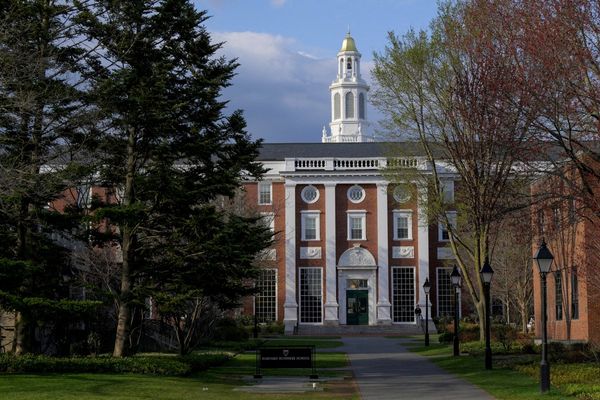
Payne said she did not intend to go into details about Tuesday’s conversation with her Chinese counterpart, including whether any concerns had been expressed about Morrison’s foreign policy pivot this week at the Chicago Institute for Global Affairs, but “it was a very positive meeting, as the prime minister said – my second meeting in the last two months”.
“We acknowledged our relationship is based on our comprehensive strategic partnership, and that’s the premise from which we begin,” Payne said. She also indicated she had raised human rights issues, including the persecution of Uighurs and the continuing detention of Zhou Yongjun.
Morrison flatly rejected the idea that Australia had already picked a side – the US – in the rivalry between the world’s great powers. He insisted that would be a “flawed analysis of the situation”.
“America is our great ally,” the prime minister said. “China is our comprehensive strategic partner and we continue to maintain that this isn’t a matter of choosing, it is a matter of working closely with both nations in the spirit of those histories and those relationships.
“I’ve been saying for time now that I reject the binary narrative that keeps being thrust towards me on this. I don’t buy it and I don’t support it and I’m not going to make decisions based on it.
“I think it is a very narrowcast analysis.”
In Australia, Morrison government ministers rephrased his characterisation, with the trade minister, Simon Birmingham, describing China has having “developed a long way from where they were” and explaining Australia’s engagement “reflects the new development status”.
Labor’s shadow finance minister Katy Gallagher said Birmingham had “[refused] to back in … his prime minister’s language used around this matter”.
Gallagher said Labor’s view is China is a developing economy but said it was unhelpful “to be arguing about two words when we have such a significant relationship with China”.