Australia’s foreign aid contributions to Pacific nations are likely to come under increasing scrutiny from the federal government.
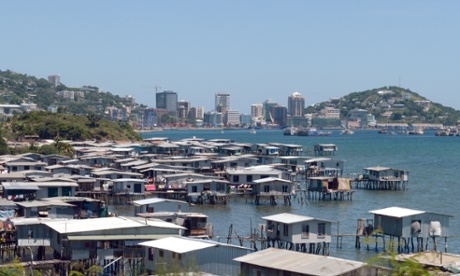
The Australian foreign minister, Julie Bishop, said on Tuesday the way aid is delivered to Papua New Guinea must change after the country dropped down the UN development rankings despite receiving more than $500m this in aid year from Australia.
At the Australia Papua New Guinea business forum in Cairns, Bishop said a “new approach” was needed that would see the private sector more heavily involved in promoting growth, after concerns continued to be raised about high infant mortality rates and maternal health in the country.
It’s difficult to say exactly what this will mean for the aid sector. While it’s clear the supply of services will shift to the private sector, Bishop also said aid would continue to increase to $577m for the country.
But how do we decide who receives aid in the region, and how are those contributions determined? The differences in Australia’s aid contributions are stark, and the reasons not altogether clear.
The Solomon Islands is second to Papua New Guinea, tipping just over $200m. Vanuatu follows well behind at $65m.
Aid to Papua New Guinea has continued to gradually increase over the last 30 years, and is now getting closer to the combined amount of aid that Australia provides to 18 Pacific Islands in the region. The overall aid to these islands – including Tonga, Vanuatu and the Micronesia Federation – has decreased.
But the momentum gained by Papua New Guinea in aid is not reflected in development and improvement in the country. As Bishop pointed out in her speech, when Australia began providing aid in 1975, PNG ranked 77th on the UN’s human development index. The index measures the health, education and income of nations and ranks them accordingly.
But this year Papua New Guinea is ranked 156, far below the level when Australia began providing aid, and concerns have continued to be raised about health services in the country. In fact, PNG rates well below other Pacific nations on the index.
Viewing the aid contributions in terms of population also leads to some unusual results. For instance, aid to the 10,000-strong island nation of Nauru, where one of Australia’s two offshore detention centres are located, was $32.9m last year. The Kiribati islands received just over $30m, but has a population that is ten times the size of Nauru at just over 100,000.
Australia plays an important role in the region, and has the potential to assist developing nations and provide valuable support. But the contributions Australia makes to different countries must be scrutinised.