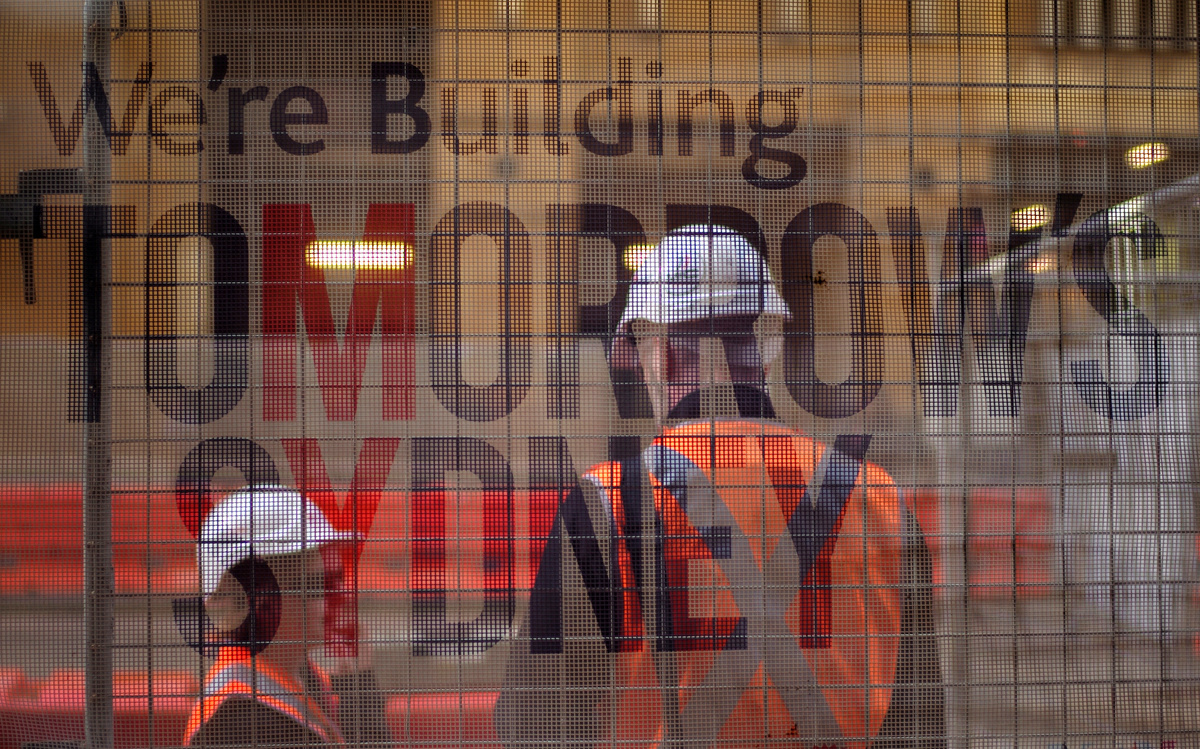
SYDNEY (Reuters) - Australia's conservative government will fast-track A$3.8 billion ($2.59 billion) in infrastructure spending, Prime Minister Scott Morrison said on Wednesday - a fillip to a stalling economy.
Australia's economic growth has slumped to its lowest in a decade, led by weakness in consumer spending and home building.
Desperate to reinvigorate the economy, the Reserve Bank of Australia (RBA) has chopped interest rates by 75 basis points to an historic low of 0.75%, though it has repeatedly said increased government spending on infrastructure was required.
Heeding those calls, Morrison will use to a major speech on Wednesday to promise an injection of government spending on road and rail projects across the country, two sources familiar with the plans told Reuters.
Nearly half of A$3.8 billion to be invested over the next four years will be spent over the next 18 months, Morrison will say.
Speaking ahead of the speech in Brisbane, Morrison confirmed the infrastructure plan.
"All these projects will provide important extra support to the economy," Morrison told Australia's Channel 7.
Morrison has for several months since his unexpected re-election in May dismissed calls for accelerated infrastructure spending, insisting the government was focused on delivering Australia's first budget surplus in more than a decade.
But with iron ore prices hitting new highs, Morrison's conservative government has more fiscal firepower to prop up the country's struggling economy.
The infrastructure spending plan is also a boost to the RBA, which discussed cutting interest rates again this month, though it decided to assess the impact of the three cuts already delivered since June.
Analysts generally assume the central bank would not want to take its cash rate below 0.5% and would have to resort to other stimulus steps such as asset purchases or lending to banks at super-low rates.
(Reporting by Colin Packham; Editing by Tom Brown)