Australian shares finished lower on Monday weighed by energy stocks, as concerns over a slump in oil demand due to the coronavirus pandemic drove the energy sub-index to its worst session in more than three weeks.
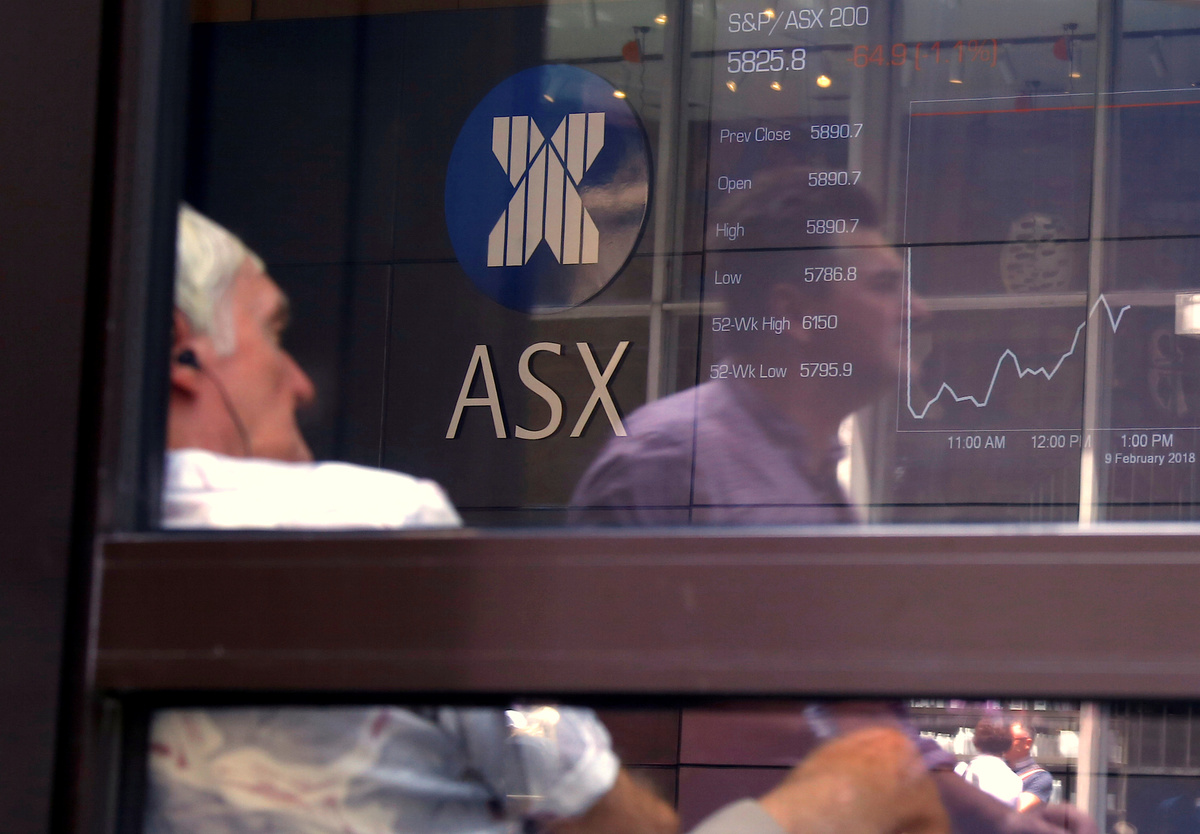
The S&P/ASX 200 index <.AXJO> fell 2.5% or 134.50 points to 5,353.00 at the close of trade.
The energy sub-index <.AXEJ> suffered a 4.6% drop as U.S. crude oil futures plunged to their lowest levels since 1999. Concerns mounted over whether U.S. storage facilities would soon reach capacity. [O/R]
"Oil names (are) looking sickly here today," RBC Capital Markets' head of equities Karen Jorritsma wrote in a note.
Jorritsma added that, as oil prices remain far below production costs for many producers, "at current levels, the entire industry is out of the money".
Industry giants Woodside Petroleum <WPL.AX> and Santos <STO.AX> lost 4.4% and 3.7%, respectively.
Caltex Australia <CTX.AX> shares plunged 7.8% after Canadian company Alimentation Couche-Tard <ATDb.TO> scrapped its takeover bid for the petrol station operator, citing coronavirus-related uncertainties.
Meanwhile, Sydney Airport Holdings <SYD.AX> eased 2.9%, hurt by a more than 45% drop in passenger traffic in March. The airport operator said data for the first 16 days of April showed traffic had slowed to a trickle.
Healthcare stocks <.AXHJ> settled 3.1% lower, with heavyweight CSL <CSL.AX> sliding 3.8% and hospital operator Ramsay Health Care <RHC.AX> dropping 2.5%.
Miners <.AXMM> were weighed down by a 2.3% fall in gold stocks <.AXGD> as the bullion price weakened amid doubts over the United States' plans to reopen its economy. [GOL/]
Gold producer Newcrest Mining <NCM.AX> and Australian-listed shares of AngloGold Ashanti <AGG.AX> lost 3.8% and 2.3%, respectively.
New Zealand's benchmark S&P/NZX 50 index <.NZ50> slipped 0.1% or 16.05 points to finish the session at 10,762.67 after starting the day in positive territory.
Prime Minister Jacinda Ardern said the country would loosen some of its virus-driven lockdown measures next week after a month of strict restrictions.
Meanwhile, data showed consumer inflation came in higher-than-expected in the first quarter.
However, the market is placing little weight on the first quarter inflation figures, which largely predate the COVID-19 lockdowns, analysts at Goldman Sachs said in a note.
"... we continue to expect a large rise in unemployment and associated fall in demand will outweigh any supply-side effects on inflation over the course of 2020," they wrote.
(Reporting by Arpit Nayak in Bengaluru; Editing by Alex Richardson)