Australian shares have plunged after global markets tumbled again overnight as US President Donald Trump's coronavirus-driven ban on European travellers rattled investors.
The benchmark ASX 200 index fell by 7.7 per cent to 4,898 by 11:35am AEDT in a volatile session.
The local share market has already lost more than $500 billion, or 25 per cent of its value — since plummeting from its February 20 record high.
The Australian dollar plunged by 4 per cent to a 17-year low early this morning.
It fell as low as 62.16 US cents, before lifting back to 62.7 cents — which is still its lowest value since April 2013.
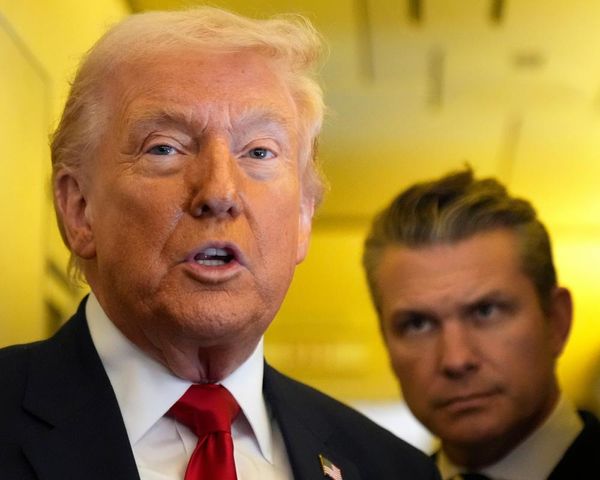
The local market sank after Mr Trump imposed a ban on European travellers from entering the United States, as global authorities struggle to deal with the coronavirus pandemic.
It also came after European markets had their worst session ever, and Wall Street's Dow Jones index fell 2,353 points (or 10 per cent) to 21,201 overnight.
That makes it the Dow's worst single day drop since the Black Monday crash in October 1987, when it shed more than 22 per cent.
Every local sector is seeing heavy losses, with financials (-6.6pc) and industrials (-8.1pc) being the worst performers.
Only four stocks (out of 200) in the benchmark index are trading higher, including Fortescue Metals (+6.3pc) and Woolworths (+0.7pc).
The worst losses are being felt by Newcrest Mining (-9.8pc), Afterpay (-11.7pc), Sydney Airport (-13.3pc) and Flight Centre (-16.6pc).
The travel industry is under intense pressure, with Flight Centre announcing plans to close 100 of its underperforming stores in Australia before June 30.
The company said it would redeploy sales staff to other nearby shops.
Virgin Australia has slashed its senior executives' pay, while cutting more flights to deal with the worsening COVID-19 outbreak and its impact on the travel industry.
The airline will reduce its routes to Los Angeles, Japan and New Zealand.
Its share price has fallen by 1.7 per cent to 5.9 cents.