Here is the news.
A woman from Warrnambool on Victoria’s southwest coast has been jailed for trafficking ice and cannabis. A court heard the woman’s life spiralled out of control after her former partner tied her up, beat her, and poured boiling water on her face.
Independent MP Cathy McGowan is holding another round of “kitchen table” conversations as the member for Indi begins to plan her campaign for the next federal election. In October, McGowan will hold a “summit” to talk about what issues emerged from the talks.
In Stawell in the state’s west, teenager Greta Carey has been overwhelmed by local support that helped her raise more than $22,000 for the leukaemia foundation. A “massive crowd” at the racecourse watched as Greta’s hair was shaved off for a $1,000 donation.
And, in case you missed it, this week is mouse census week. Farmers in grain growing areas are being asked to assess mouse activity on their farms in an attempt to better understand and prevent plagues.
All local stories: the human, the serious and the trivial. Do we value them? Do they matter to the people of Stawell, Warrnambool, Wodonga, Bendigo and Ballarat?
I’m certain they matter a great deal, but that doesn’t guarantee they’ll continue to be told. Rural and regional press is at a tipping point and we hardly hear about it.
The tension between the democratic necessity of journalism, for all its faults, and the economic reality of producing it can no longer be papered over in the regions, where a third of Australians live.
Proposed cuts at 13 regional Fairfax Media newspapers in Victoria are so deep that they would all but finish the capacity of these local institutions to do public interest journalism, as well as the bread and butter task of recording the stories of local people.
All up, almost 40% of editorial jobs would go under the proposal. 159 jobs would be slashed to fewer than 97– including 66% of photography jobs.
Federal MP Andrew Broad has told Fairfax, due to announce its final plans on Thursday, exactly what he thinks of them. Broad is the National MP for the seat of Mallee, taking in the towns of Mildura, Swan Hill, Horsham and Stawell in Victoria’s northwest.
He wrote a letter to Fairfax’s CEO Greg Hywood after plan was announced last month. John Angilley, the company’s rural boss, phoned him to discuss.
“What I’m saying is there are a few key things that are essential to growing rural and inland cities,” Broad told Guardian Australia.
“They need access to public transport. Second is an industry, be it an agricultural industry or mining. The third is access to higher education, and the fourth, which is very important, is the ability for that city to tell its own story. That’s why our regional newspapers are so important.”
Fairfax has been consulting since its announcement, but Broad wonders if the company is listening.
“My concern is that their management are not based there, this guy [Angilley] has never been to Horsham. He said ‘I must get up there sometime to have a look’.”
Broad has two newspapers in his vast electorate affected by Fairfax’s proposed cuts. The Wimmera Mail Times is set to lose five full time positions – two of its seven journalists, one of its two photographers, an editor and a production staffer.
The idea is for a single editor and one photographer to serve three papers and their websites – the Times, the Stawell Times News and the Ararat Advertiser. That’s three large communities - Horsham, Stawell and Ararat – with a single editor and one photographer.
The Ballarat Courier serves Victoria’s second biggest regional city. It could lose 2.4 (full-time equivalent) journalists, a news director, chief of staff and three of its five photographers.
The Bendigo Adviser would lose 3.4 journalists, 2.5 special publications staff, two editorial leadership positions, more than four of its six photographers and a production staffer.
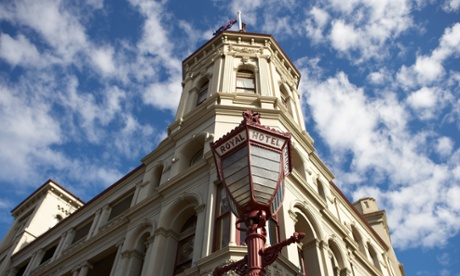
The Warrnambool Standard would lose one journalist, two section editors, all 7.3 sub editors, and its photography staff would go from 4.2 positions to 1.5.
The Border Mail is a substantial regional newspaper that covers a large area straddling the Victorian and NSW border centred on Wodonga and Albury. It has won major awards for its stories on the impact of the drug ice in the region and its investigation into youth suicide.
Under Fairfax’s proposal, it would lose all of its 11 subeditors, one journalist, three section editors and eight photographers, leaving it with just two to cover a vast area of substantial cities and smaller communities.
As for the Stock and Land, which covers Victoria, Tasmania, the South Australian Mallee and Riverina, it would be left with three reporters. One wonders if they’ll ever get out of the office.
And so it goes on, and this after years of cutbacks already. As one long-term staff member of the Warrnambool Standard put it: “They’re not just tweaking around the edges, they are disembowelling the place. I cannot think how they think this is sustainable.”
Those left will move to the NewsNow model, underway since last year when it was trialled less aggressively at regional mastheads in south-western NSW. What it means is an aggressive move to online journalism, with the work of professional photographers and sub-editors being picked up by a reduced staff of reporters with almost comical workloads.
Crikey reported that a journalist under NewsNow would be required to typically write six stories a day - two leads, two down page stories and two briefs. They’d take their own photographs, write their own headlines, and publish straight to the web, going through no sub-editing process.
Those stories would then be published by the newspapers the next day in mostly pre-prepared news holes. Fairfax is the largest publisher of regional papers in the country and the intention is that this model will be rolled out beyond Victoria.
It is inconceivable that these cuts would not cripple the capacity of the mastheads – newspaper or website – to perform a decent job in covering their communities, let alone to publish more ambitious journalism, already too rare at country papers.
The media union and staff are hoping that the company might agree to save a job here or there when it makes its announcement this week, but are not expecting major concessions. In some cases, staff levels could become so low that it is hard to see how basic shifts could be covered, let alone annual leave and sick leave.
Angilley reassures us in a statement that its Victorian operation “will remain the most trusted source of news and information in the communities we serve.”
“Journalists will report local news across multi-media, as well as be trained to write headlines, captions and fact-boxes. Quality-checking processes and procedures will be in place and our editors will remain responsible for managing risk and maintaining editorial standards.”
Fairfax must know that this sounds like nonsense, and that everyone else can sense what the cuts will really mean. Victorian premier Daniel Andrews said that “maintaining and protecting country papers is vital in supporting our many country towns – once they’re gone they’re gone for good”.
One brave journalist at the Border Mail, Brad Worrall, started a petition to urge Fairfax to rethink its decision. “If Fairfax goes ahead with these cuts, the ability to report vital local news stories to regional communities will be under threat,” he wrote.
So far, more than 3,500 people have signed. There’s a Facebook page and protest hashtags. Parliamentarians, mayors and community leaders have complained publicly and in parliament.
All this is fair enough, but what else? It is easy (and, no doubt, justified) to criticise Fairfax for some things – its spin, in particular. Perhaps it is contributing to its own cycle of decline, cutting deeply to squeeze out profits that will mean fewer stories, a drop in quality and the inevitable further loss of public support.
Perhaps staff are right and Fairfax doesn’t get that regional towns are different to big cities, and that putting stories up immediately to the web – at no cost – will erode the newspapers even more quickly.
But won’t regional media also be revolutionised by the Internet, even if the newspapers hold up longer than those in the cities? The focus does have to shift to digital, although that’s not where the revenue is now.
Indi’s Cathy McGowan has also met with Fairfax. “They are convinced that that what they’re doing is what they need to do to keep their business going,” she said. “My sense is they’re probably right but the cost to regional communities will be enormous.”
She also pointed out that the shift to online journalism is inevitable but in her area, “we’ve got to get the NBN rolled out and we’ve got to get mobile phone coverage. In my communities, they still need the newspaper”.
Fairfax is a business and the reality it faces is obvious. Australian Community Media, which runs Fairfax’s regional, community and agriculture assets, was one of the company’s worst performers in its half yearly results, with total revenue down 7.4%.
Profits at regional papers are also down (although many remain profitable), and circulations are slipping. Regional mastheads are mostly marginal operations at Fairfax and other companies. The response is routine – restructure and cut costs.
Yet if we believe that journalism is essential for citizens to participate in a democracy – that it is more than a business - then we can’t let this pass with a hand-wring, a hope, and a hashtag.

There are new players in Australian journalism – Guardian Australia, for instance, and BuzzFeed, the New Daily, the Conversation and soon the Huffington Post. Yet these websites are focused on national news, not local and regional stories, and some are publicly or philanthropically funded – they don’t all have to turn a profit as Fairfax does.
What do we do about it? There is the ABC in regional Australia of course. The national broadcaster is cutting costs itself, including shedding about 10% of its staff. Five regional local radio bureaus have closed and the state-based 7.30 axed.
Yet the ABC sees its role in the regions as critical and growing – it has people in 48 country areas and its ABC Open project in regional Australia – encouraging and training people to tell their own stories – is innovative. It has also announced a new regional division to start in July.
The ABC likes to stress that it is not a “market failure” broadcaster – its role is to provide a comprehensive service, not to fill the gaps left by private companies. But the truth is that it is becoming a market failure operation in many areas, no more so than in the bush. It knows it, too.
“With commercial media struggling to maintain its presence in regional Australia, it is even more necessary for the ABC to ensure it delivers for these audiences,” the ABC’s managing director Mark Scott said in November.
It would be unhealthy for the ABC to be the only substantial media organisation in regional Australia, but that’s where we’re headed if local newspapers and their websites become substandard or die.
One alternative could be an idea being floated in the UK – the BBC ending its differences with private media and working with companies to serve local and regional communities.
John Whittingdale, the chairman of a committee into the future of the BBC, was quoted as saying, “I am worried about the parlous state of local newspapers which is quite dangerous for local democracy. We should consider using part of the proceeds of the [BBC] licence fee to support local newspapers directly”.
The ABC doesn’t have a licence fee of course, but could it share content with regional newspaper websites perhaps? Could it work more cooperatively with private media to do major stories and investigations for people living in regional and remote areas?
MP Andrew Broad baulks at the suggestion of direct public funding for regional mastheads. The idea is anathema to companies like Fairfax and News Corp on freedom of the press grounds. Yet there are ways of enshrining editorial independence even if some public support is offered – look at the ABC itself.
If not direct funding, what about tax concessions or other ways of subsidising local journalism? Again in the UK, chancellor George Osborne said in his budget speech in February that the government would look at tax breaks for local and regional media, noting that these papers are a “vital part of a healthy democracy” and needed help to adapt to new technology.
It’s possible that private companies would be more likely to support tax breaks rather than direct financial support. Certainly Ashley Highfield, head of regional publisher Johnston Press in the UK, was “delighted the chancellor has recognised the crucial role local newspapers play in communities across the country”. If not that, why not tax deductions for local start-ups, non-profit or otherwise?
None of this is being discussed here, where the risks to regional news reporting are just as critical and just as dangerous. Both Broad and McGowan say that if Fairfax miscalculates and cuts too deeply, their communities will support other ways of producing and getting local news. These papers have long histories within their towns, but they’ll abandon Fairfax if it abandons them.
Yet Broad is wary of financially backing Fairfax or other private companies, even modestly.
“I don’t know, where do you start, where do you stop?” he said. It’s a matter of priorities. How much effort should be put in to “making it easy for Fairfax to turn a profit?”
That’s a reasonable view, but Broad and the people he represents are watching these mastheads wither, whether they’re online operations or newspapers. As one staff member at the Warrnambool Standard said: “This is a slowly unfolding tragedy that we’ve found impossible to stop. By the time people do realise what has happened to their local paper, it will be too late.”
-
Gay Alcorn was a senior Fairfax journalist and editor until 2012. Fairfax did not respond to requests for an interview.