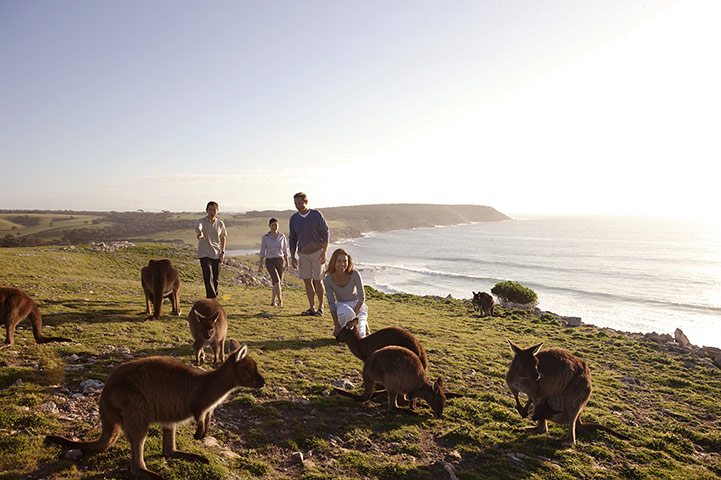
This pristine wilderness, 155km (96 miles) wide with 510km (316 miles) of coastline, offers a diverse range of habitats that are largely unspoiled by human activity. The effect has been to preserve large populations of native Australian animals, including the unique Kangaroo Island kangaroo, which is substantially slower than its relatives on the mainland. Photograph: Tourism Australia
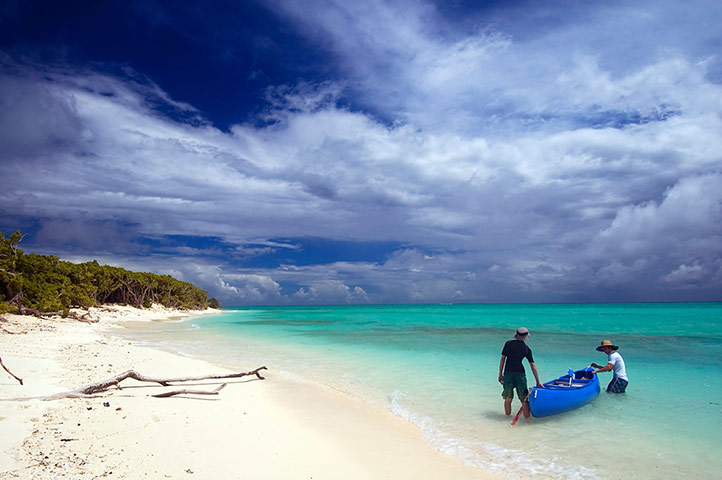
The world’s largest coral reef is situated off the coast of Queensland and comprises over 2,900 individual reefs and 900 islands that stretch for over 2,600km (1,600 miles). Head out on a boat trip from Cairns for what will be a magical experience. The clear water makes spotting bright butterfly fish, colourful parrot fish and friendly (yes, really) reef sharks easy. Photograph: Alamy
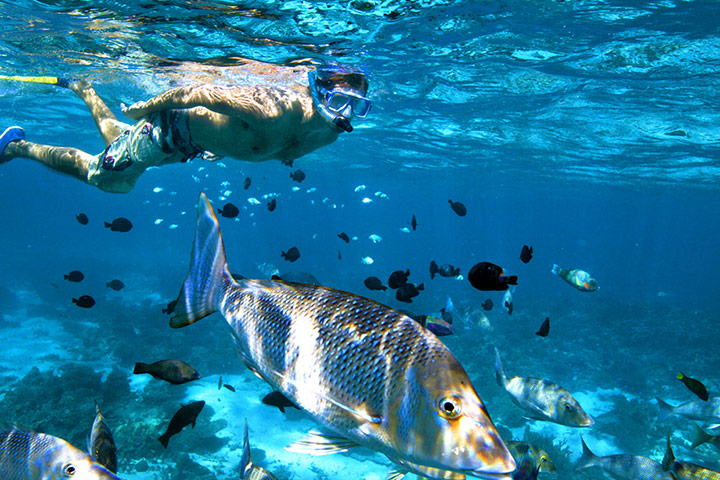
Coral Bay is your jumping off point to a host of aquatic activities in and around Western Australia’s impressive Ningaloo Reef. Here, under the watchful eye of a trained guide, you can swim with manta rays and whale sharks, or stay on the surface if you prefer, by chartering a sailboat. Photograph: Tourism Australia
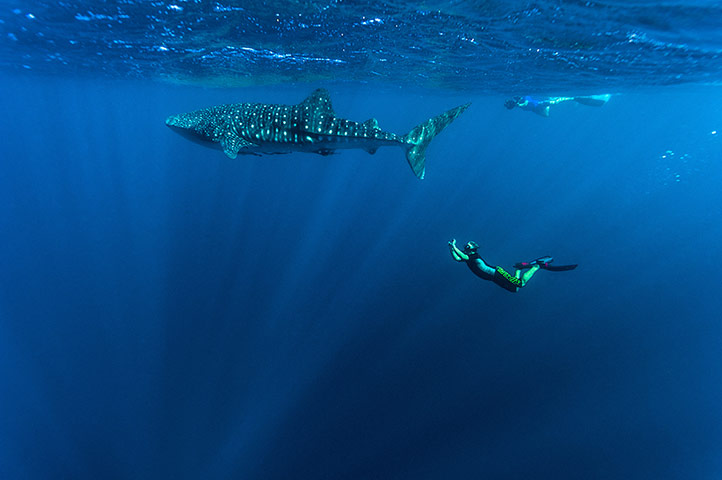
These gigantic creatures are the world’s largest fish (up to seven metres long) and just being in the water next to one as it sweeps its way past is unforgettable. They visit Ningaloo Reef, off the coast of Exmouth in Western Australia every year between April and July, and swimming with them is permitted one boat at a time. Photograph: Jason Edwards/Getty Images/National Geographic Creative
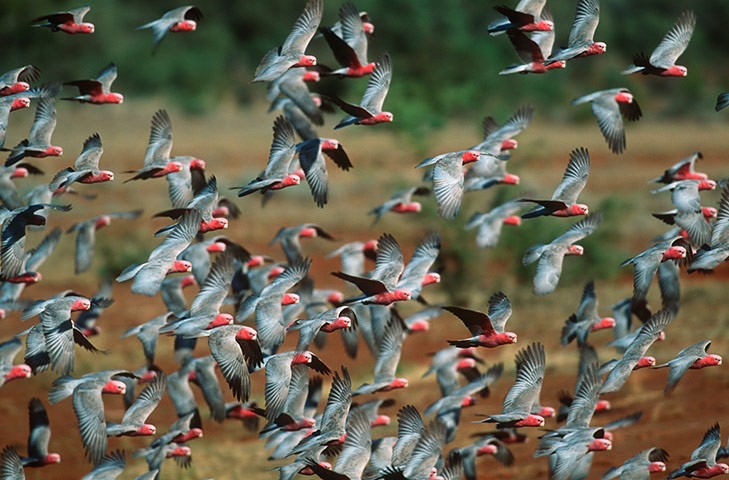
One-third of Australia’s native bird species can be found in Kakadu, the country’s largest national park. Even among the technicolor parrots, the bright pink galah stands out, especially when flocks of them take to the air at once. The female birds, also known as the rose-breasted cockatoo, have spectacular red eyes. Photograph: Martin Harvey/Getty Images/Gallo Images
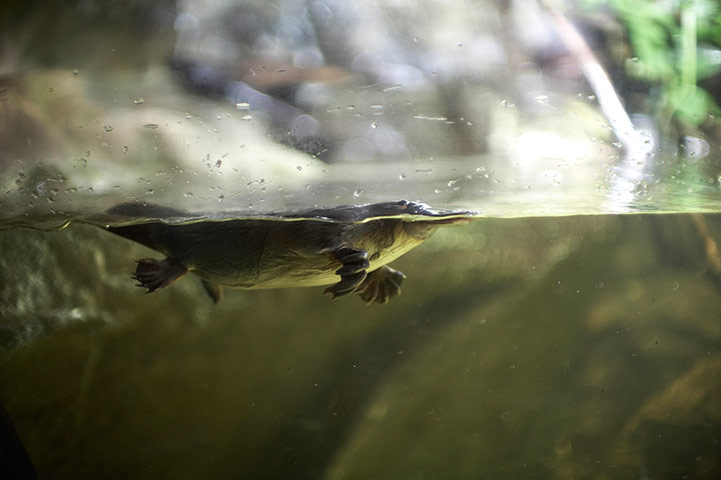
Every schoolchild knows this duck-billed, beaver-tailed oddity is one of only two mammals to lay eggs, but few people have seen one in the wild in their home territory of eastern Australia. The best place for a bankable platypus sighting is the lush Otway National Park in Victoria, where a community of platypus live at Lake Elizabeth. Photograph: Andrew Holt/Photographer's Choice
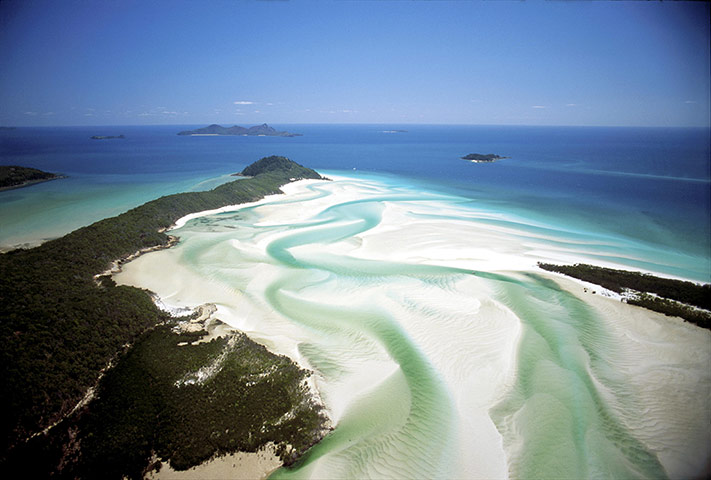
The main attraction of this protected nature reserve, the largest of the 74 islands that make up the archipelago that takes its name, is Whitehaven beach. This seven-kilometre stretch of pure white silica sand is regularly voted the world’s best beach, and the outstanding thing about it is that it’s all but empty every night, bar a few hardy campers and yachtspeople moored in one of the island’s many bays and inlets. Photograph: Tourism Australia
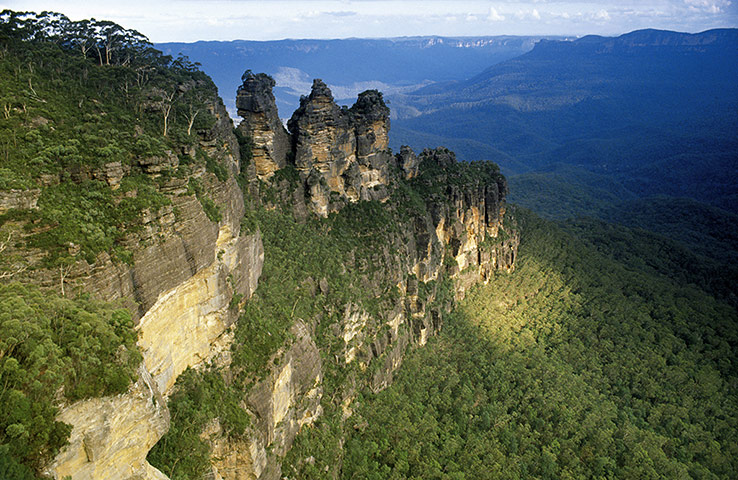
Little more than an hour from Sydney lie the Blue Mountains, a World Heritage site known for its rock formations and spectacular flora. The Three Sisters is the most famous of these formations, their eerie shape crafted by erosion of the soft local sandstone. A bush trail leads to the rocks from Echo Point and down to the valley floor via a set of steps known as the Giant Stairway. Photograph: Tourism Australia
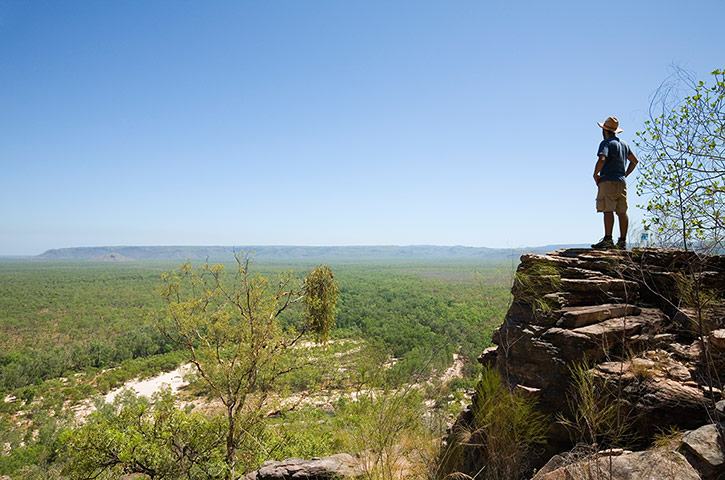
A hiker looks out over the landscape of Kakadu from Jim Jim Falls escarpment, on Barrk Marlam Bushwalk. Australia’s largest national park covers an area half the size of Switzerland and is a Unesco World Heritage site, listed for both its environment and its living Aboriginal culture. Aboriginal people have lived in Kakadu for over 50,000 years and more than half the park is Aboriginal land. Photograph: Andrew Watson/Getty Images/Lonely Planet Images
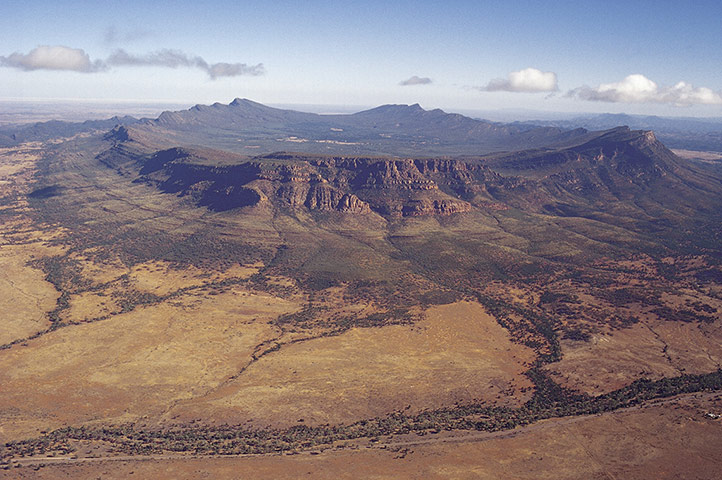
This spectacular natural amphitheatre of rock 430km (267 miles) north of Adelaide is in the heart of the Flinders Ranges national park, and is one of the most popular places for visitors to get a flavour of the outback, thanks to the proximity of Wilpena Pound Resort and Rawnsley Park station. Photograph: Tourism Australia