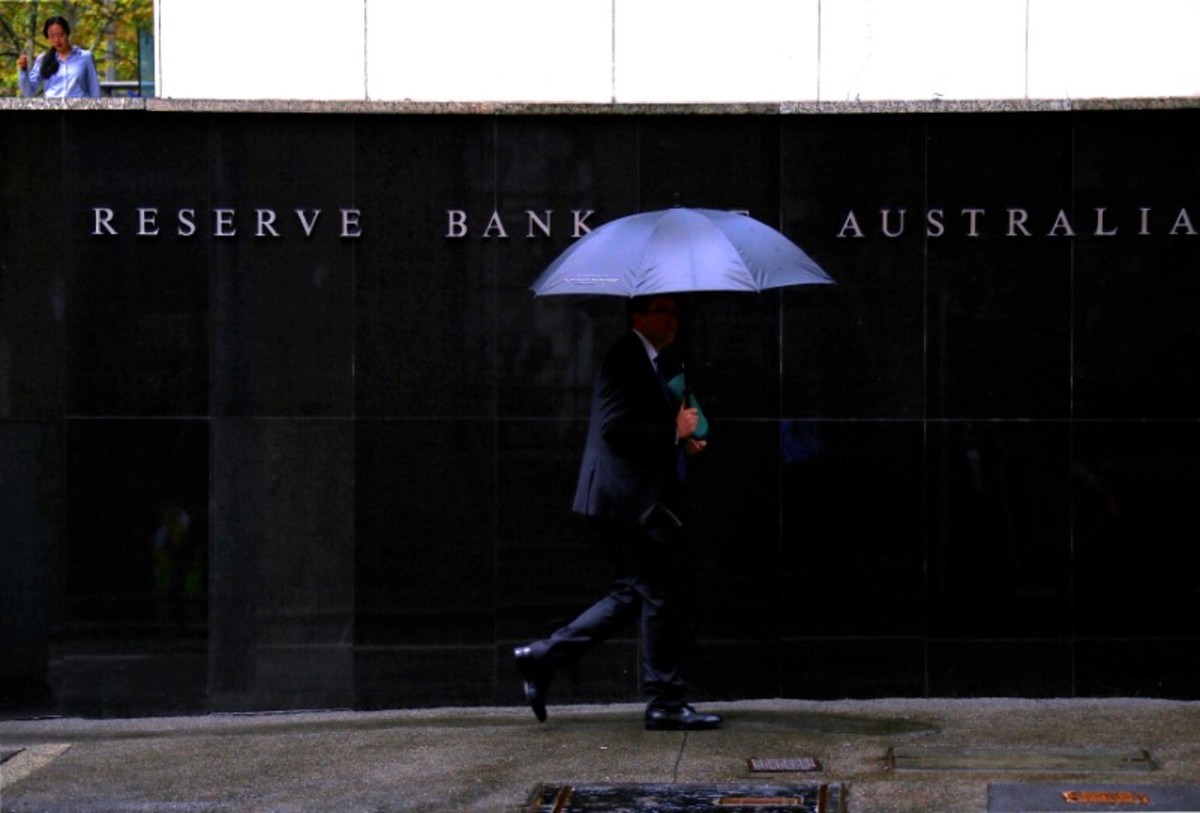
SYDNEY, July 17 - Australia's central bank stressed there was no need to move interest rates as inflation remained tepid while high household debt and the threat of a full-blown global trade war added to risks.
The Reserve Bank of Australia's (RBA) Board agreed the next move in the cash rate would more likely be an increase but saw "no strong case" for a near-term shift, Tuesday's minutes of its July policy meeting showed.
"Rather, the Board assessed that it would be appropriate to hold the cash rate steady and for the Bank to be a source of stability and confidence," the minutes showed.
The RBA last cut rates to 1.5 percent in August 2016, notching up the longest period without a change in modern history. Financial markets <0#YIB:> are wagering this steady spell could extend beyond 2019.
Governor Philip Lowe has repeatedly said any increase in cash rates is still some time away as wage growth and prices show scant sign of heating up soon.
The case for a hike has also been weakened by a cooling in the country's once red-hot housing market. A clamp down by regulators on investment lending and rising funding costs for banks mean house prices nationally are now falling for the first time since 2012.
Data out this month from property consultant CoreLogic showed home prices in Sydney were down 4.5 percent in June from a year ago, the sharpest decline since the global financial crisis of 2008. Annual price growth in Melbourne had slowed to just 1.0 percent, from a double-digit pace last year.
Board members spent considerable time discussing household debt which is at all-time highs as a percentage of disposable income.
Members noted that a "material" portion of household debt is held by lower-income households while the lion's share is with high- and mid-income households who have more stable jobs and larger savings buffer.
But while their assets exceeded the value of debt they were mostly illiquid such as superannuation and real estate.
"Households with high debt levels are more vulnerable to economic shocks and therefore more likely to reduce consumption in the face of uncertainty about their future income," the minutes showed.
"Accordingly, members agreed that household balance sheets continued to warrant close and careful monitoring."
U.S. President Donald Trump's tariffs against China, Australia's single biggest export market, and Europe have also added to uncertainties.
At recent events, Lowe called a potential trade war the greatest single external threat to Australia's prosperity. Two-way trade accounts for around 45 percent of Australia's annual gross domestic product (GDP).
Last month, the White House enacted tariffs on $34 billion in Chinese goods. Beijing quickly responded with a 25 percent levy on 659 U.S. products ranging from soybeans and autos to seafood.
The Trump administration further raised the stakes in its trade row with China, saying it would slap 10 percent tariffs on an extra $200 billion worth of Chinese imports.
(Reporting by Swati Pandey; editing by Wayne Cole)