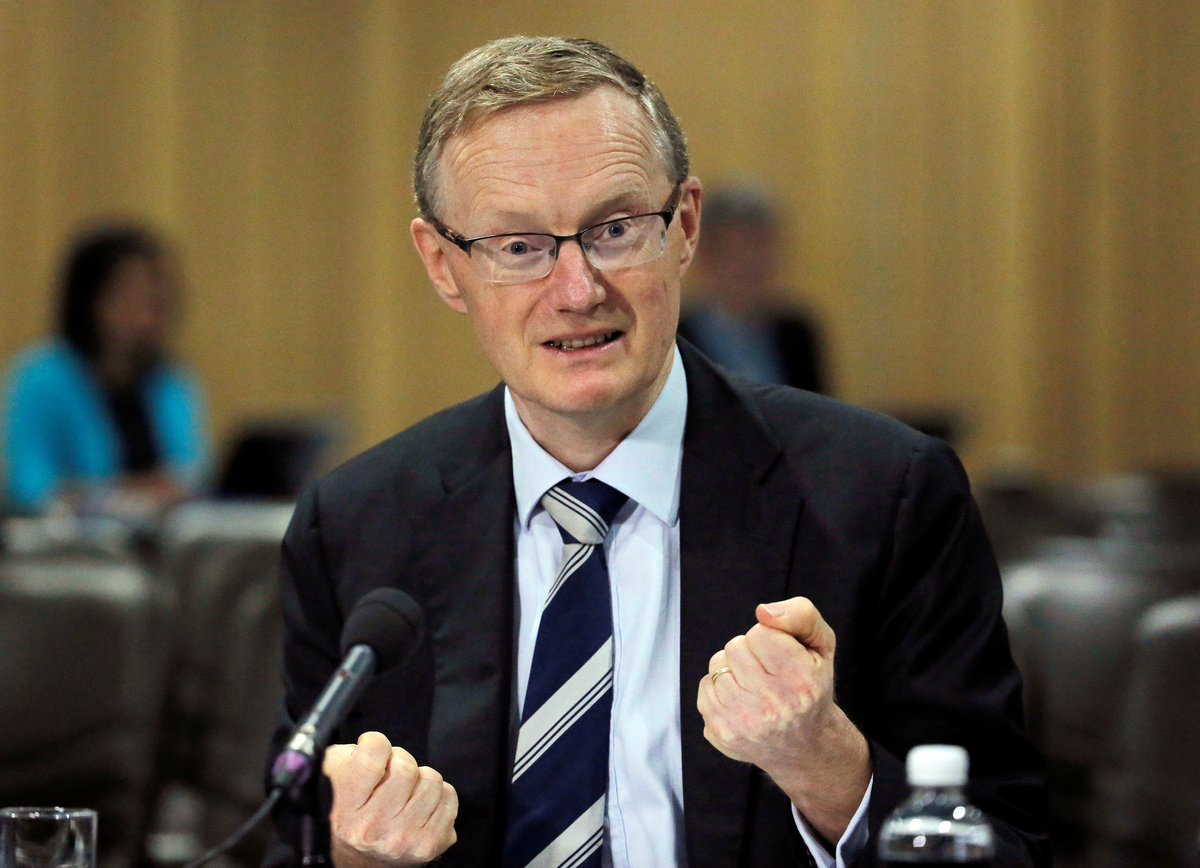
WASHINGTON (Reuters) - Reserve Bank of Australia Governor Philip Lowe said on Thursday that it was "extraordinarily unlikely" that negative interest rates would be implemented to meet the country's inflation and growth targets, adding that low rates alone were unlikely to stimulate investment.
"I'm not going to speculate on ... negative interest rates and quantitative easing in Australia, other than to say that negative interest rates are extraordinarily unlikely in my country," Lowe said during a presentation at the International Monetary Fund and World Bank fall meetings in Washington.
Lowe said that without non-monetary actions to stimulate investment by reducing risk premiums associated with new capital investment, there is a serious risk that monetary policy will become "overburdened."
Steps should be taken to reduce trade and geopolitical uncertainties, and structural reforms should be made to improve business investment climates, he said.
"In my view we're now clearly in the world of diminishing returns to monetary easing," Lowe said. "If that’s right, then the solution to the problem lies elsewhere. That’s creating an environment that encourages investments."
"Without progress on this front, the main effect of lower interest rates is to push up the price of existing assets, rather than encouraging investments in new assets, which is what’s needed," Lowe added.
The IMF has recommended that central banks and finance ministries employ more macro-prudential policies to try to mitigate the risks of an extended low-rate period, which is encouraging more risky loans to satisfy a market thirsty for higher yields.
Lowe said he was not optimistic that macro-prudential tools could effectively mitigate such risks, partly because more of these reside in market-based financing sources outside bank regulators' purview. Such tools also would blunt the stimulative effect of lower rates, he added.
"It would seem curious to me to lower interest rates to stimulate our economy, and simultaneously say 'We're very worried about borrowing,'" Lowe said.
(Reporting by David Lawder; Editing by Paul Simao)