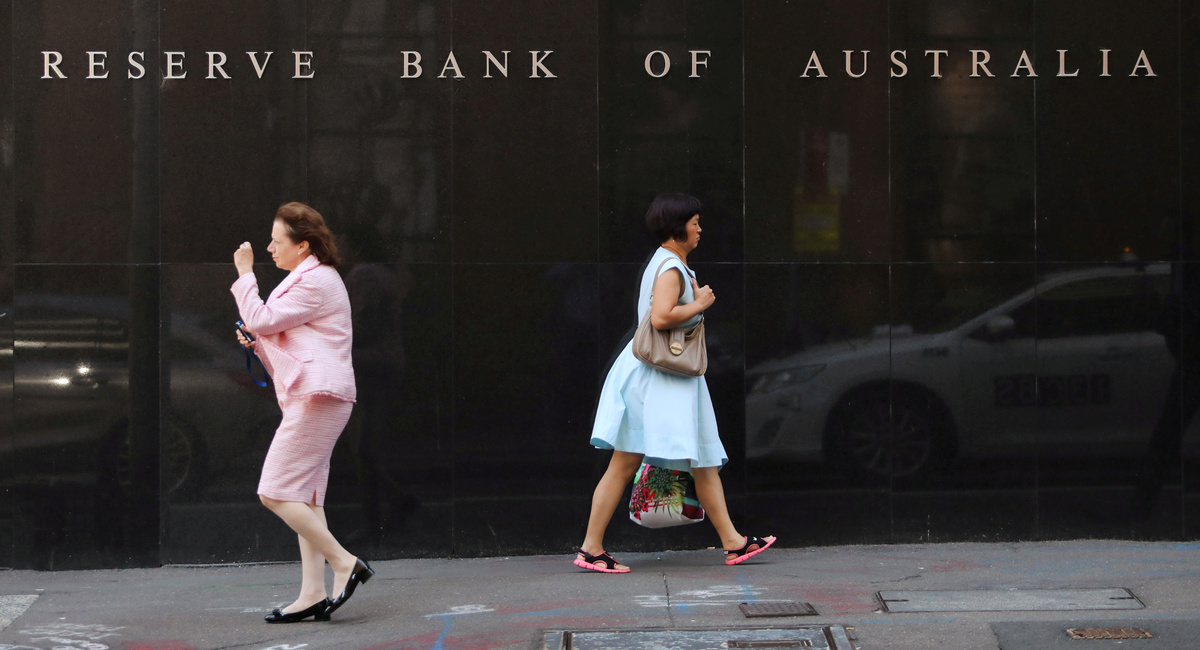
SYDNEY, (Reuters) - Australia's central bank discussed unconventional monetary policies, including negative interest rates, at its August board meeting as it left the door ajar for further easing having already cut rates twice to 1%.
Minutes of the Reserve Bank of Australia's (RBA) Aug.6 meeting showed it would consider further cuts to interest rates if it was needed to support growth and achieve its 2% to 3% inflation target.
The RBA left interest rates at all-time lows earlier this month after easing by a quarter point in both June and July.
Financial markets <0#YIB:> are fully priced for another rate cut to 0.75% by year-end, and to 0.5% by February.
Economists polled by Reuters prior to the August meeting predicted a third cut would come in November.
The RBA was tight-lipped about the timing of the next move, saying only that it would consider a further easing "if the accumulation of additional evidence suggested this was needed" to support its growth and inflation targets.
This implied that a September cut might be unlikely.
The country's A$1.9 trillion economy ($1.3 trillion) is expanding at its weakest pace since the global financial crisis, weighed by a long downturn in the property market and sluggish household consumption.
RBA policy makers have repeatedly singled out consumption as one of the biggest domestic uncertainties for Australia's stuttering economy.
The prospect of further reductions have stimulated debates on how low rates can go in Australia and the benefits from ultra easy monetary policies.
The RBA board reviewed the experience of other advanced economies with unconventional policies such as very low and negative rates, explicit forward guidance, buying government bonds and providing long-term funding to banks, the minutes showed.
"Members noted that a package of measures tended to be more effective than measures implemented in isolation," the minutes showed.
"Finally, it was important for the central bank to communicate clearly and consistently about these measures."
The RBA has already taken a step towards forward guidance. The minutes showed "it was reasonable to expect that an extended period of low interest rates would be required in Australia."
Last week, some economists, including at the Commonwealth Bank of Australia <CBA.AX>, revised their outlook to price in steeper RBA rate cuts following an escalation in an ongoing Sino-U.S. trade war.
The RBA Board saw the trade dispute as increasing the downside risks to global growth, noting businesses around the world had already significantly cut back investment plans.
(Reporting by Swati Pandey; Editing by Wayne Cole)