“Stay overnight,” I urge. “You will feel much better tomorrow.”
But she is adamant. “I will be fine. I’ve fallen before.”
“Can we get you some help?”
“No. I have trouble keeping appointments. Don’t waste your time on me.”
“At least show me you are steady on your feet.”
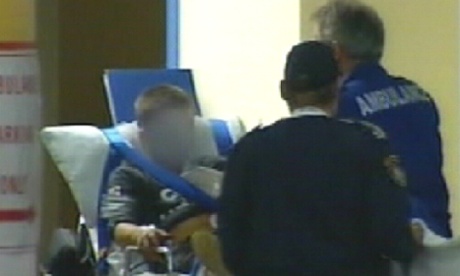
She had drunk a bottle of vodka before lunchtime – “I just felt like it.” A bruise has started unrolling on her face on which she fell. She clutches her chest gingerly as she sits up. The intern reflexively springs to her side as she teeters to a standing position. Dismayed, we watch her walk, nearly fall, and walk again, determined to get out. Then she signs herself out, mercifully after accepting a bag of intravenous fluids to prop up her blood pressure.
“Take care,” I say unconvincingly, fearing she will be back with a bleed or a fracture. It all feels like bad medicine but then I can’t help wondering how much we could help her in our acute hospital setting anyway. Addiction services would counsel her and connect her with an outpatient service that has a long waiting list and reasonably banks on individual responsibility to turn up. Many patients don’t make it there. Effecting long-term behavioural change calls for enormous patience, understanding and a non-judgemental attitude. Despite our ideals, it’s hard to summon these on a hectic ward where the emphasis is on patient throughput. The more I see such patients, the more I doubt the value of hospitalisation beyond stopgap measures.
Yet it’s no secret that Australians have a drinking problem. Twenty per cent drink excessively over their lifetime and nearly half reported drinking excessively on a single occasion in the past year to cause acute harm. Add cigarettes and illicit drugs to the mix and a staggering 40% of Australians engage in risky health behaviour according to the Australian Health and Welfare Institute.
Public holidays and the Christmas festive season fill hospital staff with dread, none more so than frontline emergency room professionals. I will never forget the New Year’s Eve night shift I worked as a junior doctor. Just as the consultant predicted, drunks started rolling in from early evening until the emergency room was filled with a cacophony of yells and profanities. As the clock struck midnight, one patient suffered a respiratory arrest after vomiting.
When everyone rushed to assist, another drunk protested at the delay in being served a sandwich by urinating on the floor, causing a porter to slip. It might pass for an amusing skit on the perils of being an emergency care worker if it weren’t for the serious consequences of alcoholism all around.
That same night, a cancer patient endured a long wait with a chest brimming with malignant fluid. Gasping for breath, she got neither a moment’s rest nor the urgent chest drain that she needed. The old man with asthma was forced to wait longer as did the little boy who fell off his new bike and broke his arm. I realised with dismay that the ratio of drunk to sober patients was so skewed that no amount of extra staff could keep up with the exhausting requirements of dealing with irrational and abusive people who had chosen to put themselves in that situation. I could see why the regular emergency staff felt resentful.
Many years on, emergency physicians writing in the Medical Journal of Australia, warn that the problem is getting worse. In a snapshot study performed at 2am on a Saturday night in more than 100 emergency departments in Australia and New Zealand, one in seven emergency presentations was alcohol-related. Alarmingly, nine Australian hospitals distributed across five states and territories reported alcohol-related presentations as representing more than a third of their emergency workload.
Every emergency department doctor and nurse has a story to tell about suffering verbal abuse or physical violence at the hands of the drunk. A pregnant nurse is threatened with a punch; a doctor is knocked unconscious while another doctor and nurse attempting to calm a patient are warned of retaliation in the parking lot. Verbal harassment is depressingly routine and an unsavoury but practical reality of being a modern emergency worker. Ward rounds and the peace of other patients in the hospital are disrupted every hour by urgent overhead calls for security guards.
Aggressive and irrational patients typically require more intensive staffing, diverting attention from others. Young children and the elderly, particularly those suffering from dementia and are easily unsettled, find emergency attendance a harrowing experience. When intoxicated patients are sent to the medical wards to recover, their stay is task-intensive and often unrewarding. They disturb other patients, bicker with staff, and frequently abscond, setting in chain more urgent measures that are not designed to achieve long-term goals.
Emergency doctors know that their department is not the ideal place for addressing the widespread misuse of alcohol in Australian society. As a physician who inherits their patients on the medical ward, I believe that the acute hospital system as a whole is a poor place for alcohol education and rehabilitation. The hospital is like a revolving door for those who present with signs of alcohol misuse or abuse. We remedy their most obvious complaints like the bleeding cut and the withdrawal symptoms, counsel them as sincerely as we can and send them on their way, only to have them re-present worse off.
As we enter the period when we are most likely to overindulge in alcohol, it is worth remembering a few tips. Australian guidelines recommend drinking no more than two standard drinks of alcohol in a day and no more than four standard drinks in a single sitting. A standard drink contains 10 grams of pure alcohol. There is no standard glass size and a drink may contain multiple standard serves of alcohol. The best advice for those under 18, as well as pregnant and breastfeeding women, is not to drink. Lastly, emerging evidence suggests that the health benefits of alcohol have previously been overestimated. Resist taking up drinking for its potentially salutary effect.
Doctors and patients both recognise that the acute hospital is not where a lifetime’s behaviour is changed. For this, we need to take a hard look at the culture of drinking and the way it is intertwined with sport and celebrations. Robust public health measures including preventive health are vital. And as many recalcitrant and reformed alcoholics will attest, personal responsibility underpins all of the above. The good news is that even people who drink excessively are not necessarily addicts, and can change with the help of positive messaging backed by purposeful support.