SYDNEY (Reuters) - Australian retail sales bounced in October after months of lukewarm demand, a bright sign for spending in the upcoming holiday season as Amazon.com Inc <AMZN.O> opened its doors for business.
The better-than-expected sales came as the Reserve Bank of Australia (RBA) held rates steady at 1.50 percent for the fifteenth straight meeting as inflation remained sluggish.
"The low level of interest rates is continuing to support the Australian economy," Governor Philip Lowe said in the monthly policy statement.
Policy makers got some encouraging signs with Tuesday's data from the Australian Bureau of Statistics (ABS) showing retail sales rose 0.5 percent in October to around A$26 billion ($19.9 billion), from September's upwardly revised 0.1 percent gain.
That was the strongest lift since May and above expectations for a 0.3 percent increase. Sales were up across every sector with clothing and eating out particularly strong.
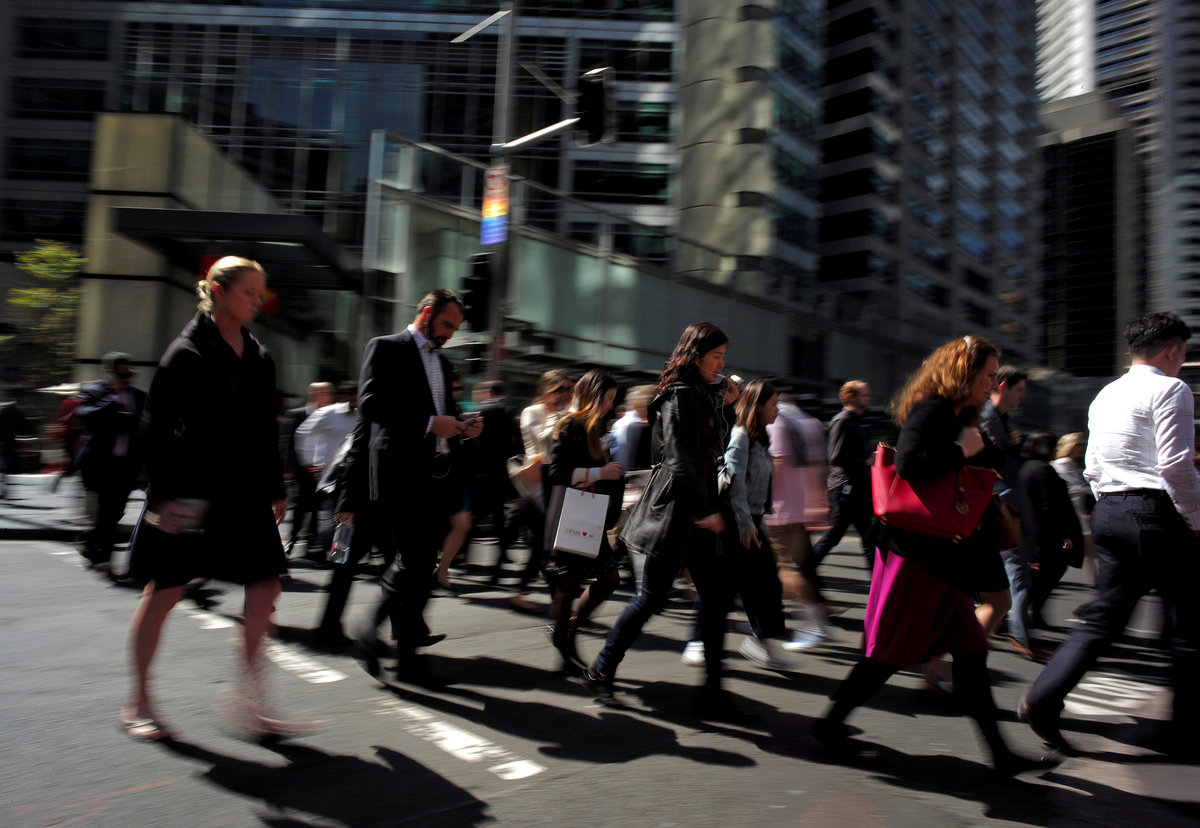
Australia's brick-and-mortar retailers have been struggling amid cutthroat competition and as relentless price discounts fail to entice customers facing paltry wage growth and mountains of debt.
There are fears Amazon's entry could further stifle traditional retailers and suppress prices and inflation.
The retail behemoth started taking online orders on Tuesday, ending breathless speculation about its arrival in the world's twelfth biggest economy.
Oddly, the ABS does not yet include online data in its headline retail series even though they account for more than 7 percent of total sales.
That means Amazon will not feature in the monthly figures, though internet sales are easily the fastest growing segment of the market.
The ABS does have an experimental estimate of online retail turnover and that jumped 11.3 percent in October to almost match last year's Christmas sales in dollar terms.
"Overall, the result suggests some of the headwinds impacting retail eased in October," Westpac economist Matthew Hassan said.
"The near term outlook still looks far from positive though with weak wages growth and a slowing housing market...to impact demand, and new entrants, most notably Amazon, set to intensify price competition."
GDP AHEAD
Household consumption remains a key source of uncertainty for the RBA as it stood pat on rates at its final meeting of the year.
Governor Lowe sounded optimistic about the economy, and expects a recent run up in employment to finally lift wage growth over time and help boost stubbornly low inflation.
Core inflation has undershot the RBA's 2-3 percent target for two years and is currently running at an average 1.85 percent.
Figures for gross domestic product (GDP) due on Wednesday are forecast to show Australia's economy expanded by a solid 0.7 percent in the third quarter, from the previous quarter.
That would see annual growth accelerate smartly to 3 percent, with a rare contraction from the third quarter of last year falling out of the calculation.
"Recent data suggest that the Australian economy grew at around its trend rate over the year to the September quarter," Lowe said. "The central forecast is for GDP growth to average around 3 percent over the next few years."
Doing its part to promote growth was the public sector as it spent big on infrastructure. Analysts estimated government spending on investment rose over 5 percent in the third quarter, while consumption spending edged up 0.2 percent.
That impulse to growth should have helped offset a slightly disappointing trade performance, with net exports adding nothing to GDP when analysts had looked for a contribution of around 0.25 percent.
Strength in resource and service exports still helped the country run a trade surplus of A$3.1 billion last quarter, while the current account deficit narrowed slightly to A$9.1 billion.
(Reporting by Swati Pandey; Editing by Kim Coghill & Shri Navaratnam)