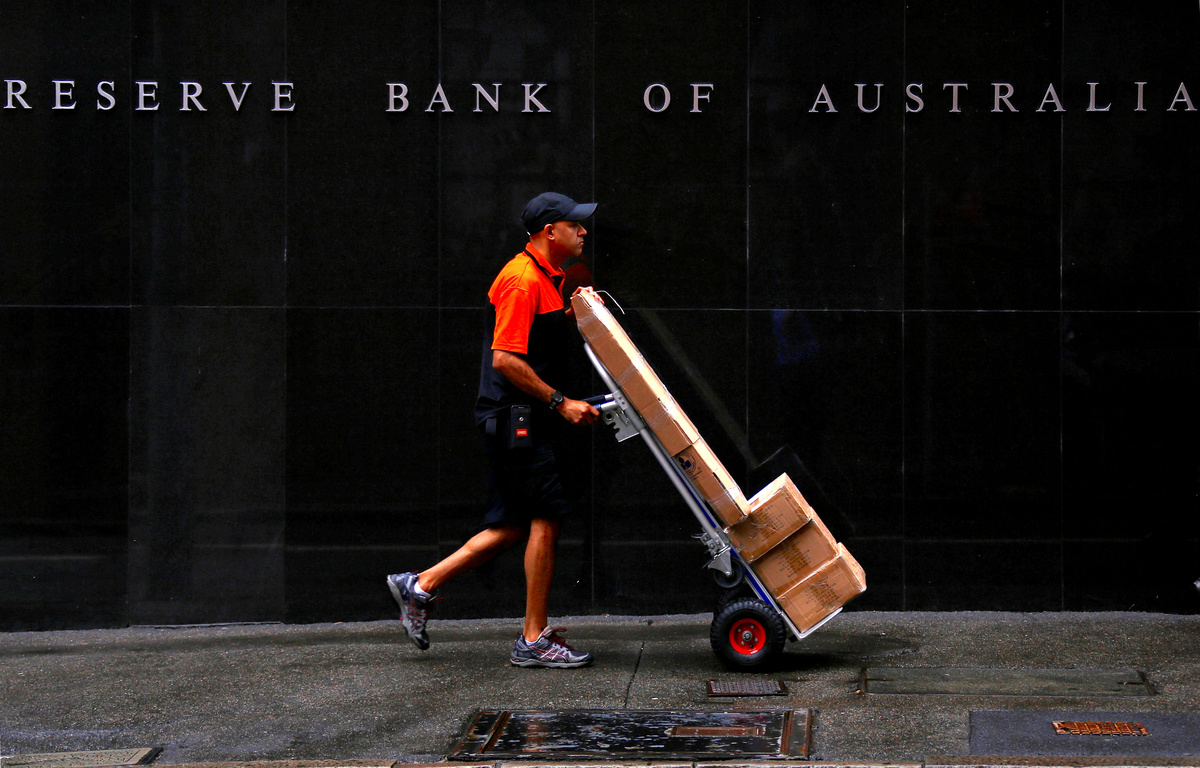
SYDNEY (Reuters) - Australia's central bank believes a cut in interest rates would be "appropriate" should inflation stay low and unemployment trend higher, though there was still no strong case for a move in the near term.
The Reserve Bank of Australia (RBA) also sees the likelihood of a higher cash rate in the near-term as low, marking a dovish turn in policy compared to last month when it saw the risks for rates to move in either direction as more evenly balanced.
Minutes of its April policy meeting released on Tuesday showed members acknowledged the effect of an even lower cash rate on the economy could be smaller than in the past given high household debt and crumbling property prices.
"Nevertheless, a lower level of interest rates could still be expected to support the economy through a depreciation of the exchange rate and by reducing required interest payments on borrowing, freeing up cash for other expenditure," the minutes showed.
The dovish slant sent the Australian dollar down a third of a U.S. cent to the day's low of $0.7140.
The change in the RBA's language also lengthened the odds for an easing later this year with a full 25-basis-point cut expected by October.
"The minutes of the RBA's April meeting suggest that it won’t take much for the bank to cut interest rates," said Marcel Thieliant, Singapore-based senior economist at Capital Economics. "We expect the RBA to cut the cash rate to 0.75 percent by early next year, starting in August."
The RBA is caught between a weakening economy led by tepid consumer spending and a strong labour market, prompting it in February to put an easing on the table, having kept rates at a record low 1.5 percent since mid-2016.
In two public outings this year, RBA Governor Philip Lowe had said there was an equal probability for the cash rate to move in either direction depending upon how the economy panned out.
But the RBA changed tack on Tuesday to say: "Members agreed that the likelihood of a scenario where the cash rate would need to be increased in the near-term was low."
Many of the RBA's global peers, including the U.S. Federal Reserve, have taken a marked dovish turn in recent months citing a slowdown in world growth.
The RBA reiterated its central scenario was for further gradual progress on both unemployment and inflation, while emphasising that a pick-up in household disposable incomes was "an important element" of its forecasts.
Annual wage growth of 2.3 percent in Australia is only slightly higher than inflation which is lingering just under 2 percent.
RBA members expect inflation to remain low for some time.
First-quarter data on consumer prices index due next Wednesday is expected to show headline inflation slowed to 1.50 percent from 1.8 percent in the previous quarter to undershoot the RBA's 2-3 percent mid-term target.
(Reporting by Swati Pandey and Wayne Cole; Editing by Kim Coghill)