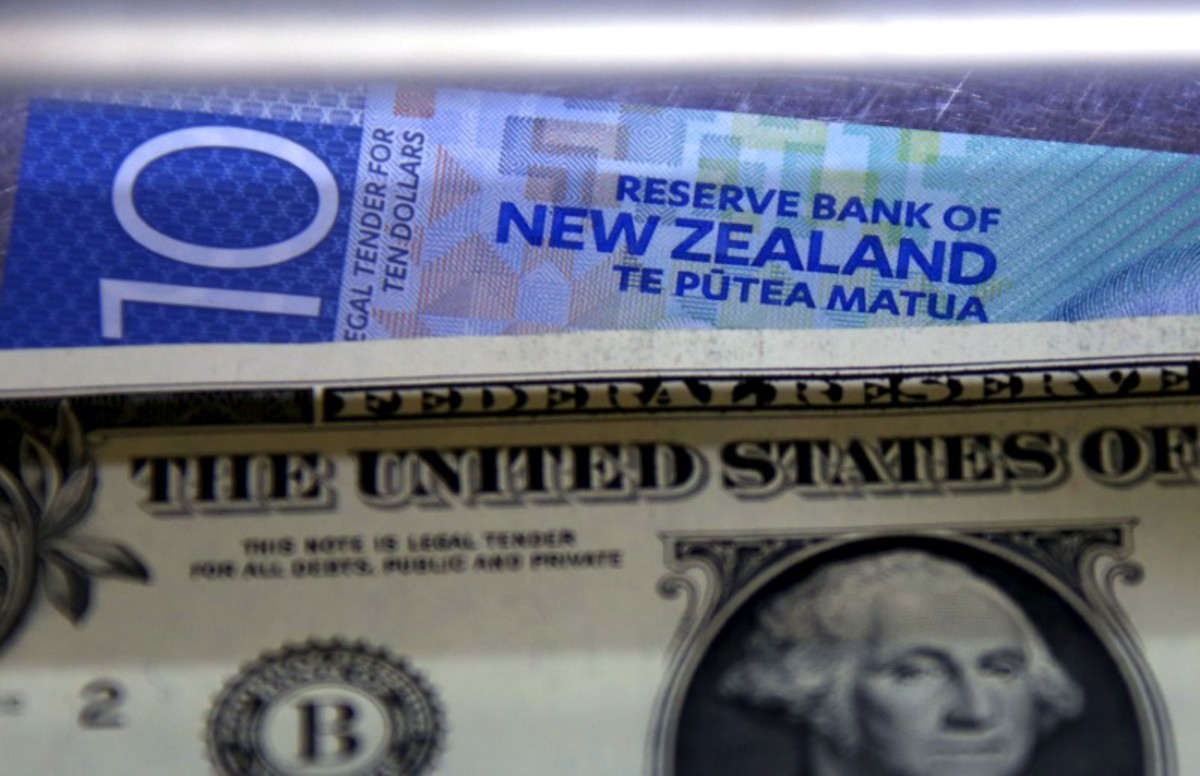
SYDNEY (Reuters) - The Australian and New Zealand dollars were fighting desperate rearguard actions on Wednesday as strains in emerging markets darkened the outlook for global growth, while a strengthening U.S. currency piled pressure on commodity prices.
The Aussie dollar <AUD=D3> retreated to its lowest since early 2017 at $0.7203 having shed more than two cents since the slide in the Turkish lira started grabbing headlines last week.
Bears were now eyeing a $0.7160 trough from December 2016 and another at $0.7145 hit in May of the same year.
"I can't help but draw the conclusion that the Aussie is under pressure because folks are genuinely concerned about the outlook for the global economy," said Greg McKenna, chief market strategist at CFD and FX provider AxiTrader.
"I've had the $0.7125/50 region as a target for some time."
Both Australia and New Zealand are heavily reliant on resource exports and are leveraged to world demand. They also have liquid, easily traded currencies which investors use to hedge risks in emerging markets.
With the Turkish lira, Argentine peso, South African rand, Chinese yuan and Indian rupee all under pressure, the inclination has been to sell Aussie and kiwi as a proxy.
The kiwi dollar <NZD=D3> touched its lowest since February 2016 at $0.6550 and looked destined to test major chart support around $0.6545. The next big target is a low from January 2016 at $0.6348.
The Aussie also got some unhelpful news at home when data on wages for the second quarter showed annual growth stuck at a miserly 2.1 percent, well below levels that would ensure a much-needed acceleration in inflation.
The head of the Reserve Bank of Australia (RBA) has argued that wages need to be growing around 3.5 percent for inflation to reach even the midpoint of the central bank's 2 to 3 percent target band.
"Labour market dynamics suggest that wages growth is unlikely to start with a '3' anytime soon," said Su-Lin Ong, head of Australian strategy at RBC Capital Markets.
"Various structural headwinds suggest limited momentum in wages growth even if the unemployment rate continues to edge lower," she added.
"Indeed, the international experience continues to bear this out and suggests that the RBA will likely remain on the sidelines for some time."
The implied probability of a rate hike now does not reach 50-50 in the futures market <0#YIB:> until December next year. A month ago, it was implied for August.
Likewise, Australian 10-year bond yields <AU10YT=RR> have dropped around 20 basis points in the last couple of weeks to reach 2.57 percent, near the lows for 2018.
Australian government bond futures rallied further on Wednesday, with the three-year bond contract <YTTc1> up 2 ticks at 97.985. The 10-year contract <YTCc1> firmed 2.5 ticks to 97.4350.
New Zealand's 10-year government bond yields <0#NZTSY=> this week touched their lowest since late 2016 at 2.575 percent.
(Editing by Sam Holmes)