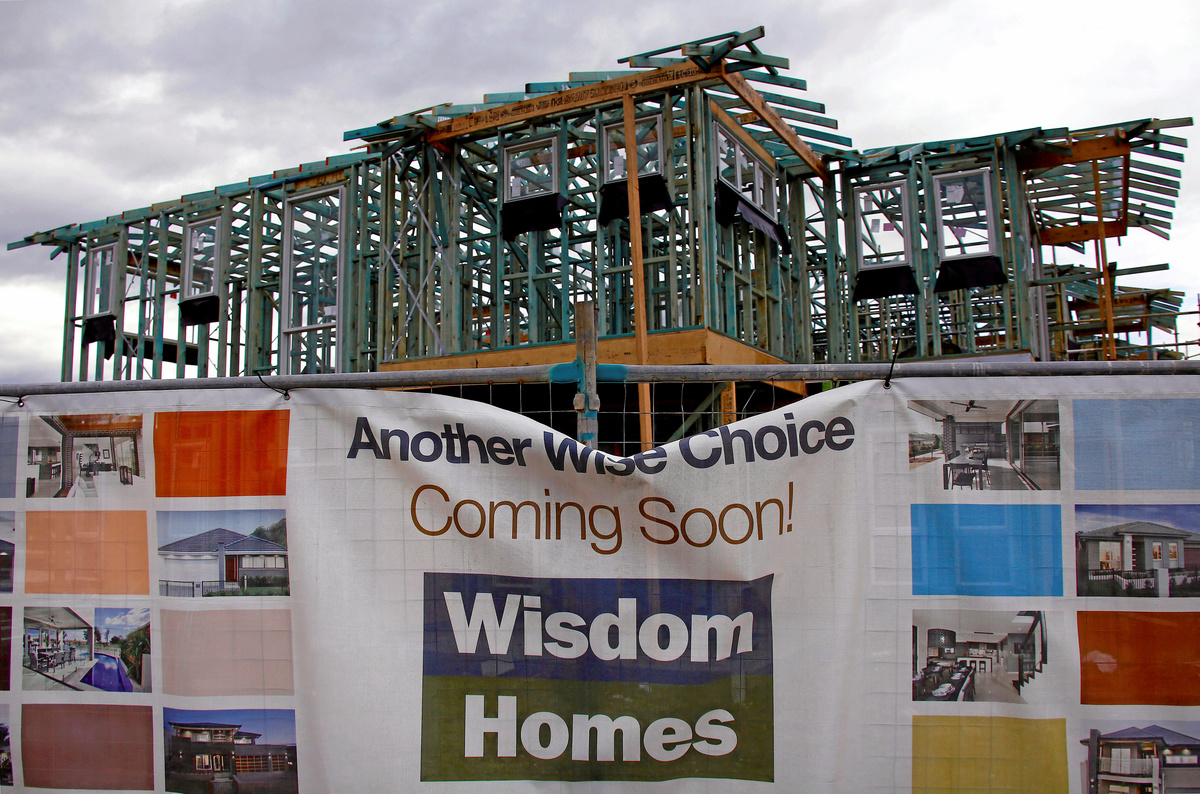
SYDNEY (Reuters) - Australian building approvals slumped to the lowest in more than five years in November as softer investor demand and falling home prices hit activity in a bad omen for the broader economy.
Building approvals plunged a sharper-than-expected 9.1 percent in November to 15,465 - a level not seen since August 2013, data from the Australian Bureau of Statistics (ABS) showed on Wednesday. That confounded expectations for a mere 0.5 percent fall.
Approvals skidded almost 33 percent from a year ago, the biggest annual decline since the 12-months to January 2009.
Housing had been a major driver for the A$1.8 trillion ($1.29 trillion) economy with sprawling construction activity boosting jobs and demand for household goods and appliances as it transitioned away from a once-in-a-generation mining boom.
But Wednesday's data suggested the rally has run its course.
"The cooling of the housing market will weigh on the economic outlook for 2019, including a likely trend decline in new home building activity," Westpac said in a note to clients.
Australian housing prices are easing after a long boom that began in 2012, with nationwide values down about 5 percent led by tighter credit conditions.
"High rise developments, which have been a key driver of this cycle, are correcting lower with further falls ahead as suggested by weaker site purchases by property developers," Westpac added.
Permits for building private houses fell 2.6 percent in November after a small uptick the previous month.
Many analysts expect home prices to ease further as banks become ever more cautious about lending amid a high-level government inquiry that has unearthed a raft of scandals at the country's biggest lenders.
Citi expects a peak-to-trough house price decline of 15-20 percent in the biggest markets of Sydney and Melbourne. They are down about 7-11 percent now since peaking late last year.
The correction is still likely to be "orderly" though, given the unemployment rate is near a 6-1/2-year low and the broader economy is jogging at a decent pace.
On the bright side, non-residential permits rose in November with office and warehouse approvals holding up, the data showed.
Separate figures from the ABS on Wednesday showed job vacancies in Australia surged to a fresh all-time peak in the three-month period ended November in a promising sign for labour demand.
Analysts value the vacancies series as it has proved a reliable leading indicator of labour demand and turning points in employment growth.
($1 = 1.3976 Australian dollars)
(Editing by Jacqueline Wong)