Summary for Sunday, 12 December
We are going to close this blog now. Thanks all for your company, comments and correspondence. Be well, all of you.
To leave you, here’s a summary of today’s developments:
- The waiting time for Covid-19 vaccine booster shots in Australia has been cut from six months to five.
- Queensland will open its borders to fully vaccinated travellers, who won’t have to quarantine, from 1am Monday. Up to 50,000 travellers are expected to enter the state over the next few days.
- The Omicron variant has hospitalised its first patient in Australia, a person in NSW.
- Victoria will drop hotel quarantine for travellers arriving from the nine southern African countries listed as of concern for Omicron.
- Moderna has been confirmed by Atagi as a booster shot for anyone aged over 18.
- Large anti-vaccine mandate protests were seen in Melbourne and Sydney.
Updated
If you got your second dose in July, it's time to get your booster.
— VicGovDH (@VicGovDH) December 12, 2021
ATAGI - Australia's technical advisory group on immunisation - has this weekend recommended a five month interval between second and third doses of the COVID-19 vaccine, reduced from six months. pic.twitter.com/1EoJu7D9dq
My colleague Daniel Hurst is asking a valid question here...
Is this the internationally accepted unit of measurement of drug incineration? (From the AFP release today) pic.twitter.com/ScvIV3b9In
— Daniel Hurst (@danielhurstbne) December 12, 2021
Updated
I’m finishing up for today and handing the blog back to Ben Doherty.
Stay well, everyone!
Updated
The biggest story of today is definitely the announcement that the waiting time for Covid-19 vaccine booster shots in Australia has been cut from six months to five.
This has been done in a bid to keep people protected against the virus and slow its spread as the Omicron variant emerges.
Got questions? We probably answered them in this handy explainer. Check it out here:
WA to open borders once state hits 90% fully vaccinated
As I reported early this morning, Western Australia has closed its borders to Queensland following a rise in local cases there.
Those coming from Tasmania are the only people (in the world) who can travel to WA without quarantining.
But premier Mark McGowan did promise to reopen the border once 90% of eligible West Australians are fully vaccinated.
He will set a date for this once WA hits 80%, which will be soon because 79.62% are currently fully vaccinated.
Updated
Liberal federal member for Brighton James Newbury will once again run at the next election, despite a preselection challenge.
I am humbled and grateful to be re-endorsed as the Liberal candidate for Brighton. My wife Suzanne and I love our community and we will continue to work every day to make Brighton a better place to live. https://t.co/B4O2FBWPeM
— James Newbury MP (@newbury3186) December 12, 2021
Newbury received 115 votes of 195.
James Newbury received 115 votes to Felicity Frederico’s 66 and Colleen Harkin’s 14. https://t.co/nvxwCjMAI2
— Sumeyya Ilanbey (@sumeyyailanbey) December 12, 2021
Updated
SA records 10 new Covid cases
AAP reports:
SA Health on Sunday confirmed the new cases are two children, a teenager, four men aged between 20 and 50 and three women after between 20 and 70.
Six are close contacts of a positive case and one acquired their infection interstate, while the remaining three cases are under investigation.
It brings the total number of active cases in the state to 64, including three people in hospital.
SA Health said a team would be sent to Indulkana in the APY Lands in the state’s far north-west to support increased testing and vaccination after Covid-19 was detected in the wastewater in the past week.
Updated
Hundreds of protesters have also marched on the Gold Coast today, ahead of the Queensland border reopening for vaccinated travellers at 1am on Monday.
Social media posts also show protesters at Tweed Heads in NSW.
Updated
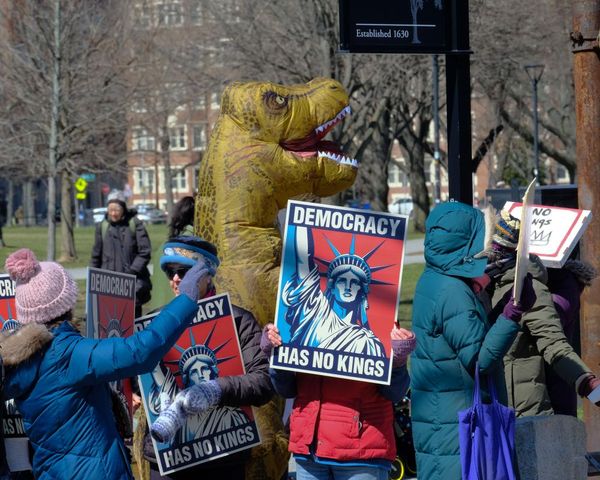
Large anti-vaccine mandate protests held in Sydney and Melbourne
Protesters have taken to the streets in large numbers in Sydney and Melbourne to rally against Covid-19 vaccine mandates and passports.
The protests this afternoon have been dubbed the “reclaim the line” rallies. Protesters met at Hyde Park in Sydney.
Meanwhile, protesters in Melbourne gathered at state parliament with signs that said things like “we can stop vaccine passports” and “we can reignite democracy”. They began marching down Bourke Street about 12.20pm, reportedly chanting “free Victoria”.


Updated
16+ pop💉12/12
— CovidBaseAU 🦠📊🇦🇺 (@covidbaseau) December 12, 2021
20,205,2751️⃣st (🔼9,146)
🇦🇺93.32%
NSW: 94.77%
VIC: 93.57%
QLD: 88.32%
WA: 88.51%
SA: 91.10%
TAS: 95.91%
ACT: 100.66%
NT: 88.42%
19,262,4152️⃣nd (🔼24,114)
🇦🇺89.21%
NSW: 93.14%
VIC: 91.74%
QLD: 81.23%
WA: 79.82%
SA: 84.52%
TAS: 90.13%
ACT: 99.00%
NT: 81.10% pic.twitter.com/w62RKt2lJJ
The Australian federal police have burned $5.2bn worth of drugs, AAP reports.
The AFP burned 25.8 tonnes – the weighing of four adult male African elephants – worth of licit drugs in 2021 found on Australian shores.
The destruction program estimates the value of methamphetamine, MDMA, amphetamines, cannabis and fast-acting stimulants found at more than $5 billion.
Using furnaces that reach up to 1400C, AFP officers were on site as the drugs went up in a filtered smoke then safely released.
The eastern command in NSW dominated Australia’s illegal drug trafficking market, with police burning 19.4 tonnes this year.
The AFP said their burning program was the culmination of efforts to stamping out organised crime in Australia.
Updated
The Australian government is staring down calls to intervene to secure Julian Assange’s freedom, after a British court cleared the way for the WikiLeaks co-founder to be extradited to the US to face espionage charges.
The government said it was monitoring the Australian citizen’s case closely, but would “continue to respect the UK legal process – including any further appeals under UK law” – and emphasised Australia was “not a party to the case”.
Read the full story from Daniel Hurst here:
ACT records one new Covid-19 case
ACT COVID-19 update (12 Dec 2021):
— ACT Health (@ACTHealth) December 12, 2021
◾ New cases today: 1
◾ Active cases: 70
◾ Total cases: 2,073
◾ Negative test results (past 24 hours): 1,207
◾ In hospital: 4
◾ In ICU: 2
◾ Ventilated: 0
◾ Total lives lost: 12
ACT COVID-19 vaccinations: 98.2% of 12+ fully vaccinated pic.twitter.com/fJO4E8CyB5
Speaking of Victoria, let’s take a closer look at today’s Covid-19 cases.
Victoria reported 1,069 new locally-acquired Covid-19 cases today. This brings the total number of active cases in the state to 11,393.
There are 310 people admitted to hospital with Covid, with 74 active cases in ICU. Of those, 37 are on a ventilator.
Two people with Covid-19 in their 70s and 80s have tragically died.
Victoria drops hotel quarantine for arrivals from southern Africa
In Victoria, from 11:59pm tonight, fully vaccinated travellers from South Africa, Namibia, Zimbabwe, Botswana, Lesotho, Eswatini, Malawi, or Mozambique will no longer be required to undertake 14 days in hotel quarantine.
In a statement, the state’s health department said that travellers arriving from these countries will follow the rules applying to travellers arriving from other countries.
If fully vaccinated, they must self-quarantine at home or at a private accommodation for 72 hours, get tested within 24 hours of arriving, and get tested again between days five and seven after arriving.
Updated
As Jen King has pointed out, the updated Queensland entry pass (the one you need to be able to cross the border from 1am) will only become available one hour before).
I’ll admit when @QldGov said ‘live at midnight on Sunday’ I thought 00.01am today - not one hour before the border opens! I’m a little incredulous at such cruelty and insensitivity. With such a tiny window, people must be extremely anxious about when they’ll cross #qldborder pic.twitter.com/fOiQ9DUorh
— Jen King 💌🏊🏻♀️ (@JustJenKing) December 11, 2021
King has been speaking to people on the border. She says “many are desperate and in a highly agitated, anxious state. Also, where to print a pass at 12:34am while living in a tent?”
And please don’t accuse me of ‘dramatics’. I have spoken to these people who are waiting to get home, to see families, to reclaim their jobs, their lives … Many are desperate and in a highly agitated, anxious state. Also, where to print a pass at 12:34am while living in a tent?
— Jen King 💌🏊🏻♀️ (@JustJenKing) December 11, 2021
Updated
It’s Justine Landis-Hanley here again to bring you the blog this afternoon. Thanks again to Ben Doherty.
Reporter Jen King is at the NSW-Queensland border today for the Guardian, ahead of the Queensland border reopening at 1am (Monday morning).
Henry is 86 and wants to get into Qld to walk his niece down the aisle. He’s waiting until Friday to travel. Another family has been trying to relocate their disabled daughter for 6 months. They’re hitting the road as soon as pass comes through cc @GuardianAus #qldborder pic.twitter.com/SA3peTknYV
— Jen King 💌🏊🏻♀️ (@JustJenKing) December 12, 2021
Friendly and cheerful truckie at Chinderah says there’s potential for tension later today if northbound caravans continue to come and park in truck bays. Cc @GuardianAus #qldborder pic.twitter.com/xlAwPezbPs
— Jen King 💌🏊🏻♀️ (@JustJenKing) December 12, 2021
Updated
'These days won't last': Queensland treasurer warns Covid cases will rise as state reopens
As Queensland records one new Covid-19 case, and readies to reopen its borders, the state’s treasurer Cameron Dick has warned the days of low infection rates are set to end.
Tens of thousands of people are expected to enter Queensland in the days following the border reopening to the rest of the country from 1am on Monday.
The one overseas case of Covid-19 recorded in the 24 hours to 6.30am on Sunday is a man in his 30s who arrived from Nigeria.
Health authorities are closely monitoring the genomic sequencing to see if it is the Omicron variant.
Dick said it was “very good news” only one case had been detected, but warned the state border reopening meant “these days won’t last”.
It will be the first time in 229 days people will not need to quarantine on arrival, provided they are fully vaccinated.
“These days will finish as soon as the virus comes to Queensland,” Dick told reporters on Sunday.
He urged the 19% of eligible Queenslanders who have not yet been fully vaccinated to get the jab to minimise the spread of the virus.
Almost 81% of those eligible in the state have now received two doses.
Queensland’s police commissioner Katarina Carroll urged people wanting to visit the state from 13 December to be patient, travel outside peak hours, and expect extensive delays.
She estimated “tens of thousands” of people would be hoping to cross into the Sunshine State in the next few days.

The border pass system will become available online on Sunday evening and will provide different measures for separate areas.
Only those who are fully vaccinated, and provide a negative result to a Covid-19 test taken within the last 72 hours, will be admitted into the state.
There is only one international flight scheduled to land in Queensland on Monday, with 12 people on board, she said.
Deputy chief health officer James Smith said he expected more strain to be put on the public health system.
He said the state was still at least six months away from living comfortably with Covid-19.
Updated
At the beginning of her meeting with Blinken, Payne said it had been “a year of real highs”.

Payne said:
Can I say at the beginning though our deep condolences in relation to the terrible tornado impacts in the United States, the news is very distressing. These things always happen at the most awful time of year, and I feel deeply for those families who are impacted and I convey Australia’s deepest sympathies.
But we have achieved a great deal in 2021, whether it is the announcement of Aukus, a really important trilateral partnership that Australia has with the United States and the United Kingdom and the outcomes of our first Quad leaders meeting in person, held notwithstanding Covid but withstanding all of the challenges, and the really practical actions that enables us to take and work with partners in the region.
And I know that you and I and our friends from Japan and India really value those engagements. They are now cemented into our future, whether it’s the Quad, whether it is Aukus and the concrete that that is the Australia — United States Alliance, for us, underpins all of that effort. So looking forward to talking this evening and great to be here, back for the G7+.
Updated
Australia’s foreign minister Marise Payne and the US secretary of state Antony Blinken have agreed on “the importance of committing to ambitious climate action in the next decade”, according to the US.
They have also called for “peaceful resolution” of issues across the Taiwan Strait after a meeting in the UK.
Payne is in Liverpool in the UK this weekend to attend a G7 Foreign and Development Ministers’ Meeting.
She met with Blinken on the sidelines of the meeting. The US state department said the pair had met “to reinforce our ongoing efforts to promote peace and prosperity in the Indo-Pacific”.
The US readout said:
They discussed deepening the U.S.-Australia alliance, the importance of committing to ambitious climate action in the next decade, and the need for like-minded allies and partners to continue to defend, strengthen, and renew democracy around the world.
They expressed concern over Russia’s ongoing aggression against Ukraine and reiterated support for a peaceful resolution of cross-Strait issues without resorting to threats or coercion and emphasised Taiwan’s important contributions to global health development.
Both leaders recommitted to our joint efforts in the region and to build back better from COVID-19. They also agreed on the importance of having a Senate-confirmed Ambassador in place in Canberra as soon as possible in light of the scope and scale of shared challenges we face.
(The Biden administration is yet to name an ambassador to Australia but there has been speculation that it may nominate Caroline Kennedy, the former ambassador to Japan who happens to be the daughter of John F Kennedy.)
Updated
I’m going to hand the blog over to my brilliant colleague, Ben Doherty to bring you the news over lunch!
A bushfire in Tasmania’s north-west at Sisters Beach has burnt through more than 400 hectares. It’s currently burning in a south-westerly direction towards the Bass Highway @abcnews #tasfires
— Monte Bovill (@MonteBovill) December 12, 2021
Suspected Omicron case visited nightclub in Newcastle
Now that Hunt’s press conference is finished, let’s turn back to the case numbers that have come out of New South Wales today.
NSW Health announced that the Argyle House nightclub in Newcastle was visited by a confirmed case of Covid-19 likely to have the Omicron variant.
Anyone who attended the venue from 9pm on Wednesday 8 December until 3am the next morning must immediately get tested, isolate and await further advice from NSW Health.
NSW Health said that confirmed cases of Covid-19, linked to a previously reported outbreak on a party boat cruise on Sydney Harbour on 3 December, attended The Argyle House.
Updated
Hunt was asked whether the Coalition would be willing to deal with the crossbench should there be a hung parliament at the next election.
Hunt says that the much of the crossbench are “to the left of not just the Labor party, but to the left of the Greens”.
So I’ll take that as a no.
Updated
Finally, Hunt was asked about the next federal election, and whether he thinks that Labor could win.
The next election is ultimately a choice. It’s a choice between Scott Morrison as prime minister or Anthony Albanese as prime minister.
If you’re not voting for the Coalition, you’re voting for Anthony Albanese ... This is Anthony Albanese as prime minister with a huge hit to electricity prices, with no control of the budget, and with very weak international security and border credentials versus Scott Morrison, who has seen us through the pandemic, who, along with Josh Frydenberg, has outstanding economic credentials and they know how to create jobs, they know how to create income, and they know how to give people the best chance at the life of their choice.
Updated
South Korean president Moon Jae-in arrived in Canberra today. Hunt is asked what he and Morrison will discuss.
Hunt says they will be discussing three things:
One is the global response to Covid, South Korea has been another standout country in their protection. Two is regional security and looking at a peaceful cooperative arrangement. And third is economic opportunity: how do we work together to boost jobs and to boost income in both countries?
Updated
Murphy says that there isn’t any good evidence to suggest that it is better to have a Pfizer booster if you had Pfizer for your first two shots.
If you had Pfizer or AstraZeneca or Moderna as your primary course, you can have either Pfizer or Moderna as a booster. The evidence would suggest that there’s no clear difference. So depends what’s available and people sometimes might have a preference.
Adding to that, Hunt says that Pfizer and Moderna are both considered “universal boosters”.
None of us think about the brand of our flu vaccine, we shouldn’t be thinking about the brand of our Covid vaccine.
Updated
Reporter: “Last week Atagi advised that there was no evidence to bring forward boosters. I’m wondering what’s changed since last week? Have you had access to data that you didn’t have last week? And on a related point - is this also about lapsing demand for boosters once we get to that heightened increase next year around March?”
Hunt:
No, this is based off the latest international evidence. We tasked Atagi with reviewing weekly exactly as Professor Murphy has said the emerging data and evidence and we have seen from Pfizer and we have seen from the international evidence emerging data in relation to the optimal time period.
The health department secretary Brendan Murphy says that over the last week, Atagi has had access to “what we call the laboratory in-vitro neutralisation data, which is a complicated way of saying tests in the lab to see how the immunity from the primary vaccination declines over time, particularly in relation to Omicron”.
Atagi felt that there was a good reason to get people boosters if possible before that six-month mark so they felt bringing it forward to five months was worth doing and particularly based on some data out of Israel which showed that is a very good time.
Updated
Hunt is asked how many doses of Pfizer and Moderna we have in Australia at the moment.
He says Australia has so far received 7.2m Moderna doses and approximately 40m Pfizer doses. In addition, we have more than 28m AstraZeneca doses.
Hunt adds that:
We’re sharing those doses overseas and we’re also making sure that there’s enough for all Australians. So we have enough already to deal with all of the possible demand for primary doses or boosters inAustralia and in terms of our international supply, overseas, we have now past the 10 million mark of doses provided to our Pacific and south-east Asian neighbours.
Updated
Hunt is asked whether Australia is still planning on sending expiring mRNA doses to our neighbours in the Pacific and south-east Asia, and whether shortening the dosage interval will mean fewer doses can be sent?
Hunt suggests the announcement today makes no difference to that plan.
We have 151m doses that have been set aside for boosters. There’s enough for all Australians. It makes no difference to the number of boosters that are expected to be had. It just brings that time frame forward and we have sufficient in the country now to meet all of the needs and so we’re well stocked in terms of AstraZeneca for the primary doses, Pfizer and Moderna and we’re in a very strong place in relation to those and at the same time we’re continuing to meet our international commitments and we’re actually well ahead of schedule on our international commitments.

Updated
As to the side-effects from booster shots, Brendan Murphy, the secretary of the health department, says:
The two mRNA are very similar to the side effects that we see with the primary course: mainly sore arms occasionally, sometimes a bit of a fever and. But generally speaking, the evidence suggests that the side effects following a booster are actually less than the side effects following the second dose. So people would expect to see the same relatively mild side effects we have seen with the other mRNA vaccines.
Updated
Hunt is asked what measure are being taken to ensure people know they are eligible for the booster shots, and what the side effects are around the boosters?
Hunt says that the government will soon launch a booster campaign which will launch in the lead up to Christmas and following Christmas.
He adds that:
We have over 8,500 primary care points of presence that can provide boosters with the announcement about Moderna. Over 9,000 when state clinics are included in that. I want to thank the states and territories for their work, our Indigenous medical community for their work.
Hunt:
With one of the highest vaccination rates in the world, with one of the lowest rates of loss of life and one of the strongest economic recoveries, Australia is doing incredibly well, but the shorter time for boosters, the extra booster option with Moderna which Brendan [Murphy] and I have had today, gives Australians more access, earlier access, and more confidence that despite all of the challenge we’ll get through it.
Hunt says that 683,000 people have had their boosters in Australia, “well ahead of expectations, well ahead of schedule”.
He says that the decision to bring forward the booster eligibility will mean “an extra 1.5 million people are now eligible to immediately access the boosters”.
Updated
Moderna Covid-19 vaccine boosters approved by Atagi
Hunt confirms that from today:
- Moderna boosters have been approved by Atagi and will be made available to everybody aged 18 and older in Australia; and
- Atagi has recommended that the wait time for Covid-19 boosters be brought forward from six months to five months, in light of international evidence around the efficacy and impact of the Omicron variant.
Updated
Federal health minister Greg Hunt is speaking at a press conference in Melbourne.
From 1am Monday, travellers from interstate hot spots can travel to Queensland by road and air, provided they are fully vaccinated, give evidence of a negative test in the previous 72 hours, complete a border pass and get a test on day five.
Queensland police commissioner, Katarina Carol, asked people to “be patient and plan ahead, to travel outside of those peak hours if we can, and to ensure that you do have your correct pass”.
Updated
Queensland now has 47 active Covid-19 cases.
Authorities urge Queenslanders to remain vigilant, get tested if they have symptoms, and check-in at venues, noting that “anecdotally we have heard that people are perhaps slacking off a little big with regard to checking in and using their check-in apps”.
Updated
QLD records one new Covid-19 cases, suspect Omicron
A man who’s in his 30s who has recently arrived in Australia from Nigeria has tested positive for Covid-19 in Queensland.
Authorities say that, given the fact he travelled from Africa, they’re “very closely following his genomic sequencing results which should be available in the next day or two days”.
Queensland authorities are speaking ahead of the state’s plan to reopen the border tomorrow.
Tragically, two more people have died from Covid-19 in NSW.
NSW Health reported that an unvaccinated man in his 70s from Sydney’s inner west died at Concord Hospital. An unvaccinated man in his 80s from south-eastern Sydney sadly died at Sutherland Hospital.
First Omicron case admitted to NSW hospital
NSW Health have also provided more information about the 485 new cases of Covid-19 reported today.
There are currently 156 cases admitted to hospital, with 23 people intensive care. Of these, seven require ventilation, NSW Health confirmed in a statement.
To date, one Omicron case has been admitted to hospital in NSW for treatment of Covid-19.
NSW confirms 10 new Omicron cases
This brings the state’s total to 55.
There were 10 new cases confirmed with the Omicron variant overnight, and more are expected as results of genomic testing are confirmed. To date, one Omicron case has been admitted to hospital in NSW for treatment of COVID-19.
— NSW Health (@NSWHealth) December 12, 2021
If you want a recap of Saturday’s Covid-19 news, you can check out my article from yesterday.
New South Wales recorded the highest number of daily Covid cases since early October while Victoria reported 13 Covid deaths and 1,193 new cases on Saturday.
Plus, the Aacta awards became Covid exposure site after a hospitality worker at the Sydney Opera House tested positive for the virus on the day the awards were held.
Read the full story here:
Updated
Federal health minister Greg Hunt is doing a media event at 11am; he and secretary of the Department of Health Brendan Murphy will get their Covid-19 booster shots.
There’ll be a press conference afterwards and I will, of course, be bringing you all the updates!
Updated
Reports emerged yesterday afternoon that Victorian authorities were investigating a seven potential Omicron infections.
AAP reports:
As of Saturday, authorities were responding to three existing Omicron infections.
“One of the positive cases is a returned traveller who was previously identified with the Omicron variant while in hotel quarantine,” the health department said.
“The other two positive Omicron cases sat together in the same row on a flight that landed in Melbourne from Dubai on 30 November.
Testing was also being conducted in relation to four other passengers on the same flight and three household contacts.
The statement from Marise Payne also says improved connectivity and access to digital technologies “can provide significant economic and social benefits and are key enablers of sustainable development”.
This is more than an infrastructure investment. It represents an enduring partnership to deliver practical and meaningful solutions at a time of unprecedented economic and strategic challenges in our region. This project builds on the strong foundations of trilateral collaboration between Australia, Japan, and the United States in the Indo-Pacific, including support for Palau’s undersea cable. It is a further demonstration of our shared commitment to quality, transparent, fiscally sustainable, catalytic infrastructure partnerships with, and between, Pacific nations.
There is some coded language in the statement contrasting the project with the approach taken by China:
These partnerships meet genuine needs, respect sovereignty, and complement the Trilateral Infrastructure Partnership and the Build Back Better World (B3W) initiative. Trilateral partners will continue to work together to promote an open, inclusive and resilient region.
The estimated cost of the project is up to $US80m (about $AU104m).
Updated
The Australian government will join with Japan and the US to fund a new undersea cable in the Pacific, aiming to improve internet services in Kiribati, Nauru and the Federated States of Micronesia (FSM).
The foreign minister, Marise Payne, issued a joint statement with her counterparts in the five countries to say the project “highlights our commitment to work together on critical telecommunications infrastructure and contribute to reliable and secure internet for the region”.
The proposed undersea cable will provide faster, higher quality, and more reliable and secure communications to approximately 100,000 people across three countries. This will support increased economic growth, drive development opportunities, and help to improve living standards as the region recovers from the severe impacts of COVID-19. The new cable will connect Kosrae (FSM), Nauru, and Tarawa (Kiribati) with the existing HANTRU-1 cable at Pohnpei (FSM), providing internet connectivity through a submarine cable for the first time.
In case you want to read it in full, here’s health minister Greg Hunt’s statement regarding Australia’s Covid-19 vaccine booster program changes here:
Moderna joins Australia’s vaccine booster program and COVID-19 boosters to be available from 5 months @GregHuntMP #auspol pic.twitter.com/Mr1MpXB62W
— Political Alert (@political_alert) December 11, 2021
With the federal election set to take place next year, one question that comes up is: who will replace Christian Porter in the Perth electorate?
The urban fringe division that hugs the coast north of Perth has belonged to the Liberals for 33 years, with Porter holding Pearce for nearly a decade before his dramatic fall from grace.
But Labor has hopes of overturning the 7.5% margin from the 2019 election, with the help of favourable boundary changes, and poll watchers say it can only be a woman to step into Porter’s shoes after this year’s revelations about the toxic culture in federal parliament.
Read the full story from Narelle Towie here:
A few small caveats at the end of Greg Hunt’s release about availability of the boosters:
Subject to the readiness of providers, both the availability of Moderna for a booster and the access from five months will come into effect immediately. There are over 8,500 GP’s, Community Pharmacies, Aboriginal Community Controlled Health Organisations, Commonwealth and State clinics providing access to either or both of Moderna and Pfizer for boosters. Individual clinics and State and Territory clinics will be free to commence immediately and will indicate when they are ready to provide boosters subject to bookings.
The defence minister, Peter Dutton, says Scott Morrison is “looking forward very much” to welcoming South Korean president Moon Jae-in to Australia.
Moon is due to meet with the prime minister in Canberra tomorrow. While in Australia, Moon is also scheduled to meet with the opposition leader, Anthony Albanese - an engagement that Dutton described as “a sign of respect”.
In an interview on Sky News, Dutton said South Korea was an important trading partner with shared values. Dutton said South Korea lived “under the constant threat of North Korea” and noted Australia’s contribution to the Korean War in the 1950s.
Moon is due to finish his term in early May. Dutton gave a hint of some of the announcements likely to come out of the visit in the coming days:
I think it underscores particularly during Covid, where where travel is very difficult, what South Korea see in the Australian relationship. They see it as a vital relationship as do we. And there is an enormous amount of upside on trading, particularly in relation to green energy and hydrogen, a very important partner in that regard. So I think this really signals a deepening of the already very strong relationship between our two countries.
Australia cuts Covid-19 booster wait time to five months
It’s official. The routine interval for booster shots is being cut from six to five months. The Australian Technical Advisory Group on Immunisation (Atagi) has issued the following new advice:
- Given the likelihood of ongoing transmission of both Omicron and Delta variants, ATAGI recommends COVID-19 booster vaccination for anyone aged 18 and older who completed their primary course of COVID-19 vaccination 5 or more months ago.
- Timely receipt of a booster dose is particularly important for people with increased exposure risk (e.g. occupational risk or outbreak areas) or who have risk factors for severe disease.
- Either Comirnaty (Pfizer) or Spikevax (Moderna) are recommended for use as a booster vaccine, and are considered equally acceptable.
- ATAGI reiterates that a third (primary) dose of COVID-19 vaccine is also recommended for anyone with immunocompromising conditions, a minimum of two months after their second dose.
The full advice can be found here. Atagi has also issued recommendations on the use of Spikevax (Moderna) as a Covid-19 booster vaccine, which can be read here.
The health minister, Greg Hunt, welcomed the updated advice. In a statement, he said:
Everyone living in Australia aged 18 and over who has completed their primary two-dose course of vaccination at least five months ago is now eligible to have an additional booster shot. This was previously recommended to be six months from a second dose. A booster dose, five or more months after the second dose, will make sure that the protection from the primary course is even stronger and longer lasting and should help prevent spread of the virus. Data from Israel shows boosters supporting reductions in the rate of infection in eligible age groups, severe disease in those aged over 40 years and deaths in those over 60 years.
Hunt described Australia as “a vaccination nation” with more than 40m Covid-19 vaccines having been administered to date.
The government says people eligible for a booster vaccine can make an appointment by visiting www.australia.gov.au or through the Vaccine Clinic Finder at www.health.gov.au.
You may be wondering why Australia would consider shortening the wait time for Covid-19 booster shots.
It’s early days, but the data around the Omicron variant so far shows that two doses of a Covid-19 vaccine offers less defence against symptomatic infections from the Omicron variant, compared with Delta.
But the great news is that experts say a booster jab raises the protection against the Omicron variant considerably.
Read the Guardian’s latest story on the findings here:
NSW records 485 new Covid-19 cases, two deaths
NSW COVID-19 update – Sunday 12 December 2021
— NSW Health (@NSWHealth) December 11, 2021
In the 24-hour reporting period to 8pm last night:
- 94.8% of people aged 16+ have had one dose of a COVID-19 vaccine
- 93.1% of people aged 16+ have had two doses of a COVID-19 vaccine pic.twitter.com/5lLg9nBIEG
Victoria records 1,069 new Covid-19 cases, two deaths
We thank everyone who got vaccinated and tested yesterday.
— VicGovDH (@VicGovDH) December 11, 2021
Our thoughts are with those in hospital, and the families of people who have lost their lives.
More data soon: https://t.co/OCCFTAtS1P#COVID19Vic #COVID19VicData pic.twitter.com/8PBFXucHuI
Updated
Peter Dutton, speaking to Sky News this morning, also encouraged everyone to get their Covid-19 booster shot.
We’re seeing, you know, 200 or 300 cases a day in New South Wales at the moment, the hospital rate is manageable and mortality rate very low. So we have to keep a mindful eye on what’s happening into the future, encourage people to get the vaccination and in particular now, the booster. I had mine last week, and if we do that, then we can get back to, you know, a life as normal as possible and people can reunite with their families over Christmas without the fear of being locked down or having to do two weeks before they arrive or two weeks after they get back to their home state.
We want Australia to get on with it, and having travelled overseas only a few weeks ago, that’s exactly what’s happening in other parts of the world. We need to accept that we’ve got one of the best health systems in the world, the ability to deal with it and to deal with it sensibly.
The defence minister, Peter Dutton, is encouraging people to get the booster shots as soon as they are eligible.
Dutton also says he hopes people can “reunite with their families over Christmas without the fear of being locked down or having to do two weeks before they arrive or two weeks after they get back to their home state”.
In an interview on Sky News this morning, Dutton was asked about the plan to bring forward booster shots by a month and the federal government’s desire to avoid a return to lockdowns.
Dutton replied that it was important to recognise the mental health and domestic violence implications of lockdowns. He said:
People don’t want to go back to that [lockdowns]. I think that’s the general sentiment, frankly, across the country, including my home state of Queensland.
We need to make sure that we understand we’re living with this now. And that’s the idea of getting to 80 or 90% vaccination rates, in some cases as Greg Hunt pointed out the other day, people over the age of 60 now 99% vaccinated - quite a remarkable achievement. And people recognise that we are going to have this variant, we are going to have the next variant. And we’ve got the health system that can underpin the success.
WA announces 14 day quarantine for Queensland travellers
Western Australia is increasing border restrictions for travellers from Queensland due to a rise in Covid-19 cases over there.
The news comes just days before WA was set to reopen its borders.
Our friends at AAP have the story:
Premier Mark McGowan says Queensland will be elevated from a “very low risk” to a “low risk” jurisdiction from 12.01am on Monday.
That means travellers from the Sunshine State must be fully vaccinated, test negative and complete 14 days’ quarantine on arrival in WA.
Anyone already in WA who’s been to a Queensland exposure site will need to quarantine for 14 days and get tested.
Mr McGowan says the tightening is needed because Queensland has recorded seven local cases in the last two days and is easing its border restrictions on Monday.
“With community spread now being experienced in Queensland and its expected move to relax border controls and quarantine requirements with COVID-positive jurisdictions, in the midst of Omicron, we need to take caution and strengthen our border controls with Queensland,” he said in a statement on Saturday.
“This will inconvenience people however we know border controls work to keep WA safe and they’re effective in managing the risks of COVID-19 entering the community - while we don’t yet have sufficient levels of vaccination coverage.”
He has promised to reopen once 90 per cent of eligible West Australians are fully vaccinated and said he will set a date once WA hits 80 per cent.
Some 88.42 per cent of residents have had one dose of a vaccine and 79.62 per cent are fully vaccinated.
Updated
Victorian health minister Brett Sutton tweeted his support for bringing the Covid-19 booster shot wait time forward to five months.
Thanks ATAGI. There is an urgent need for third doses/boosters. Don’t delay if you’re due. I’ll now get mine before Christmas. https://t.co/jhoR9s8g4E
— Chief Health Officer, Victoria (@VictorianCHO) December 11, 2021
Good morning! It’s Justine Landis-Hanley here to bring you the headlines today, Sunday 12 December 2021.
The Australian government is expected to announce that it will cut the wait time for Covid-19 booster shots from six months to five, in an effort to combat the fast-spreading Omicron variant.
Health minister Greg Hunt told Nine newspapers:
A booster dose, five or more months after the second dose, will make sure that the protection from the primary course is even stronger and longer lasting and should help prevent spread of the virus.
Data from Israel shows boosters supporting reductions in the rate of infection in eligible age groups, severe disease in those aged over 40 years and deaths in those over 60 years.
The Australian Technical Advisory Group on Immunisation (Atagi) has also approved the Moderna Covid-19 booster to be offered alongside Pfizer, the ABC has reported.
Updated