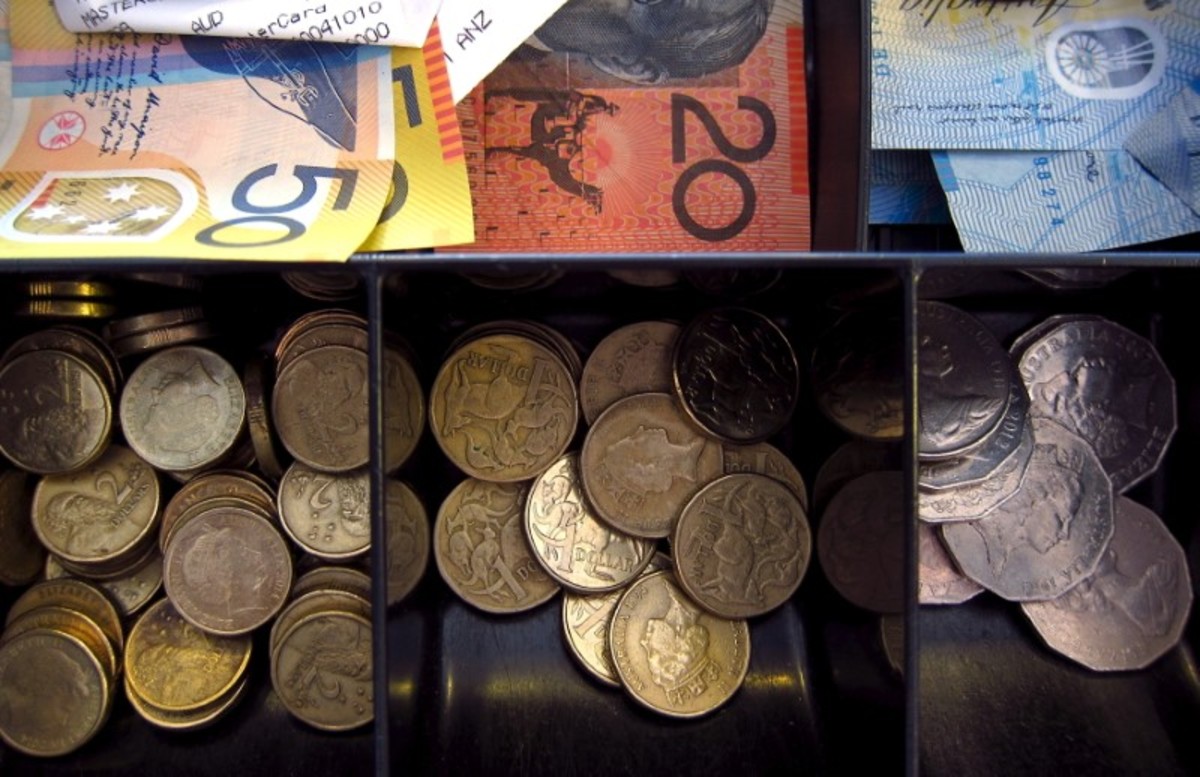
SYDNEY/WELLINGTON (Reuters) - The Australian and New Zealand dollars hit fresh multi-month lows on Wednesday as the relative outperformance of the U.S. economy sent its currency higher across the board.
The Aussie dollar was huddled at $0.7435, having touched its lowest since last June at $0.7424. It has now shed almost four U.S. cents in less than three weeks.
The kiwi dollar was near its lowest since December at $0.6967, having again lost four cents since mid-April.
The U.S. dollar has been on a tear as economic indicators there outpaced much of the rest of the advanced world, forcing a mass shake-out of short dollar positions - particularly against the euro and sterling.
That has also shaken confidence in a synchronous global recovery, sending funds toward U.S. assets at the cost of emerging markets from Argentina to Turkey.
This trend has been doubly negative for the Aussie since many investors use the commodity-leveraged currency as a liquid proxy for global growth and emerging markets, selling it as a hedge when times are troubled.
Adding to the strain was President Donald Trump's decision to walk away from the nuclear deal with Iran, leaving investors uncertain as to what might happen next in the Middle East.
All of which overshadowed an upbeat budget from Australia late on Tuesday which underlined the country's favourable debt background.
With the budget set to return to surplus a year early Australia's net debt is set to peak around 19 percent of GDP, far below the G20 average of 80 percent.
"Consequently, Australia will remain an attractive destination for foreign debt investment," said Elias Haddad, senior currency strategist at CBA.
"This will further facilitate Australia's ability to finance its small current account deficit of just 2-3 percent of GDP."
One result is that the Australian government can currently borrow for 10 years at rates 20 basis points lower than the United States.
The kiwi's next test will be a Reserve Bank of New Zealand policy decision early on Thursday. A steady outcome is considered certain but a change of tone is possible from Adrian Orr, its new governor.
New Zealand government bonds slipped in line with U.S. Treasuries, nudging yields up as much as 4 basis points.
Australian government bond futures also eased, with the three-year bond contract off 2 ticks at 97.785. The 10-year contract fell 5 ticks to 97.1950.
(Reporting by Wayne Cole; Editing by Eric Meijer)