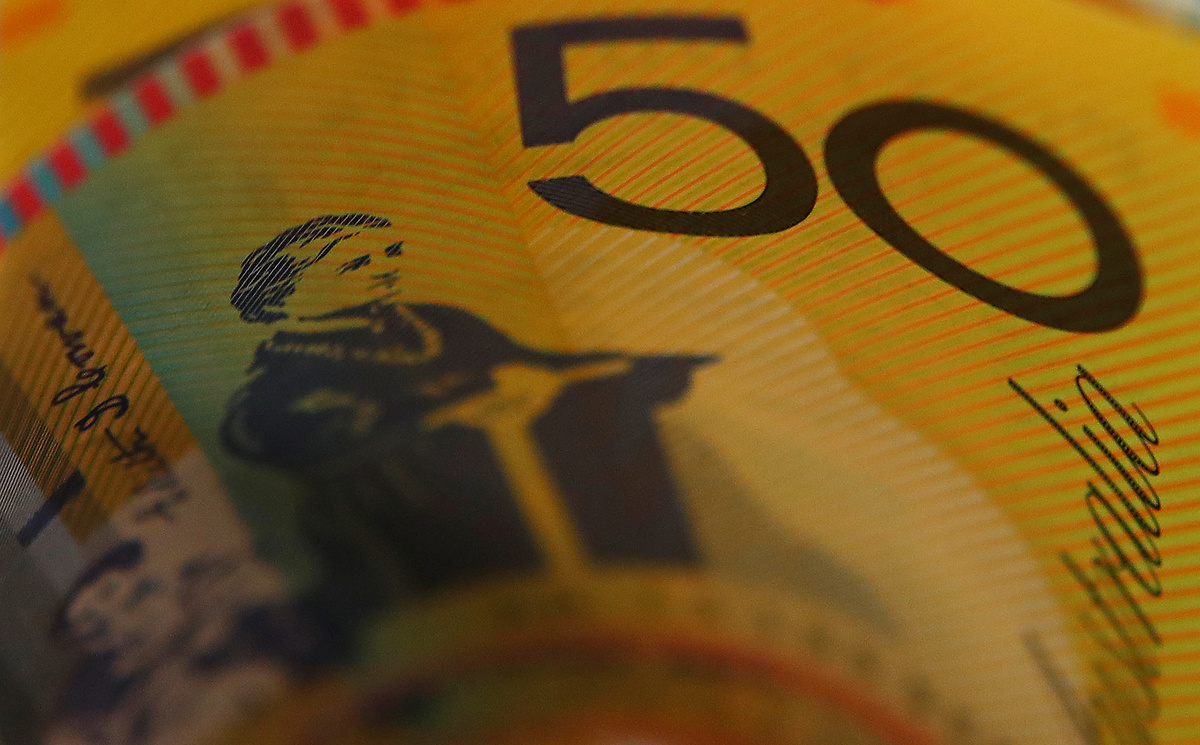
The Australian and New Zealand dollars were in firm form on Wednesday as global stocks kept rising in defiance of surging coronavirus cases and another batch of Chinese economic data surprised on the upside.
The Aussie was holding gains at $0.6910 <AUD=D3>, having bounced from a $0.6833 low on Tuesday. It now faces resistance around $0.6920 and $0.6960.
The kiwi dollar was likewise up at $0.6465 <NZD=D3>, after rebounding from a $0.6385 trough overnight. Resistance lies around $0.6470 and $0.6532.
Both tracked gains in U.S. stocks, as they have done for weeks now, reflecting their countries' exposure to commodity prices and the outlook for global growth.
Helping was the Caixin index of Chinese manufacturing, which rose to 51.2 in June, the highest reading so far this year and above forecasts of 50.5.
Investors have been wagering Beijing's efforts to stimulate its economy, and particularly infrastructure, would support demand for, and the price of, Australian resource exports.
Domestic data was more mixed, with approvals to build new homes in Australia falling a sharp 16.4% in May as a boom in hire rise apartments tapered off.
Home prices also dipped 0.8% across the nation in June in a lagged reaction to the coronavirus lockdowns. Yet prices were still up 7.8% on June last year and sales turnover rebounded as social restrictions were eased.
"Given the huge negative shock to the economy caused by the COVID‑19 pandemic it is hardly surprising that prices have eased," said Gareth Aird, a senior economist at CBA. "Indeed what has surprised us is that prices have only contracted nationally by 1.0% since March.
"Whilst property prices are still likely to ease over coming months, it looks more likely that the falls will be more modest than initially anticipated."
Over in New Zealand, data on electronic card spending has shown a steep rebound in activity since restrictions were eased at the start of May.
"The data shows a clear release of some pent-up demand," said Kiwibank chief economist Jarrod Kerr. "And it's looking more and more like a return to normal in some areas of the economy."
"Greater domestic tourism goes some way, but foreign tourism is a hard void to fill," he cautioned. "And overshadowing all of this, is the rise in unemployment which may dampen future spending, and investment."
(Editing by Sam Holmes)