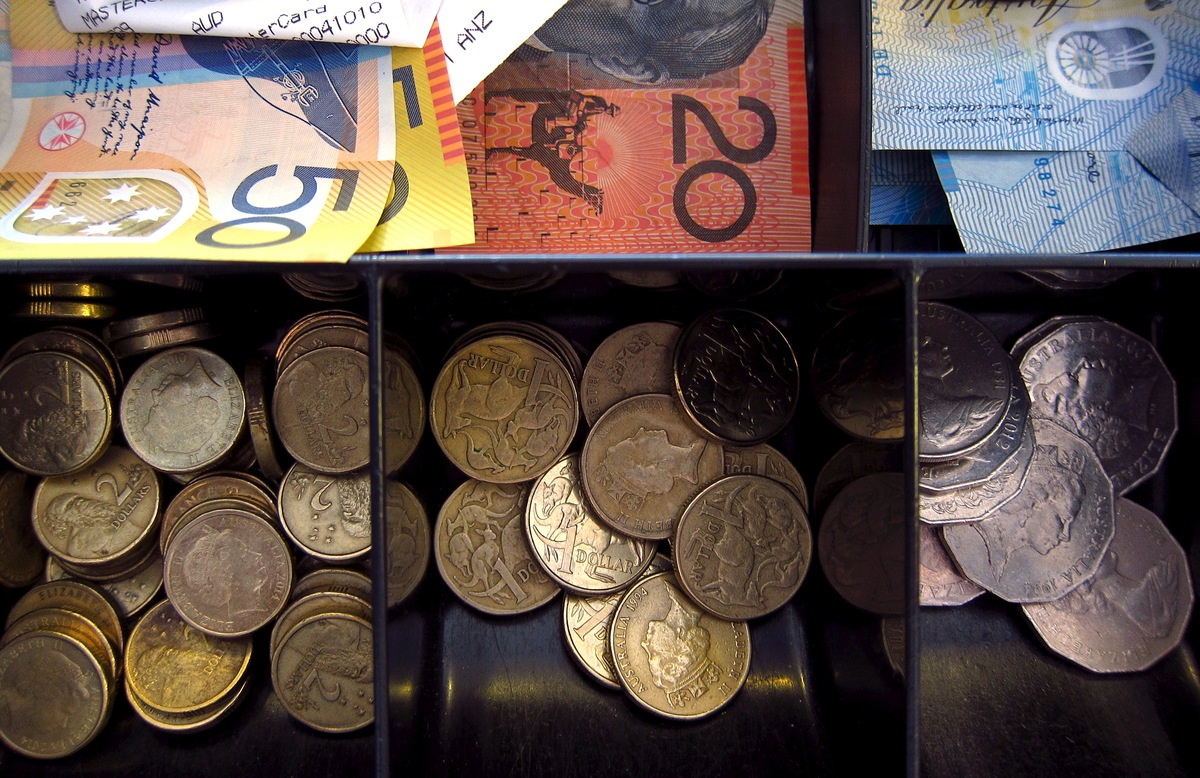
The Australian and New Zealand dollars extended their remarkable comeback on Tuesday as efforts by some countries, notably in Europe, to re-start their economies boosted risk sentiment globally.
Also helping were data suggesting Chinese exports and imports were not nearly as weak as many feared in March, fanning hopes the world's second biggest economy could get back on its feet relatively quickly.
The Aussie added 0.7% to $0.6422 <AUD=D3>, having risen for seven sessions in a row to a five-week top. That was a stellar turnaround from the 17-year trough of $0.5510 touched in mid-March and set up a test of resistance around $0.6500.
The kiwi dollar <NZD=D3> reached its highest in more than four weeks at $0.6130, leaving the March low of $0.5469 a distant memory.
Ray Attrill, head of FX strategy at NAB, said the market had also noted Australia's success in containing the spread of the coronavirus at home.
"AUD outperformance owes something to the fact Australia's COVID-19 curves have bent downwards more sharply than just about any country outside China, which is getting plenty of international attention," he said.
That progress did not come without a cost, however, as strict rules on social distancing closed chunks of the economy.
NAB's own monthly business survey out on Tuesday showed record falls in both conditions and confidence in March, with sales, profits and employment all down sharply.
The Australian government warned unemployment could spike to 10% by June, adding to expectations for a weak March jobs report due out on Thursday.
The government is planning to borrow record amounts to fund desperately needed fiscal stimulus, and announced on Tuesday the sale of a new 0.25% 2024 Treasury bond by syndication.
Dealers are keen to see how much bids the offer draws as a gauge of offshore demand for all this debt.
So far, buying by the Reserve Bank of Australia (RBA) has helped keep three-year bond yields <AU3YT=RR> down near its target of 0.25%, but yields on 10-year paper <AU10YT=RR> have drifted up to 0.95% from a low of 0.68% early in April.
Three-year bond futures <YTTc1> were steady at 99.730 on Tuesday, while the 10-year contract <YTCc1> eased 3.5 ticks to 99.0700.
(Editing by Shri Navaratnam)