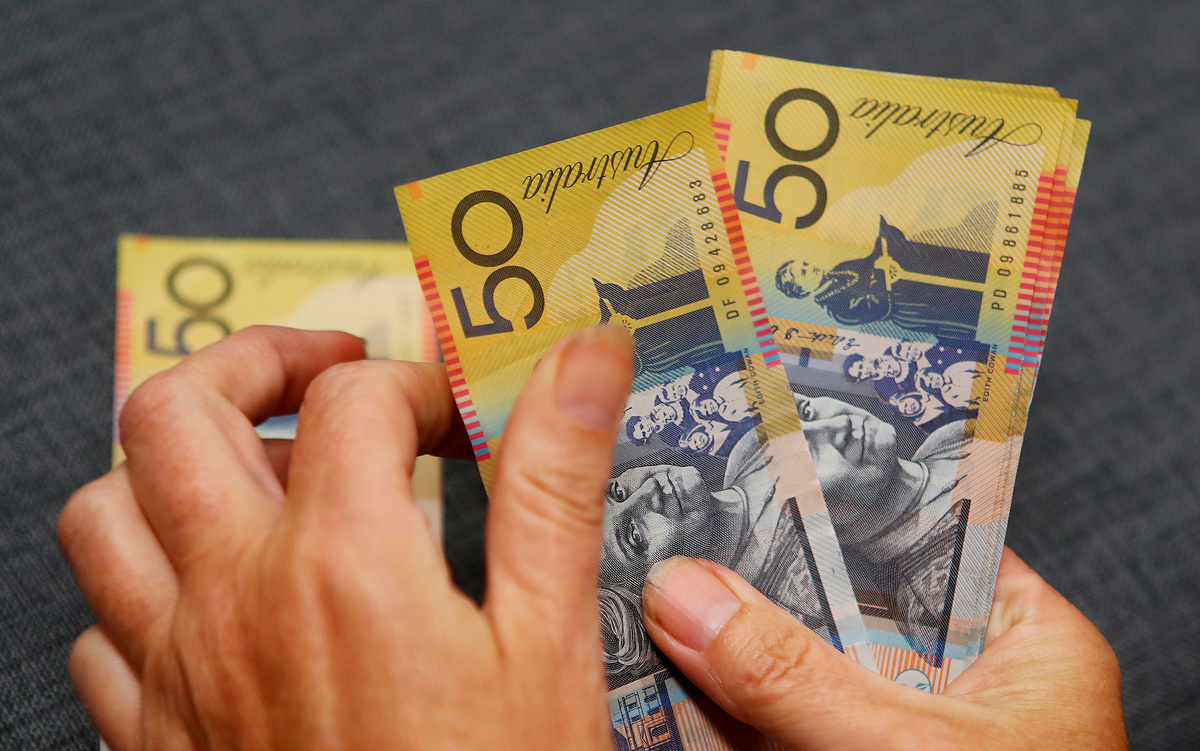
SYDNEY (Reuters) - The Australian and New Zealand dollars came off highs on Tuesday as risk sentiment got a knock amid worries about global growth and worsening trade relations between the United States and China.
The Australian dollar <AUD=D4> was last at $0.7284 after climbing to a 2-1/2 month peak of $0.7338 on Friday. It slipped 0.5 percent overnight for its worst single-day performance since Nov. 12.
The losses came alongside a sell-off in global equity markets with the main Wall Street indexes tumbling between 1.6 and 3.0 percent due to a cocktail of factors, including rattled investor confidence in the long high-flying tech sector. [.N]
The Aussie is often traded as a liquid proxy for global growth as Australia's export-driven economy is largely dependent on world trade. The spectre of escalation in the Sino-U.S. tariff war has weighed on the Aussie for much of this year.
"There are renewed concerns about US-China trade tension... adding to more generalised concerns over global growth," ANZ said in a note to clients.
Reserve Bank of Australia (RBA) Governor Philip Lowe singled out global trade protectionism as a "significant" risk to world growth, in minutes released on Tuesday of the central bank's Nov. 6 policy meeting.
Trade relations between the world two biggest economies seemed to have worsened over the weekend when U.S. Vice President Mike Pence said in a blunt speech there would be no end to U.S. tariffs on $250 billion of Chinese goods until China changed its ways.
The domestic outlook appears rosier though, with the RBA striking an upbeat tune as it flagged a possible "pronounced decline" in unemployment in the minutes.
Still, there was no case for an increase in interest rates from the current record low of 1.50 percent as wage growth and consumer prices were still tepid.
"It seems clear from the text that the Reserve Bank Board is comfortable with how things have played out over 2018 and is comfortable with current interest rate settings," said Ryan Felsman, Sydney-based senior economist at CommSec.
In a note, he said that while no change in the official cash rate is expected until later in 2019, "just like Reserve Bank Board members, we are closely watching trends in the job market and wages."
Later in the day, RBA's Lowe will give a talk in Melbourne titled "trust and prosperity".
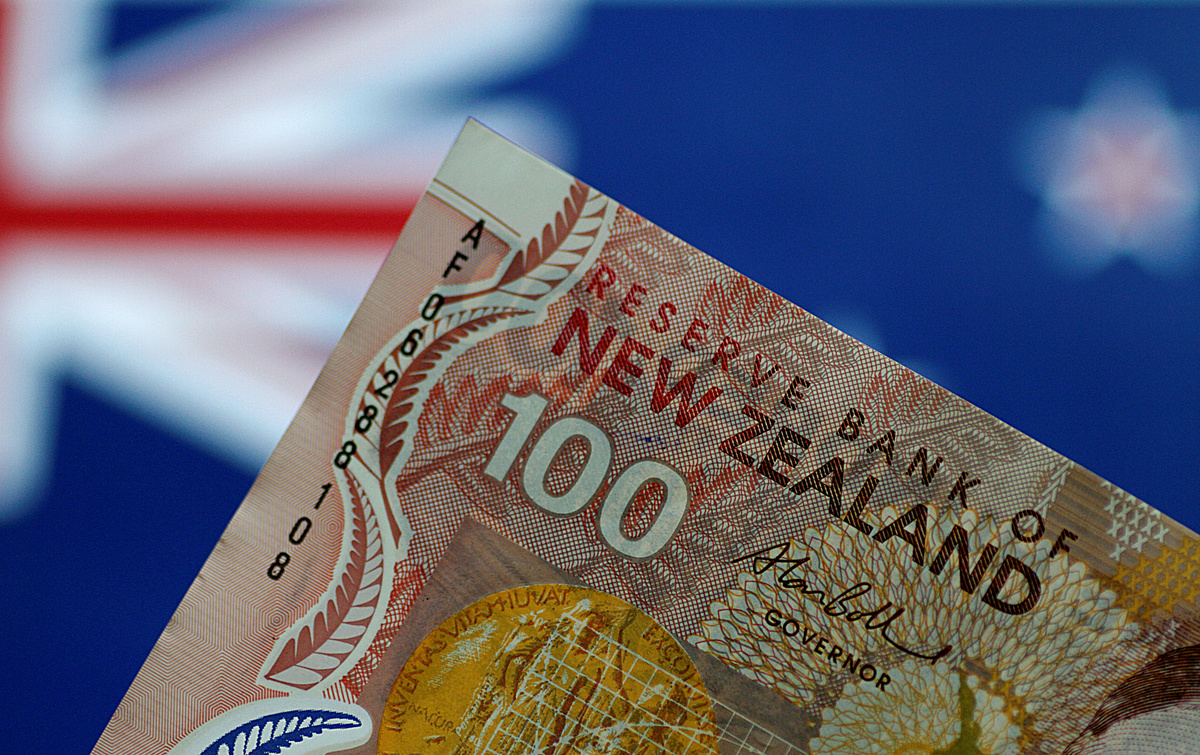
In New Zealand, the kiwi <NZD=D4> was last up 0.2 percent at $0.6845 but lower than Friday's $0.6882 which was the highest since end-June. It slipped 0.6 percent overnight, the worst fall since early October.
New Zealand government bonds <0#NZTSY=> rose a tad, sending yields about 1 basis point lower across the curve.
Australian government bond futures eased, with the three-year bond contract <YTTc1> off 3 ticks at 97.83. The 10-year contract <YTCc1> slipped 4.6 ticks to 97.285.
(Editing by Richard Borsuk)
.jpg?w=600)