SYDNEY (Reuters) - The Australian and New Zealand dollars retreated from around four-month highs on Monday, as traders took profits following sharp rallies in recent weeks.
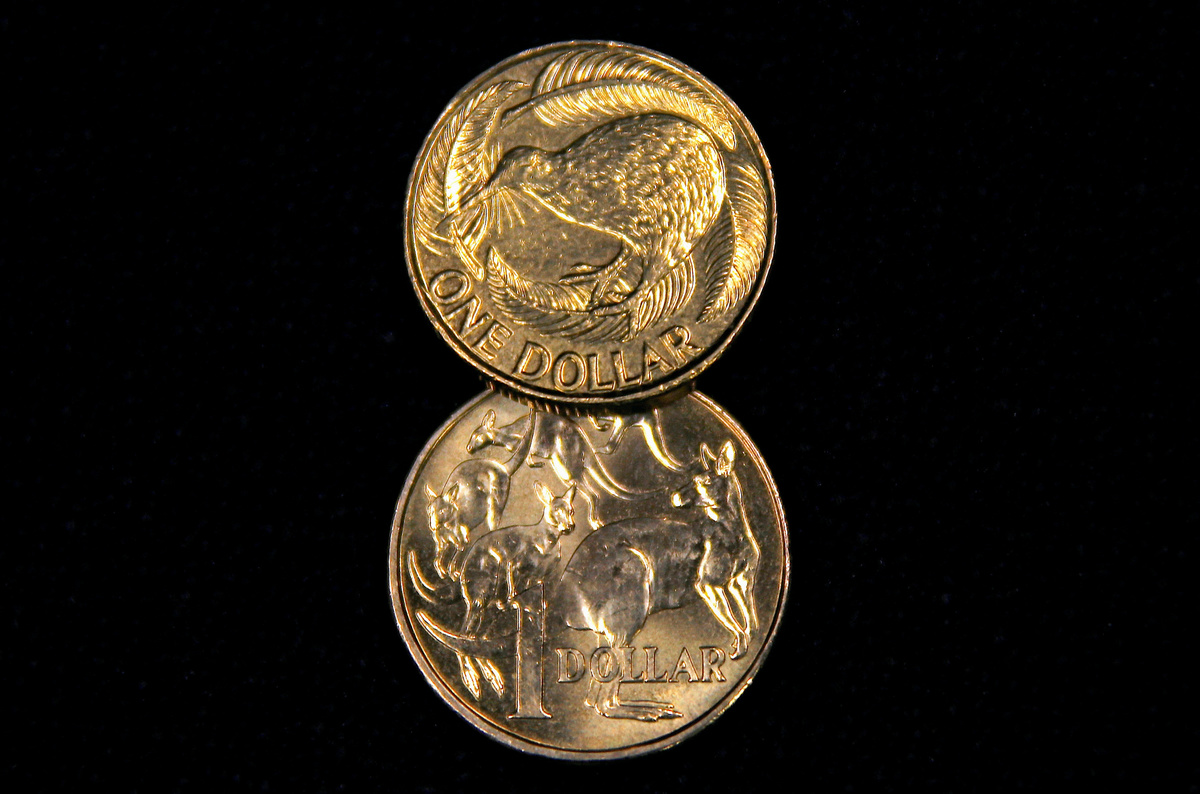
The Australian dollar <AUD=D4> last fetched $0.6878 from Friday's $0.6938, its highest level since late-July. The Aussie rose 0.5% last week, adding on to 1.1% gains clocked the week before.
The New Zealand dollar <NZD=D4> was down 0.5% at $0.6594 after climbing as high as $0.6636 on Friday. The kiwi jumped 1% last week, marking its fifth consecutive weekly gain.
In Australia, a key highlight on Monday was the government's mid-year budget review in which it cut its forecasts for growth in the economy and wages as part of a A$33 billion downgrade to expected revenues over the next four years.
The move put a question mark on the government's ability to provide aggressive fiscal stimulus to prop up the country's slowing economy.
"We think that the pressure will remain on the government to provide more support for households as the weak consumer environment drags into 2020," said Diana Mousina, a Sydney-based economist at AMP.
"So there is still scope for tax cuts in the May 2020 budget."
Mousina expects the Reserve Bank of Australia (RBA) to lower its cash rate to 0.25% by March.
Market attention will next be on November labour market report due Thursday, which is expected to show modest employment growth with the jobless rate unchanged at 5.3%.
"The resilience of the labour market in the face of an otherwise weak economy remains impressive, but I suspect we're on borrowed time and conditions will more clearly weaken by early/mid-2020," said David Bassanese, chief economist at Betashares.
Investors were also keeping an eye on trade talks between Washington and Beijing following a last minute agreement that averted additional tariffs on Chinese goods totalling $160 billion.
However, scepticism remained as a date to formally sign the agreement is yet to be determined.
Traders also speculated about whether the Trump administration, which has called the current deal as 'phase one', would begin talks for 'phase two' given their fundamental differences over key issues such as intellectual property rights. [FRX/]
New Zealand government bonds <0#NZTSY=> gained, sending yields about 4 basis points lower across the curve.
Australian government bond futures rose, with the three-year bond contract <YTTc1> up 4.5 ticks at 99.270. The 10-year contract <YTCc1> added 9.25 ticks to 98.8275.
(Reporting by Swati Pandey in Sydney; Editing by Rashmi Aich)