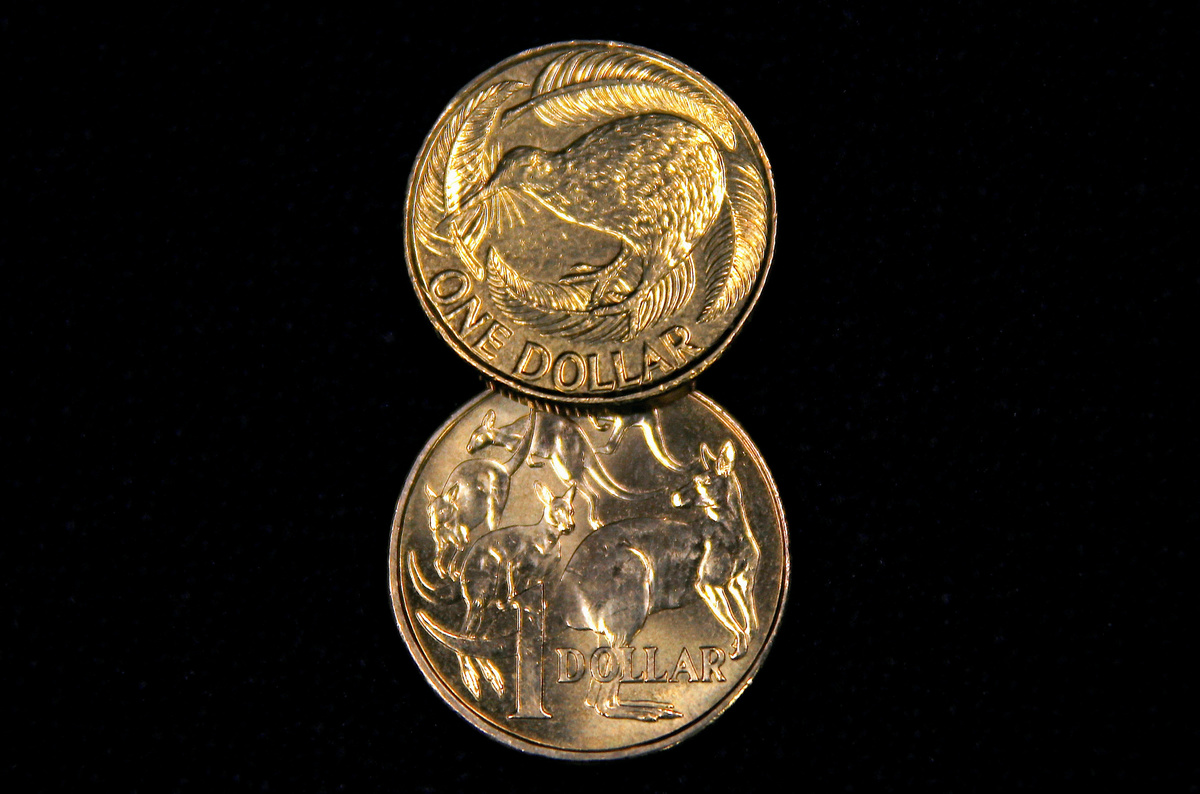
SYDNEY (Reuters) - The New Zealand dollar pared some recent gains on Wednesday as profit-taking overshadowed upbeat data and the promise of fiscal stimulus, while its Australian counterpart was saddled with another poor reading on local consumption.
The Aussie was stuck at $0.6812 <AUD=D3>, having slipped further away from its recent peak at $0.6862. Immediate support lies around $0.6800.
The kiwi dollar drifted off to $0.6527 <NZD=D3> and really needs to break last week's four-month top of $0.6576 to regain momentum.
New Zealand's government on Wednesday trimmed its forecasts for economic growth in a mid-year budget review, and also announced a NZ$12 billion increase in infrastructure spending to be funded partly by new borrowing.
"The highlight was a substantial lift in planned capital spending," said Westpac economist Dominick Stephens. "However, this is planned over a period of many years."
"That is a wise way for the government to run its infrastructure programme, but it means the impact on the economy will be smaller than more front-loaded spending might have been."
Domestic data continued its impressive run with retail spending on electronic cards jumping a surprisingly strong 2.6% percent in November, from the previous month.
Spending was boosted by global sales events, including Black Friday, but also extended to groceries and hospitality.
The mood was exactly the opposite in Australia, where a survey showed consumer sentiment had taken a turn for the worse amid worries about the economic outlook and family finances.
The Westpac/Melbourne Institute index of consumer sentiment fell 1.9% in December, to be down a hefty 8.9% from a year earlier.
Unhappily for retailers the index of whether it was a good time to buy a major household item fell 2.1% in the month, suggesting any extra cash from lower interest rates and tax rebates was still being saved rather than spent.
"The consumer clearly needs more support with interest rate cuts and moderate tax cuts not providing enough of a boost given soft wages growth. More tax cuts would be ideal," said Diana Mousina, an economist at AMP Capital.
"In the absence of fiscal stimulus we expect more rate cuts from the Reserve Bank, with a 25 bps cut in both February and March taking the cash rate to the lower bound of 0.25%."
Markets currently imply around a 54% chance of an easing in February <0#YIB:>.
Australian government bond futures eased in line with a dip in U.S. Treasuries overnight. The three-year bond contract <YTTc1> lost 2.5 ticks to 99.280, while the 10-year contract <YTCc1> fell 4 ticks to 98.8525.
(Editing by Jacqueline Wong)