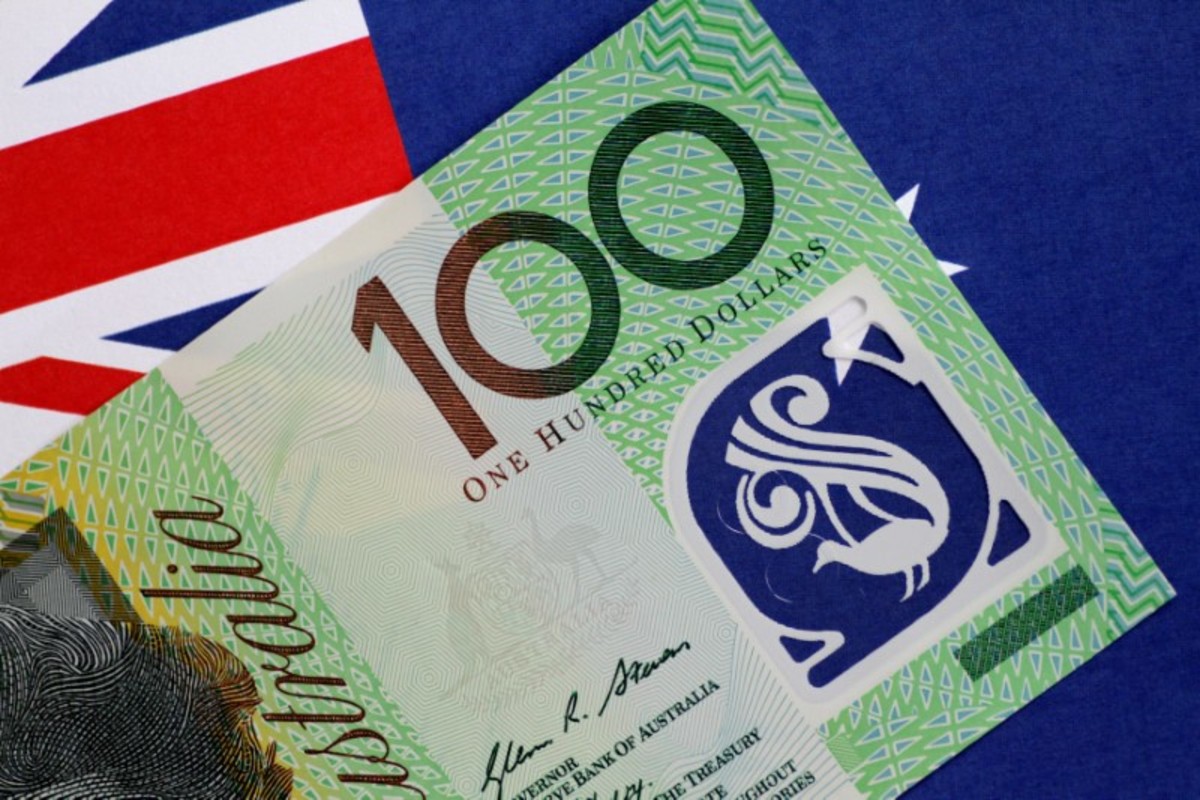
SYDNEY (Reuters) - The Australian dollar hovered near two-year highs on Tuesday ahead of second quarter inflation data, while its New Zealand cousin held close to a 10-1/2 month top.
The antipodean currencies were also helped by a weakened greenback, which is wallowing near a 13-month trough on persistent political woes in the United States and an uncertain outlook for interest rate rises in the country.
The Australian dollar <AUD=D4> was at $0.7941 compared with a high of $0.7992 touched last week. Key chart support lies at $0.7875 with resistance at $0.8000.
"The Aussie has strengthened 4 percent over the past fortnight...underscoring investor appetite for currencies supported by higher interest rates," said Tony Boyadijan, senior vice president, foreign exchange at Compass Markets.
"The Aussie has also been boosted by the U.S. Fed's cautious outlook... pushing back the market's expectations of further U.S. rate hikes."
The Fed is widely expected to keep interest rates unchanged at this week's two-day meeting which ends on Wednesday. Investors will be watching for any fresh hints on whether the Fed might raise interest rates again this year, and when it will begin paring its bond holdings.
Locally, a big potential catalyst for the Aussie's next move will be second quarter inflation data due on Wednesday, followed by a speech by Reserve Bank of Australia Governor Philip Lowe.
Core inflation - closely watched by policymakers - likely stayed below target for a sixth straight quarter.
The Aussie has also been supported by a 1.1 percent rally in spot iron ore on Monday with Dalian iron ore futures <DCIOcv1> near 3-month highs.
Across the Tasman Sea, the New Zealand dollar <NZD=D4> steadied at $0.7440, not far from high of $0.7460 touched on Friday, which was its highest level since Sept. 8, 2016.
The currency briefly slipped to a low of $0.7402 after the NZ government of primary industry flagged a bovine infection, analysts at JP Morgan said.
New Zealand government bonds <0#NZTSY=> edged lower sending yields 2 basis points higher across the long end of the curve.
Australian government bond futures eased, with the three-year bond contract <YTTc1> down 1 tick at 98.00. The 10-year contract <YTCc1> was off 1.5 ticks at 97.3050.
(Editing by Kim Coghill)