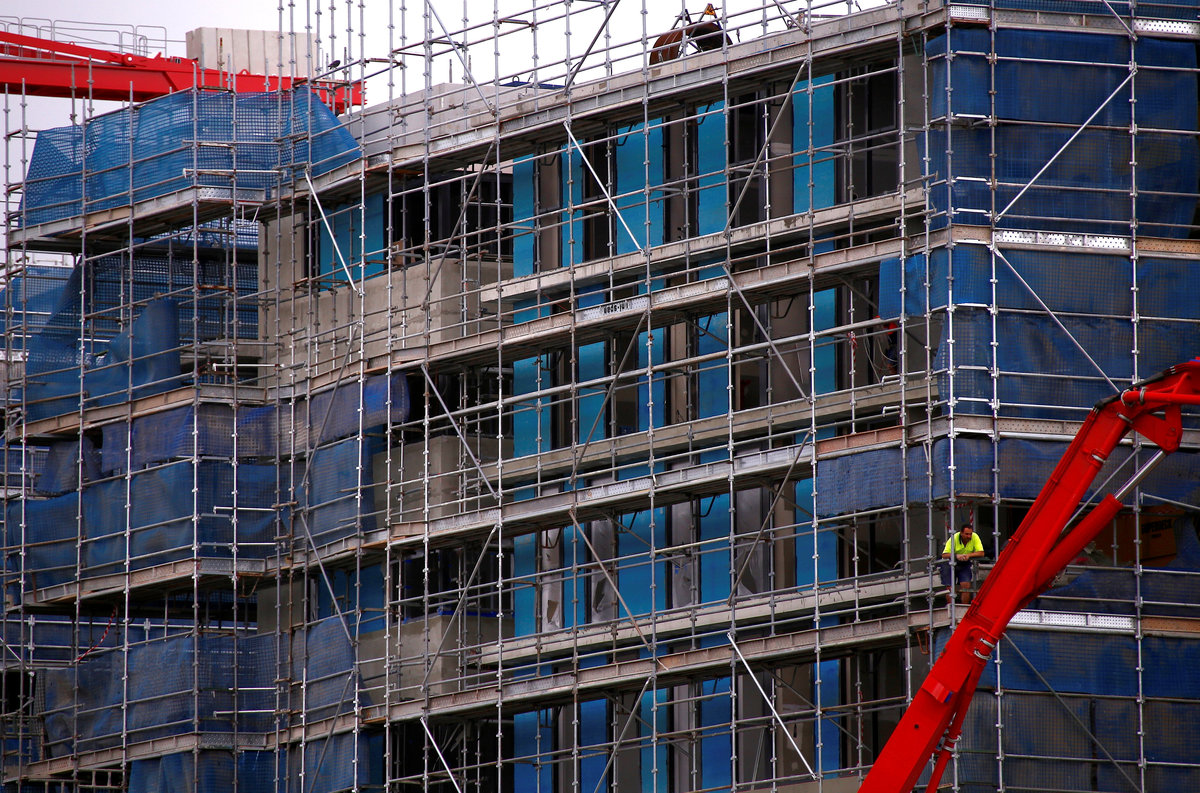
SYDNEY (Reuters) - Australian business investment unexpectedly slipped last quarter as miners spent less on buildings, yet other sectors splashed out more on plant and machinery in a positive sign for economic growth.
Investment dipped 0.2 percent on a seasonally adjusted basis in the December quarter to A$29.6 billion ($22.91 billion), data from the Australian Bureau of Statistics (ABS) showed on Thursday.
That undershot forecasts for a 0.9 percent gain, though only because investment in the previous quarter was revised sharply higher to show an increase of 1.9 percent.
The disappointing headline number sent the Australian dollar falling more than a quarter of a U.S. cent to a 2 month trough of $0.7712, although economists saw reasons to cheer.
"There is some good news underneath the headline," said Sarah Hunter, head of Macroeconomics at BIS Oxford Economics.
Spending on equipment, plant and machinery climbed 2.2 percent and should have added moderately to economic growth in the fourth quarter.
Figures due next week are likely to show Australia's A$1.7 trillion gross domestic product (GDP) expanded by anywhere from 0.5 percent to 0.8 percent in the quarter.
The increase in manufacturing and other industries capex "is reassuring as the non-mining sector will be the driver of private sector investment going forward," she added.
"The data has largely confirmed the business confidence surveys, which have sat in positive territory for over a year now."
HIGHER SPENDING
Firms also raised their spending plans for this year and beyond. The latest estimate for investment in the year to June came in at A$114.6 billion, topping most analysts' forecasts of A$112 billion.
The first, and very early, estimate for 2018/19 was for spending of A$84 billion and these plans tend to be revised up steadily over time.
"The key point remains that investment is no longer the Achilles' heel of the economy as firms are starting to flex their spending muscles," said Paul Dales, chief economist at Capital Economics.
"Despite the small disappointment, it is becoming clearer and clearer that investment will increasingly support GDP growth."
The Reserve Bank of Australia (RBA) has been sounding markedly more optimistic on investment thanks in large part to booming public spending on infrastructure, where the pipeline of work is at its highest level as a share of GDP in several decades.
Mining investment also looked to have stabilised after several years of steep decline, and other industries were finally taking up the slack.
Leading the pack was the IT sector, with plans for a 40 percent expansion in spending in the year to June, followed by utilities, professional services and construction.
Commercial property has been undergoing something of a renaissance, with tourism and student accommodation particularly strong, thanks to a big influx of Chinese visitors.
"The key question for the broader outlook is whether this optimism and spending spills over to wages growth, household income and consumer spending – this will be crucial to lifting GDP growth significantly above its current pace," Hunter said.
(Reporting by Wayne Cole; Editng by Eric Meijer and Kim Coghill)