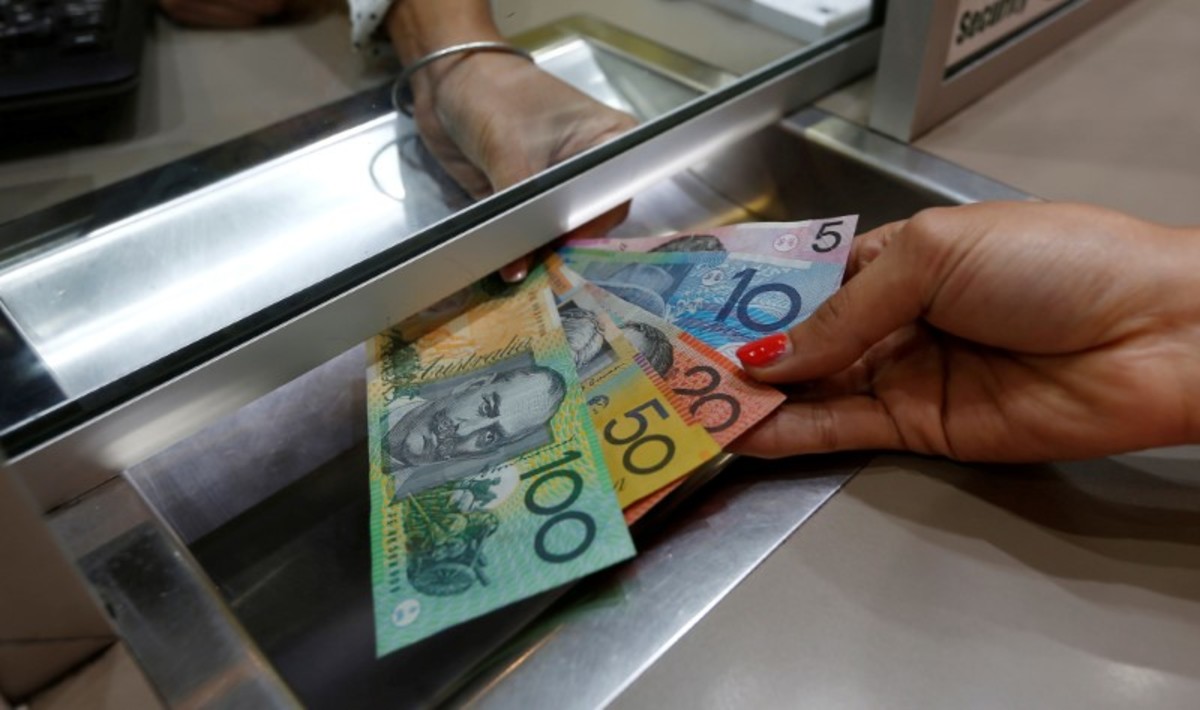
SYDNEY/WELLINGTON (Reuters) - The Australian dollar eased from 2-1/2 year peaks on Monday as speculators booked some profits on short U.S. dollar positions while bracing for a key report on domestic inflation later in the week.
The Aussie dollar <AUD=D4> was down 0.26 percent at $0.8091, having stretched as far as $0.8136 on Friday. That was its highest since May 2015 and cleared a double top from September at $0.8105 and $0.8125.
The local currency has been underpinned by broad weakness in its U.S. counterpart, strength in global growth and commodity prices and a run of improving data domestically.
Yet its ascent will also put downward pressure on import prices and inflation, a trend that is unlikely to be welcomed by the Reserve Bank of Australia (RBA).
Consumer price figures for the December quarter, due on Wednesday, are expected to show underlying inflation remained stuck below the floor of the RBA's 2-3 percent target for two years straight.
Indeed, analysts suspect risks are for a softer result given Q4 CPI data from New Zealand showed price pressures in tradable goods and services were surprisingly weak.
Investors already assume the RBA will be in no rush to tighten, with a hike implied as a 50-50 chance <0#YIB:> for August. Yet a move is fully priced in by November.
"The RBA is still moving closer towards the beginning of a rate hiking cycle, not away from it," argued St George Bank senior economist Janu Chan.
"Moreover, the U.S. tightening cycle is well-underway and well-anticipated," Chan added. "Predominantly reflecting a weaker US dollar profile, we are upgrading our AUD forecast for the end of 2018 from 82 to 84 cents."
The New Zealand dollar <NZD=D4> had also been gaining ground on the its U.S. cousin until last week's inflation surprise caused a sharp setback.
The kiwi stood at $0.7332 on Monday, some way short of the recent four-month top of $0.7435.
A regional holiday in Auckland, the country's commercial centre, muted trading and the week ahead is light for domestic data.
"This week the NZD is likely to be driven by off-shore events. A continuation of last week's broad $0.7250-$0.7450 trading range appears likely," said Jeremy Couchman, senior economist at Kiwibank.
New Zealand government bonds <0#NZTSY=> eased, sending yields 2.5 basis points higher at the long end of the curve.
Australian government bond futures dipped, with the three-year bond contract <YTTc1> off 1.5 ticks at 97.720. The 10-year contract <YTCc1> lost 2.5 ticks to 97.1400.
(Editing by Richard Borsuk)