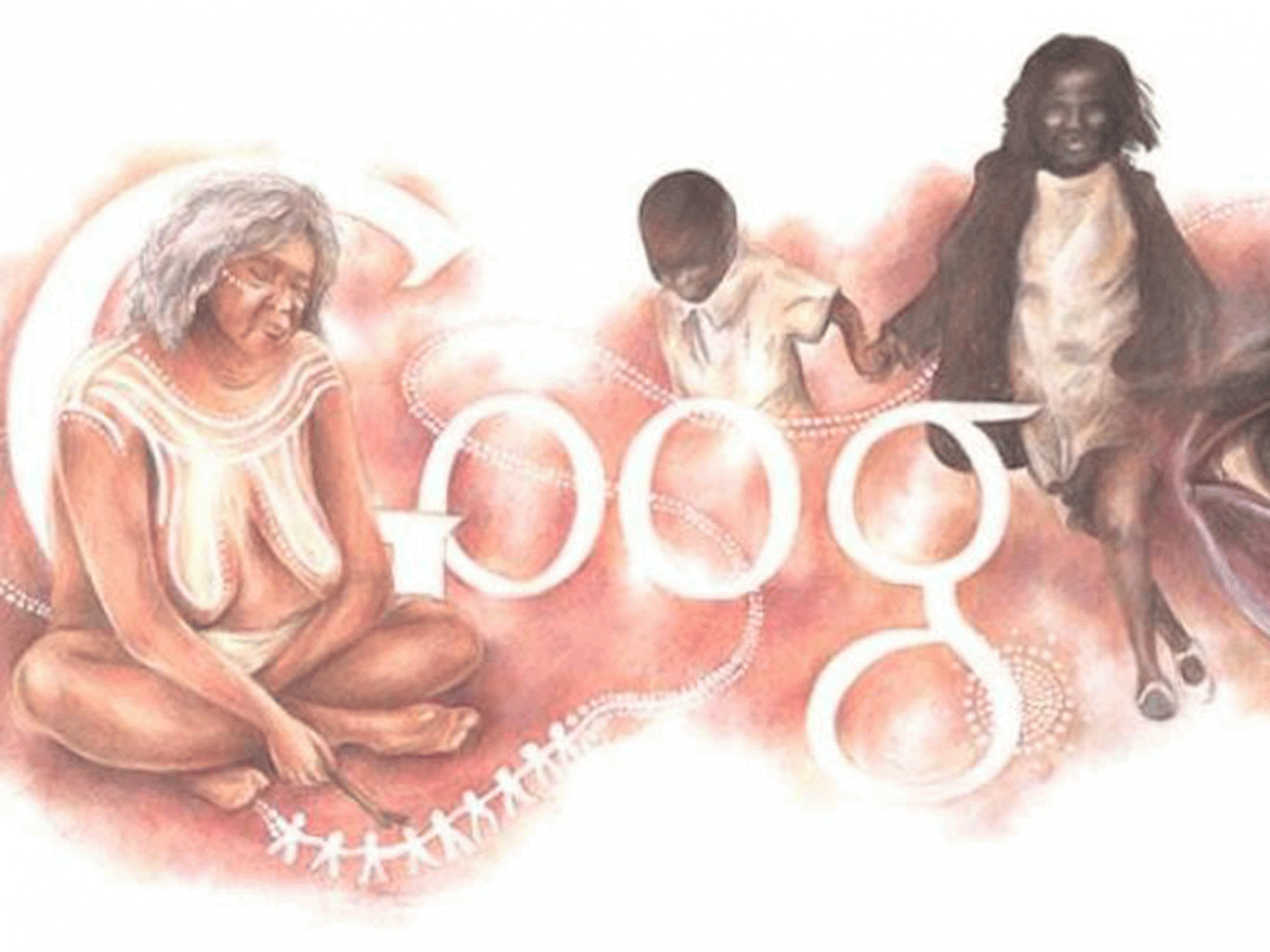
A 16-year-old girl's drawing of a persecuted Aboriginal mother has become Australia Google's homepage on the country's annual day of patriotism.
Ineka Voigt, a student from Canberra, said she hoped her depiction of a mother and her child abducted by colonialists would bring "reconciliation" with a historically oppressed community on Australia Day, according to the Sydney Morning Herald.
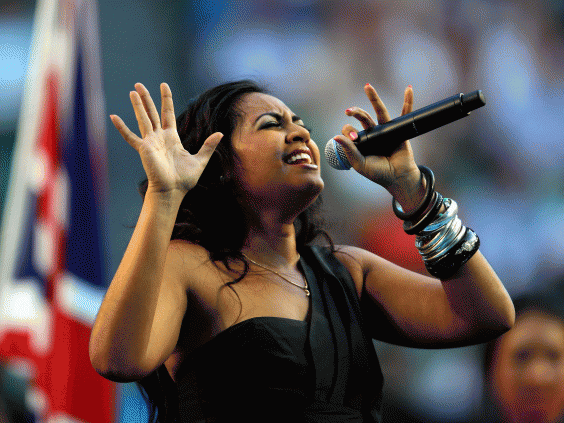
Her message has fuelled an ongoing debate in the country about the meaning and date of the day. An Aboriginal pop star sang the national anthem in an indigenous dialect for the day, and a social media campaign to celebrate the nation on a different date is also under way.
Controversy surrounds January 26 because it celebrates the arrival of the first convict ships to the continent in 1788.
Many Aboriginal people, Torres Strait Islander people and Australians say the date is deeply offensive and shameful.
Throughout the 1900s, many Aboriginal children were also forcibly removed from their parents, as British colonialists and church missionaries claimed this was for their own benefit. Historians have argued the policy was a way to subdue and disintegrate the native population.
So Ms Voigt answered Google's challenge - "If I could travel back in time I would..." - with the wish to re-unite an Aboriginal mother and her stolen child.
"I would reunite mother and child," she wrote in her application to Google.
"A weeping mother sits in an ochre desert, dreaming of her children and a life that never was... all that remains is red sand, tears and the whispers of her stolen dreamtime."
The young artist, who has spent time talking to Aboriginal families, said the drawing was her way of apologising to those communities.
"I can't change it, but instead I wanted to send a message of reconciliation," she said.
"[It's] my own little way of saying sorry."
Her message, seen by millions of Australians as Google's official Doodle for Australia Day, contributes to a wider debate over the date and meaning of the day.
Jessica Mauboy, a 26-year-old Aboriginal pop singer, opened the day of celebrations with a rendition of the Australian national anthem on Sydney Harbour Bridge in a New South Wales indigenous dialect, as the Aboriginal and Australian flag were raised together.
The hashtag #changethedate has also been trending on Twitter, with many citizens saying they would not partake in celebrating oppression which continues to exist to the present day.
One user wrote: "By celebrating Australia Day on the 26th of January we are effectively celebrating this," along with a picture of enslaved Aboriginal people in chains.