And that’s it for today – thanks for reading. Tune in tomorrow for more Covid capers (and the rest).
Updated
Just to clarify, there were two key pieces of new information in that Gunner press conference: a bloke who was supposed to be isolating went to a corner shop, creating a new exposure site in Darwin; and there was an issue with the tracing timeline, meaning he was in the community longer than first thought.
Gunner says the corner store is near a busy service centre attended by “vulnerable Indigenous populations”.
But he says CCTV footage shows the man wore a mask while he was in the store, and it did not appear anyone from nearby Indigenous communities was inside at the time.
Because we cannot trust all of the information that the person has given us, he is being reinterviewed - or should I say interrogated - by the police and [we] will be doing more work today to be certain there are no other sites that we don’t yet know about.
He added:
Very few people came through the store during this period and we don’t believe that anybody from our Indigenous communities entered the store during that time.
Updated
Gunner has a little more to say about the corner store liar, as he will now be known. He says there is a possibility it could impact on the decision for lockdown to lift in Darwin tomorrow afternoon:
Let many repeat so it is very clear - we have a new casual contact exposure site as a result of an individual breach in his isolation order.
The risk is not high, but the risk is there. This also shows that we never stop working. We don’t just believe a story or take things for granted. We keep working and working to make 100% sure that we have got everything. We will keep working through this tonight. Get the contact tracing done. Make sure we keep the virus trapped.
Depending on what we can learn tonight, this may have an impact on our decision for the lockdown tomorrow morning. I hope it won’t, but I have got to be straight with you, it might.
Updated
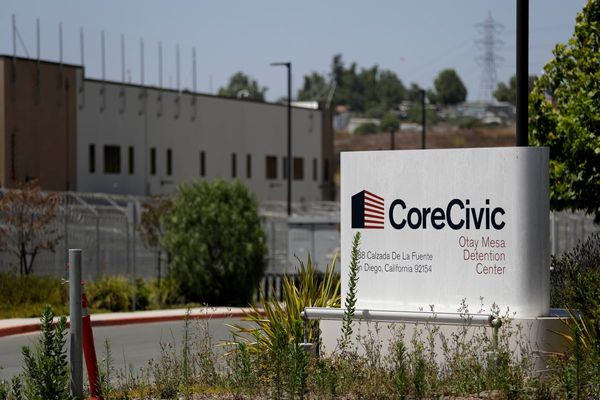
NT case 'broke the law' and breached quarantine order, Michael Gunner says
The NT chief minister, Michael Gunner, has held a quick press conference, saying a man who tested positive for Covid-19 breached quarantine orders in Darwin:
On Monday, we were advised that his time in the community was limited to 36 hours until Saturday night. We now know this was wrong. Our team has been constantly interrogating and reviewing information and we can advise he spent a limited time in the community on Sunday before he arrived at the Centre for National Resilience.
He was under a legal direction to isolate and (go) to the centre to continue his isolation. He broke the law before this happened and he lied about it. We discovered this exposure site after continuing to interrogate and review all possible information, including interviewing contacts and reviewing CCTV footage. The new exposure site is a casual contact exposure site.
It is the Stuart Park corner store on Westralia Street between 12:18pm and 12:35pm on Sunday, 27th June. Any person who attended this site between 12:18pm and 12:35pm on Sunday must now isolate and contact authorities to arrange a test.
Updated
Good evening
Thank you to everyone who joined along today – that’s me done for the day, but the wonderful Nino Bucci will take you through the next part of the evening.
In the meantime – what happened today?
Well, a bit.
- Simon Birmingham admitted Australia was at the ‘back of the queue’ when it came to receiving the Pfizer vaccine.
- Another member of the public dobbed on Barnaby Joyce thinking he had again broken social distancing rules – police investigated, but he was cleared. (The dob-in-the-deputy-PM hotline seems to be a NSW-specific lockdown game).
- NSW recorded another 24 cases, as Gladys Berejiklian admitted that Covid was still circulating in the community (half were in lockdown for all or part of their infectious period).
- Queensland recorded two new cases, one of whom was in isolation.
- The NT also recorded one new case – they were also already in isolation.
- The rest of the nation was Covid free.
- WA, Queensland and the Northern Territory are looking good for ending their lockdowns when their respective 72 hours are up (four days for WA).
- The public health official advice over AstraZeneca for under 40s continues to be confusing – make an appointment with a doctor and talk it out there if you are wondering about it.
- Malcolm Turnbull called the Morrison government vaccine rollout the biggest public administration failure he can remember.
Looking to tomorrow and it will all be about the national cabinet meeting.
Scott Morrison’s quarantine period ends tonight. He’ll host the national cabinet meeting virtually as normal, and then his new cabinet will be sworn in (after the latest Nationals reshuffle) in the afternoon. That should mean you all see Morrison front the media for the first time since Monday night, when he announced AstraZeneca would be made available to under 40s (after doctor’s advice) and took the states, and officials, by surprise and then went dark.
(That led to Harold Holt trending on social media today).
On national cabinet, as Paul Karp and Katharine Murphy report, it’s going to be a fight about international arrival numbers – with the Labor states lining up to slash the number of people coming in. Birmingham, notably, did not rule that out when asked about it today, and seemed to suggest the commonwealth was open to the discussion.
As Murph and Paul report:
The Victorian and Queensland premiers, Daniel Andrews and Annastacia Palaszczuk, initiated the arrivals debate during Monday night’s national cabinet meeting. On Thursday, Andrews declared the “only way to pull up a Delta variant outbreak is to lock everyone down” and it was therefore “better to lock some people out than to lock everyone down”.
Cutting international arrivals is also supported by the West Australian premier, Mark McGowan, who on Thursday described people bringing Covid back from overseas as the “biggest threat vector”. He called on the commonwealth to “very, very heavily” crack down on the number of exemptions granted for Australians to fly overseas.
The premiers say because the Delta strain is more infectious, overseas arrivals should be slowed until the national Covid vaccination rollout gathers pace.
Data released on Thursday showed only 7.92% of Australians over 15 were fully vaccinated and Birmingham acknowledged New Zealand and Australia were currently “at the back of the queue” for Pfizer deliveries because of high infection rates in the northern hemisphere.
Nino will take you through the rest of the evening – thanks for letting me gatecrash the daily news blog for a little bit. I’ll be back when parliament returns for the Politics Live blog, but it’s been great hanging with you for a bit. In the meantime, please – take care of you. It’s rough out there and everyone is tired and a bit over it. I get it. I hope things get a little lighter soon.
Updated
The Greens disability spokesperson, Jordon Steele-John, has also laid into the Morrison government over the vaccine roll out for people with disabilities:
“I’m blown away by the contempt that the Morrison government has shown for disabled people, our families and the people who support us to live a good life since the very beginning of the Covid-19 pandemic,” he said.
“Disabled people and carers were denied the Covid supplement back in March 2020 when many people’s costs were significantly increased due to quarantine, lock down and Covid restrictions.
“Then, the disability royal commission heard that the Morrison government hadn’t included disabled people in their emergency response plan for Covid-19.
“Here we are, almost a year later, asking the same questions about why disabled people get treated differently to other at-risk members of the community with regards to the vaccine rollout.
“Scott Morrison and the Liberals should be ashamed; vaccinating disabled people and support workers needs to be made an urgent priority now.”
Updated
Voluntary assisted dying legislation came into effect today in WA.
As AAP reports:
About 60 West Australians are expected to peacefully end their own lives within the next 12 months under newly implemented voluntary assisted dying laws.
The legislation came into effect on Thursday after an 18-month implementation period.
WA is now the second state after Victoria to activate voluntary assisted dying, which was recently also legalised in South Australia and Tasmania.
Under the WA scheme, terminally ill adults in pain and likely to have less than six months to live - or one year if they have a neurodegenerative condition - will be able to take a drug to end their lives if approved by two medical practitioners.
Premier Mark McGowan said about 60 people were expected to be approved to end their lives in the first 12 months.
“It’s a very difficult thing to talk about, the end of life of a loved one. It’s a very, very sad thing,” Mr McGowan told reporters on Thursday.
“But all we’re trying to do here is provide people with a choice and if they’re going through intolerable suffering they can choose to end it in their own way, at their own time.
“For many families, that will be a huge relief. For those of us who have lost a loved one in enormous pain where they were begging for release, this will be a relief for those people knowing that when their time comes, they can make a choice.”
Just eight medical practitioners have so far completed the necessary training to administer voluntary assisted dying.
A further 37 GPs and nurse practitioners are currently undergoing the training among a total of 95 who have expressed interest.
Harold Holt is now trending on Twitter.
The Prime Minister has not spoken to the Australian people since Monday night. Half the country is in lockdown. This is not leadership. Australians deserve better.
— Anthony Albanese (@AlboMP) July 1, 2021
Updated
Sky News just ran the banner ‘Prime minister held politically hostage’ if you are wondering how things are going on the right.
We have reported on this previously but with the news Australia has completed its formal withdrawal from Afghanistan, Labor says it is now urgent the federal government fast-track the visas of “the interpreters and staff that worked with our troops and diplomats”.
From the Labor release:
In many cases, these people wore Australian uniforms and helped keep our defence personnel safe when they were deployed overseas, at great risk to themselves.
Afghan interpreters were vital to Australia’s operations over the last 20 years and the Morrison Government has a moral obligation to protect them.
While we understand a small group of interpreters have had their visas approved, there are hundreds of interpreters and local staff seeking Australia’s protection.
It is particularly disturbing that today we learnt that Mr Morrison is giving tens of thousands of visas to unvaccinated tourists and business people to come to Australia, but the Government is still not expediting visas for Afghan interpreters whose lives are at risk.
Surely these Afghan interpreters, who wore Australian uniforms alongside Australian soldiers, should be at the top of the visa processing list, not at the bottom.
Labor has requested a briefing on the situation the Afghan interpreters and staff find themselves in, with increasing reports of direct threats against their safety by the Taliban.
Labor is seeking answers from the Government on how many local staff remain, how many have applied for visas and been granted, and what the Morrison Government will do to help those who are left.
While every case must be considered on its individual merits, the Morrison Government must not allow any further delays of the processing of these visas.
Many veterans have said this issue is exacerbating their existing trauma because they see it as leaving their mates behind.
Expediting the processing of these visas is also in our national interest as neglecting these interpreters now will compromise our capacity in future conflicts and in peacekeeping operations to recruit local staff as interpreters.
The Morrison Government needs to ensure the safety of these people and their families, and see their visas processed without delay.
Updated
Here was Matt Canavan at the beginning of that ABC interview, while defending Australia’s delayed vaccine rollout:
There is a clear relationship between those countries that have low death rates and low case rates and those countries that have low vaccination rates – surprise, surprise, those countries that have had more coronavirus have taken up vaccines earlier, have had less hesitancy because there is a clear and present danger to them.
I would much prefer to be in a country that has a low death rate and low vaccination rate rather than the vice versa. This utopian ideal world and country exists where you are both leading the world in vaccination and you have some of the lowest death rates in the world. That doesn’t really exist. We can’t make the perfect the enemy of the good. Our rollout – our response to Covid has not been perfect. There are things that could have been and have been done better, but it has been very, very good and most Australians are still alive compared to most other countries and that’s a damn good thing.
And this is what he had to say a few minutes later, when asked about the WA, Qld and Victorian push to have international arrivals cut:
I think that would be a backward step. I would like to see us increase the number of people coming back overseas over time. We’ve got to learn with Covid. Yes, there will be outbreaks as a result of that as we’ve seen, but we just cannot completely depart from all the risk here.
Fortunately, and it is fortunately, there has not been a single death from coronavirus where it has been caught in Australia this year, not a single death. To go from that situation to say, ‘OK, we will shut the borders again. We will reduce the number of desperate Australians who want to come home to their own country’ – I don’t see the need for that. We have to manage this. Vaccinate people. 70% of the people in the older age brackets have at least got one shot. We are getting there. Younger people, of course, don’t face the same fatality risks from so we have to get the balance right and adjust ourselves over time and we cannot just keep locking up every time there is an outbreak of this disease.
Again, it was the same interview.

Updated
Matt Canavan, who is a politician, who is currently speaking, is asked about why Scott Morrison hasn’t actually addressed any of the issues which have popped up since his Monday press conference. He says there have been too many politicians speaking already and it is not a problem that the prime minister hasn’t addressed people.
Updated
Matt Canavan: government's response to Covid 'has not been perfect'
Matt Canavan is the next guest on the ABC’s Afternoon Briefing. For reasons not immediately clear, he is doing the interview in front of his tool wall.
Canavan, despite the repeated coal dust-streaked hi-vis photos, is an economist by trade.
He is asked about Malcolm Turnbull’s vaccine rollout comments and says:
I disagree with that completely. I think it’s way over the top there. The key policy goal for us during a global pandemic is to save people’s lives.
It is to keep people safe, and on that score, the Australian government and Australia has a whole – the Australian people as a whole have done very, very well.
We are about – there are only about 50 countries below us that have had a lower death rate, most of those are isolated countries in the Pacific islands, sub Sahara. There is a clear relationship between those countries that have low death rates and low case rates and those countries that have low vaccination rates.
Surprise, surprise, those countries that have had more coronavirus have taken up vaccines earlier, have had less hesitancy because there is a clear and present danger to them.
I would much prefer to be in a country that has a low death rate and low vaccination rate rather than the vice versa.
This utopian ideal world and country exists where you are both leading the world in vaccination and you have some of the lowest death rates in the world. That doesn’t really exist. We can’t make the perfect the enemy of the good. Our rollout – our response to Covid has not been perfect. There are things that could have been and have been done better, but it has been very, very good and most Australians are still alive compared to most other countries and that’s a damn good thing.
Updated
Malcolm Turnbull is now re-tweeting some of his quotes from that interview, so I think he’s had a good time.
And then he is out of time.
We’ll have to wait until next time to find out Malcolm Turnbull’s thoughts on other issues. It’s a shame he is so reticent.
So what is Malcolm Turnbull’s advice for working with Barnaby Joyce, for Scott Morrison?
Turnbull:
I had a pretty good relationship with Barnaby, and I’m sure Scott will have a good relationship with him.
You just have to – look, the bottom line is you have a cabinet government and issues of policy have to be determined inside the cabinet.
You’d be calling on Joyce not to freelance on policy outside of the cabinet, and if there is a dispute where the Nationals are not prepared to agree to something, if they want to make that an issue, they are entitled to do so. Theoretically, it could bring down the government.
Theoretically, it could, theoretically it could bring down the government, and that contributed to my final week of leadership when Dutton launched his coup, but a very familiar cast of characters are still involved both inside and outside of Parliament.
Updated
Turnbull: Barnaby Joyce 'clearly determined' to prevent commitment to get to net zero emissions by 2050
And we then shift to Barnaby Joyce, his former deputy’s return to the deputy prime ministership.
Malcolm Turnbull:
I think from a policy point of view, Barnaby is clearly determined to do everything he can to prevent Australia making a commitment to get to net zero emissions by 2050. There has never been, in my recollection, an issue of global importance on which Australia is so at odds with its closest friends and allies than this one. We are really, really out of step.
And Joyce is going to make it politically difficult, perhaps impossible, for the government to get in step, and it is a – this sort of coal-hug, climate-denying madness – because that’s honestly what it is. It is essentially something that works and that rightwing bubble with Sky News and the Murdoch press and it’s obviously supported by the fossil fuel lobby, or large parts of it, and it really is, it’s irresponsible from a global point of view, it’s denying the reality of global warming and denying our responsibility to act. And it is also denying Australia potentially an enormous opportunity to become a clean energy super power.
We have all of the ingredients to do that, and this – I describe it as madness.
This is probably not quite the right word, but it is so irrational. It is possibly the claptrap that you are getting in this rightwing media bubble. These are the same people that – the same organisation, Murdoch’s organisation that are telling Americans that Donald Trump won the election, and it was that sort of craziness that fuelled the attack on the Capitol on 6 January. One of the biggest threats to our liberal democracies is actually the normalisation of extraordinary lying and falsehoods, and again, I said craziness. So that’s the facts.

Updated
Malcolm Turnbull continues being very helpful in this interview:
Should the arrivals be cut?
Turnbull:
I guess, yes, whether it’s 70%, 80%, or 50%, that’s a judgement call, but again the fundamental problem here is a failure in public administration. Jane Halton recommended last year that we needed to have more of the cabin-style quarantine facilities, provided by the commonwealth who does have the constitutional responsibility for quarantine, I hasten to note, and like Howard Springs, so that you don’t get that transmission by aerosols, which is obviously how this disease is transmitted and in particular the Delta strain, and those facilities should have been put in place, but they are only now just starting to, I guess, advance discussions.
Look, it’s – whether it is on the vaccination or the quarantine facilities, you have to scratch your head and say, ‘How on earth could we have got into this situation?’ How on earth do you have people working in the front line with Covid people with Covid not being vaccinated and, in the case of the driver, apparently not wearing a mask? So, there is a lot of questions here.
Now, I just hasten to add, with any quarantine system, there is always going to be the risk of breaches, human error, et cetera, so I think if you are going to rank the failures in public policy, and there have been a lot of successes, too, but the biggest failure is not getting enough vaccines.
Updated
Still on vaccines, Malcolm Turnbull says:
We clearly don’t have enough vaccines – we clearly don’t have enough Pfizer, we don’t have any Moderna. Yes, we are short of vaccines and that’s because we didn’t buy more last year.
Does Turnbull believe it is bad luck or bad management?
Turnbull:
There is no point making excuses for the inexcusable, right. It is a fundamental principle – you don’t put all your eggs in one basket. It is obvious, with the vaccines being developed very rapidly with a level of uncertainty, that you would acquire a number of vaccines in large quantities, and that would mean that if they all turned out to be absolutely right for all age groups, you would end up with a big surplus.
So what? Yes, it’s dollars, but then you may share that with other countries. It is what I say, it is a high-class problem.
But the idea of being left short – I think it is inexcusable, and – that was simply, I think it was inexcusable, and the amount of people who have looked at Australia and said, ‘Gosh, you guys have done so well with quarantine and borders’ and kept the transmissions down to very low levels and they were impressed by that and are amazed.
In many parts of the United States they have upwards of 70% fully vaccinated herd immunity - not everywhere in America, but in many parts of the country, herd immunity is there.
Updated
So did Scott Morrison muddle the message when he emerged from national cabinet on Monday?
Malcolm Turnbull says the answer is “yes”:
What I don’t understand is that the whole purpose of a cabinet is solidarity. The principle of cabinet responsibility was supposedly founded by Lord Melbourne, British prime minister back in the 1800s when, in frustration, threw up his hands and said, “Gentleman, I don’t care what we say, as long as we all say the same thing.”
Coming out of the national cabinet and announcing a new policy that had not been discussed, canvassed or agreed to in that cabinet is extraordinary. Because effectively that was – I don’t know whether that was just – that was a thought bubble, I don’t know if Scott had workshopped that before, I have no idea, but the fact that you’ve got so many other – premiers and chief medical officers disagreeing with it, and very vocally, obviously undermines confidence in the vaccine. I just want to say, by the way, that Lucy and I have had the AstraZeneca vaccine.
Lucy has just as of today had her second shot, and my second shot is coming up in a couple of weeks, and I encourage everyone who can get vaccinated to do so.”

Updated
Malcolm Turnbull on whether or not Australia was ever “at the front of the queue” with vaccines:
Well, we never were at the front, right, that’s the thing. We should have bought as many vaccines from as many makers of vaccine as we could.
If we had ended up with a big oversupply of vaccines, that would have been, as they say, a high-class problem, and we could then have given surplus supplies to PNG or Indonesia or the Pacific – you know, there are plenty of countries that we should have shared surplus vaccines with.
But how on earth we got to the point where we were short of the vaccines we needed and let alone the confusion that you were talking about just a moment ago. It’s mind-boggling. Vaccine hesitancy is a problem everywhere and at every time. It is as though governments are trying to do their utmost to maximise at the moment with all of the disagreements and confusion. No, look, it is a mess. That’s the technical term.”
Updated
Asked if he can think of a “bigger failure” Malcolm Turnbull says:
I can’t think of a bigger black-and-white failure of public administration than this. Governments make lots of mistakes, of course, as we all do, but this was something that was very doable – get plenty of vaccines, get people vaccinated as rapidly as possible – that’s what we were told was going to happen.
We were warned that if we were not vaccinated quickly we would be sitting ducks, you know, at the risk of new variants.
I remember Raina MacIntyre making that point right at the beginning of the year.
These lockdowns are a consequence of the failure to get the vaccination done, and it is a massive fail, yes.
You can’t – there is no point – look, there is no point going on and on about how bad it is, because it’s done. So, the important thing is to go forward, but there is also no point kidding ourselves that this hasn’t been a phenomenal failure in public administration. I don’t see how else you can describe it.”
Updated
"A comprehensive failure of administration" – Malcolm Turnbull lashes vaccine roll out
Former prime minister Malcolm Turnbull is on Afternoon Briefing and he is asked his opinion on the vaccine roll out.
He doesn’t hold back on criticising his successor’s administration of the program.
It is hugely disappointing. We are way behind from where we need to be, and really it is inexcusable. The other developed countries are so far ahead of us.
The reason we are so far behind is because the government last year didn’t buy enough vaccines, didn’t buy nearly enough Pfizer and didn’t buy any Moderna. Look, it is a comprehensive failure of administration, I’m afraid. There is no other – you can’t put a gloss on it
This is just a failure to do the one single most important job the commonwealth government had which was to get the country vaccinated, so it is hugely disappointing.
It goes on.
Updated
The attorney general, Michaelia Cash, has confirmed employers will play a role in delivering the Covid vaccine to employees (which has been floating around for a bit now).
Cash has emerged from a roundtable with the AG’s department and the department of health and employer groups to make the announcement.
From the release:
“I want to thank the business community for working so constructively, keeping Australians employed through this pandemic, and ensuring our economic recovery continues,” said the Attorney-General and Minister for Industrial Relations, Michaelia Cash.
“Rather than playing politics with vaccinations, the Morrison Government is working positively and constructively with business groups and leaders to encourage every Australian who can, to get vaccinated. This is because the business community knows that their survival and the fate of millions of jobs depends on Australians getting vaccinated as soon as possible.”
From today, these groups, who represent businesses that employ more than 7.5 million Australians, will now disseminate this information and advocacy to their employees.
Since the vaccine rollout commenced in February, the Australian Government has made a wide range of guidance available to help businesses and workers to understand their rights and obligations in relation to workplace vaccination, helping them make informed decisions about how they might choose to approach COVID-19 vaccination in their workplace.
Participants noted the important role that workplaces can play in promoting and facilitating vaccination, and agreed to work together to ensure businesses have easy access to a comprehensive resource kit to assist them with communicating the benefits of vaccination with their workers.
Guidance on workplace vaccination is available from Safe Work Australia and the Fair Work Ombudsman.

Updated
Vaccinations by numbers: who has it, who doesn't
We’ve just had some new data published on the state of Australia’s vaccination program. The data breaks vaccination numbers down by age and gender. It shows 6,109,102 people over the age of 16 (about 30%) have had a single dose and just 1,633,434 people, or 7.92%, were fully vaccinated.
Less than 7% of Australians in their 50s and 60s have been fully vaccinated against Covid-19 four months into the rollout.
Australia’s vaccine rollout began on 20 February. People over 50 have been eligible for vaccination since 3 May.
About 105,062, or 6.7%, of Australians aged 50-54 have received both doses, and 34.3% have received a first dose, while about 99,425 (6.4%) of people aged 55-59 are fully vaccinated. The figures are worse for those aged in their 60s.
About 90,000 people, or 6.3%, aged 60-64 have received both doses, while 71,314, or 5.7%, of people aged 65-69 are fully vaccinated.
The data also shows the oldest Australians are still far from fully vaccinated. About 35,000, or 67.1%, of those aged 95 and over have received a first dose and 20,311 (38.4%) have received a second dose.
Full vaccination rates for the 90-94, 85-89, and 80-84 age brackets were 29.8%, 20.2%, and 15.7% respectively.
Surprisingly, the proportion of those in their 70s and fully vaccinated was only marginally higher than those in their 40s.
Full vaccination rates for the 75-79 and 70-74 cohorts were 13.6% and 12.1% respectively. The rates for the 45-49 and 40-44 age brackets were 12% and 10.4%.

Updated
Meanwhile, the latest changes to the Morrison ministry will be made official tomorrow afternoon, when the new ministers – Bridget McKenzie, Andrew Gee and David Gillespie are sworn into their roles.
For those following along, Scott Morrison gets out of his quarantine later tonight (his two weeks at the Lodge will be up then) but that presents a slight (personal) dilemma for the PM:
If he goes home to Sydney, he will be locked down and unable to travel to states which have closed their borders to Sydney (which is all of Australia).
But his family will be in the hotspot, so they can’t travel to the ACT, without locking down for two weeks.
NSW case confirmed at vaccination centre
NSW Health has released information on a new Covid case at the Olympic Park vaccination centre:
STATEMENT: Covid Case at Olympic Park vaccination centre. @9NewsSyd pic.twitter.com/36f5g0FJhr
— Chris O'Keefe (@cokeefe9) July 1, 2021
Updated
NSW police officer fined for flouting public health orders
AAP also has an update on people now dobbing on cops:
A NSW police officer has been fined for flouting public health orders and not wearing a face mask inside a McDonald’s restaurant in Sydney’s north.
Police received information that the 53-year-old superintendent had breached the public health order on Wednesday at Mount Colah McDonald’s.
The officer was issued with a $200 penalty infringement notice on Thursday.
NSW police said there were 65 penalty infringement notices issued on Wednesday, 52 of which were for failing to wear a fitted face covering.
Deputy prime minister Barnaby Joyce was fined $200 for not wearing a mask while paying for petrol at a service station in his hometown of Armidale on Monday after he was dobbed in to Crime Stoppers by a member of the public.
Updated
Reserve Bank may have to reconsider interest rates due to 'booming economy', economists say
AAP has an update on where the economy is heading – and what that could mean for the RBA and its pledge not to raise interest rates:
The Australian economy is ending the financial year with a flourish on several fronts after a marked rebound from the deepest recession since the 1930s due to the COVID-19 pandemic.
A new spread of data shows manufacturing is expanding at its fastest pace in almost three decades, home owners are enjoying the biggest price gains since 2004 and record job vacancies are pointing to more employment gains ahead.
“Australia has a booming economy,” Commonwealth Securities chief economist Craig James said.
“In coming months the Reserve Bank will have to weigh up the current stimulatory settings.”
The Reserve Bank will hold its monthly board meeting next Tuesday where it is expected to keep the cash rate at a record low 0.1 per cent.
While the central bank has been adamant that it won’t be lifting interest rates until 2024, economists expect a hike could now come in 2023 or even earlier.
Updated
The TGA’s latest safety report on the vaccines is out (it’s a weekly release) and you can find it here.
In the week of 21-27 June 2021 we received 1459 AEFI reports for COVID-19 vaccines.
Large scale vaccination means that coincidentally some people will experience a new illness or die shortly after vaccination. The TGA reviews all deaths reported in people who have received the vaccination and monitors signals that may relate to vaccine safety to distinguish between coincidental events and possible side effects of the vaccine. Part of our analysis includes comparing natural expected death rates with observed death rates following immunisation. So far, the observed number of deaths reported after vaccination remains less than the expected number of deaths that would occur naturally, or from other causes, for that proportion of the population.
Since the beginning of the vaccine rollout to 27 June 2021, there have been over 7.3 million doses of COVID-19 vaccines administered. The TGA has received and reviewed 335 reports of deaths in people who have recently been vaccinated and found that two were definitely linked to vaccination. These were both TTS cases related to the AstraZeneca vaccine.
Updated
Officials from the infrastructure department will be grilled by a Senate committee about a car park fund that doled out $660m to projects identified by Coalition MPs and candidates.
On Thursday a request by two Labor senators and Greens senator Peter Whish-Wilson to the chair of the Senate rural and regional affairs and transport committee triggered a spillover estimates session to inquire into the fund.
In a scathing report, released on Monday, the Australian National Audit Office found that not one of the 47 projects was chosen by the department and car park sites were instead selected through a process that “was not demonstrably merit-based”.
It found 87% of the projects were located in 23 Coalition-held seats or six target seats where Coalition MPs and candidates were consulted about project selection.
Labor will use the estimates committee to examine project spreadsheets referred to in the ANAO report. The audit found the office of the then-urban infrastructure minister, Alan Tudge, asked to add potential projects and a column to the spreadsheets for the government to set their relative priority.
The shadow urban infrastructure minister, Andrew Giles, said the “major scandal” of the commuter car park program had “failed both in terms of good governance and project planning, leading to ineligible projects being funded, massive cost blow outs and ongoing delays in delivery”.
You can read more here
Simon Birmingham deflected a question on his “back of the queue” comment from earlier this morning (in relation to the Pfizer/mRNA vaccines) and focussed instead on the data release and the vaccines coming at the end of the year.
Birmingham:
It is clear, that global vaccine companies like Pfizer have prioritised countries that have wider outbreaks of Covid than for example New Zealand or Australia, who have Covid largely under control*.
*It is also because other countries put in orders ahead of Australia.
Updated
Simon Birmingham continued:
I think it is about looking at the evidence in relation to the risk factors, as we did with example with India, and whether they are changing on entry into the country. That is the kind of evidence that we have followed here to date, Australia has some of the tightest border controls into the world, that has been managed as successfully as anywhere else in the world to keep Australia safe and secure, and we’re going to continue to do that.
Reading between the lines there, Simon Birmingham seems to be saying that the commonwealth is at least willing to have the arrival cut back discussions – not foreclosing on options, as Murph would say.
Simon Birmingham doesn't rule out cutting international arrival caps
Now that you have some of that context, let’s return to Simon Birmingham – here is what he had to say about the push from the Labor states to cut the international arrival caps – he doesn’t say no:
We have seen around 680,000 Australians returning during the Covid pandemic, and overwhelmingly they have returned safely, and through hotel quarantine systems, the vast majority in a manner that has protected Australia.
There is no perfect model or approach, we are dealing with a global pandemic that has wreaked havoc around the rest of the world, which we have broadly managed to avoid thanks to the good work of governments working together, businesses in Australia working together, that is how we intend to keep it.
We have shown as a government [a willingness] to close Australia’s international borders to allow only a tiny portion of regular travel back into the country, overwhelmingly only Australians and the direct relatives coming back into Australia.
We have also shown a willingness to tighten it even further, such as during the India outbreak, if the risk factor is greater, and we will always continue to look at that evidence and work with the state and territories.

Updated
Lt General John Frewen also said since Monday 2,616 Australians aged under 40 and over 18 have had an AstraZeneca vaccine (across Australia).
Updated
As was made clear by the Atagi co-chair, Prof Christopher Blyth this morning on ABC radio AM, the Atagi advice remains that people in the younger age group (18 to 40) should only be considering AstraZeneca in “pressing” circumstances:
“There are some situations where that would be warranted, but they are quite small,” he said.
“The Atagi advice is that Pfizer is our preference for those under the age of 60 years.”
Updated
Simon Birmingham, who earlier today admitted Australia was “at the end of the queue” for Pfizer vaccines (contradicting Greg Hunt’s repeated “front of the queue” line) has been sent out again to talk about the vaccine program.
This time he is taking aim at Queensland and says “scare-mongering” over the vaccines is only emboldening anti-vaxxers.
Birmingham:
I think on the whole premier Dan Andrews has got it right when he says that people should listen to the doctor, not the politicians, and Annastacia Palaszczuk should listen to Dan Andrews.
Certainly the type of scaremongering that we have seen coming from the Queensland premier and the Queensland chief medical officer do not give confidence, they help anti-vaxxers, and they should take a more calm and rational approach, listen to the calm advice of our profession across Australia, and listen to your Labor party colleague in Victoria, take the time to listen to our doctors when it comes to vaccines, not anybody else.
Updated
The Royal Australasian College of Physicians says school closures should only be used as a last resort in containing Covid-19 outbreaks, and only occur on a case-by-case basis such as when a case or contact is detected within a school setting.
“We commend the WA government for keeping schools open despite a snap lockdown this week,” a statement issued by the College this afternoon says.
“Physicians and paediatricians are concerned about the serious impacts of closing schools on the mental health, well-being and learning of children and young people. These impacts are greatest for students from disadvantaged backgrounds, and for those with disabilities.”
RACP spokesperson and paediatrician, Dr Asha Bowen, said jurisdictions should be doing “everything” to avoid an extension to school holidays as a measure to contain the spread of Covid-19.
“We must avoid blanket closures of schools because of the detrimental impact these have on the social and psychological wellbeing of students,” she said.
“School closures also place additional economic and psychological stress on families which can increase the risk of family conflict and violence. They also place unintended strain on the health care system as health care staff need to attend to childcare and home schooling.
“A range of measures can be undertaken to manage the health risks associated with schools remaining open such as avoiding large gatherings, minimising adult mixing on the school campus, mask use, and staggering the start and end of the school day.”
Bowen said there is little evidence to show that schools are a high-risk transmission environment for children. But there is a risk there for teachers.
“Which is why we’re calling for all staff in school settings to be given priority access to the vaccine, so they can extend their own safety into their workplace,” she said.

Updated
Vaccine data finally made public
It has taken a long, long, long time – and plenty of questions, fights and WTFs – but the vaccine data is finally being released. Proper data, that is.
Just 7.92% of Australians aged 16 and over are fully vaccinated.
Updated
In case you missed it, the federal government’s vaccine eligibility checker has been updated to include 18- to 39-year-olds as being eligible for the AstraZeneca vaccine. That came after the prime minister announced people under 40 could speak to their GP about receiving AstraZeneca if they wished. It has technically been possible previously and the Atagi advice hasn’t shifted – Morrison made it explicit.
You can find the checker tool here
If you are thinking about it, just talk to a doctor.
Updated
Prof Robert Booy, an infectious disease physician and director of the Immunisation Coalition, has given some comments to the Australian Science Media Centre about how young people are supposed to make sense of all of the information and difference in opinion about the AstraZeneca vaccine. He says:
“Suppose you’re a 25-year-old young person, male or female. How do you weigh up the risks of catching Covid, and the complications of that, with the risk of having a Covid vaccine, Pfizer or AstraZeneca?
“First of all, we know that Covid is less severe in young adults and the risk of hospitalisation or death from Covid is much lower than an older person.
“So, what is needed is a way in which to calculate a risk-benefit ratio that’s relevant to you, as a young person. Such a calculator is available on the web from the UK. It was set up by the Oxford group. It’s extremely helpful if you live in the UK where disease is common but we need a risk calculator for Australian circumstances.
“Several groups are working on just that. For example, the Immunisation Coalition is in discussion with the Oxford group to quickly adapt their instrument to Australia. Watch this space.
“So a 25-year-old person has to consider if they have Pfizer, having to wait for some weeks and months, or getting AstraZeneca quite quickly. She/he would take into account that there is an imminent risk of transmission if living in the eastern suburbs of Sydney, but a very low risk in many other parts of Australia.
“And understandably would be concerned that there is a risk of clotting syndrome (TTS) in the order of 1 in 25,000 after the first dose of AstraZeneca.
“The clot problem would probably require hospitalisation but only about one in 25 people hospitalised might die from it, giving a risk of less than 1 in 500,000 of dying from a clot due to the vaccine.
“No vaccine or medicine is without some risk, albeit rare, or even very rare. Reports from the United States suggest that the Pfizer jab may result in a risk of myocarditis/pericarditis in one out of 100,000 vaccine recipients, with a higher rate if you are young and male. Also, about one in 100,000 people given an mRNA vaccine is at risk of anaphylaxis but the allergic reaction is most unlikely to cause death.
“There’s a lot to consider. Experts are working on it, and these calculators will hopefully be available soon. In the meantime, GPs are well equipped to answer people’s questions.”
Updated
National Cabinet will be held tomorrow (Scott Morrison will be released from his two week quarantine tonight, but the meeting, for obvious reasons, will still be virtual) and the main agenda item will be lowering arrival caps for returning international travellers.
The Labor premiers are pushing for that – they argue it is bringing in too much risk.
That is an issue for several reasons – we have already seen commentary on ‘non-citizens’ entering and ‘taking up quarantine spots’ (which, if they are granted an exemption, they are well within their rights to do, and visiting family and loved ones 18 months into a global pandemic is not something any of us should be even remotely outraged about). But also, because there are still so many people trying to return home or see loved ones.
We’ll find out how that battle goes in just under 24 hours. The argument that repeat business travellers should be vaccinated seems valid, and one which Queensland is prepared to fight for.
But cutting arrivals by up to 50% to 80%, which is something both Queensland and Victoria is arguing for, has massive flow on effects.
Updated
Labor’s Tony Burke is holding a press conference – he wants JobKeeper back.
He says he is worried the disaster relief payments don’t keep a connection with an employer – which he said was the main benefit in the JobKeeper program (despite, what he said was its flaw, JobKeeper not being available to everyone).

Updated
A director of the Sydney Swans has been appointed as chairman of the country’s peak government arts funding body, the Australia Council.
The arts minister, Paul Fletcher, announced the appointment of Robert Morgan, who is also the executive chairman of the advertising and marketing firm Clemenger Group, on Thursday.
Morgan replaces the former Rio Tinto boss Sam Walsh, who was largely missing in action during the Covid-19 crisis that hit the arts sector particularly hard during lockdowns in 2020, due to a long-running legal dispute with the mining goliath, resulting in him ultimately collecting almost $7 million.
In October last year Walsh joined the board of one of Saudi Arabia’s biggest mining companies.
Morgan, whose cultural credentials include a stint on the board of Opera Australia, will oversee the administration of more than $1billion in arts funding for the 2021-22 financial year.
Updated
For those worried abut the pregnant dog whose owners are in isolation in SA, the state’s chief health officer Nicola Spurrier has an update. (Spurrier mentioned this in yesterday’s press conference after her sparring match with Sky News’s Chris Kenny).
"I've been told that 'Madeline' is doing well... she is getting lots of cuddles from people in full PPE." Professor Nicola Spurrier has provided an update on how 'Madeline' the pregnant St Bernard is coping while her COVID-positive owners are in isolation. https://t.co/2d1QXIMZ00 pic.twitter.com/nteDBUMWJI
— 7NEWS Adelaide (@7NewsAdelaide) July 1, 2021
Updated
NSW Health has updated its venues of concern list:
⚠️PUBLIC HEALTH ALERT – VENUES OF CONCERN⚠️
— NSW Health (@NSWHealth) July 1, 2021
NSW Health has been notified of a number of new venues of concern associated with confirmed cases of COVID-19. Following further investigations there is also updated health advice for a venue of concern in Bossley Park. pic.twitter.com/uknUDom40F
Updated
ACT authorities are also assuring users of its QR check-in app that only the ACT health department will have access to the data.
(*cough WA cough*).
Updated
The ACT is also upping its QR code game. It won’t matter how long you are there for – from the 15th of July, you’ll have to check in pretty much everywhere:
Retail settings include:
- supermarkets
- petrol stations
- take away services
- clothing stores, and
- department stores.
Transport facilities include:
- buses,
- light rail vehicles,
- taxis
- hire cars, and
- Uber and rideshare services.
Please note: a bus chartered for a school excursion is not captured by the definition of a public bus.
Updated
David Littleproud, who will be handing over emergency management to Bridget McKenzie once she is sworn in back to the cabinet, has released the details on who is now eligible for the commonwealth Covid-19 payment for workers in NSW (just don’t call it JobKeeper):
Claims can be lodged now for people who reside or work in City of Sydney, Waverley, Randwick, Canada Bay, Inner West, Bayside and Woollahra.
Eligible people in the additional declared areas of Greater Sydney, the Blue Mountains, the Central Coast and Wollongong will only be eligible to lodge a claim for the payment from 4 July.
Those eligible will receive $500 if they’ve lost 20 hours or more of work, and $325 if they’ve lost less than 20 hours of work. They must not have liquid assets of more than $10,000 or be in receipt of other support payments.
This is a weekly payment and people will need to re-apply for any subsequent weeks where the commonwealth declared hotspot and state imposed health restrictions have been in place for more than seven days.
Once a claim has been lodged, using a Centrelink online account through myGov, customers do not need to do anything else.
When their claim is approved, customers should get their payment the next business day.
Customers will receive an SMS when their claim is submitted. People don’t need to call to check on their claim.
If people aren’t claiming for an area that is eligible from today, they’ll need to wait until they are eligible before calling or lodging a claim.
Anyone who’s attempted to lodge prior to the date they become eligible will need to lodge a new claim. Payments will also be backdated to the date someone first became eligible, rather than the date the claim was lodged.
Eligible visa holders will need to call Services Australia on 180 22 66 to claim. Phone lines are open 8am to 5pm, Monday to Friday and 9am to 4pm Saturday and Sunday.
Other payments that may be available to eligible people across NSW include the Pandemic Leave Disaster Payment, JobSeeker Payment and the Crisis Payment for National Health Emergency.
For more information on the COVID-19 Disaster Payment and other available supports go to servicesaustralia.gov.au/covid19.
Updated
You may have seen the tweet from Amy Coopes (a journo turned doctor and all round good egg who you should follow if you’re not already), about someone changing the Covid-19 permit signs heading into Victoria from NSW to motifs of goats. We asked for photographic evidence, and thanks to a meme page, we can deliver.
YESSSS the internet delivers
— Amy Coopes (@coopesdetat) July 1, 2021
Ping @GuardianAus https://t.co/VcJDjnAuf0
Updated
The ACT will continue with its mask mandate, despite recording no Covid-19 cases (the ACT has been Covid free in the community for months). The chief minister Andrew Barr says while NSW continues to see cases, the ACT will take precautions.
The border isn’t shut, but ACT residents can’t travel to hotspots without home quarantining on return (which means Greater Sydney).
There were 6,000 Covid tests in the ACT in the last day.
Updated
With no cases in WA and just two cases in Queensland (one of which was in quarantine), both states are looking good to exit from their short lockdowns as planned, at the end of the 72 hours imposed.
But, as we all know, this is a rapidly changing situation, so we’ll keep you informed of each development as it happens.
Updated
WA records no new local Covid cases
Good news in the west as well – Mark McGowan says no new Covid-19 cases have been found in the community.
The three day lock down is giving contact tracers the time they need, he says, to make sure anyone who has been potentially exposed to the Delta variant is found. So far, that’s 360 close contacts (295 have tested negative so far) and 2503 casual contacts (1173 have tested negative so far).
Updated
New Australian climate service goes live
No one tell Malcolm Roberts – but there is a new climate service, formed to help Australia adapt to climate change. From the environment minister Sussan Ley:
Coordinated by the Bureau of Meteorology, the Australian Climate Service significantly strengthens Australia’s position as a world leader in anticipating and adapting to the impacts of a changing climate.
It will help Australia to better anticipate, manage and adapt to climate impacts by bringing together climate, natural hazard, geospatial and socioeconomic information into one connected platform.
The customer-driven service brings together the expertise of the Bureau, Geoscience Australia, CSIRO and the Australian Bureau of Statistics.
This service, which will expand its capability over the next four years, will help ready us for natural disasters before they happen, enabling better planning and preparation ahead of time.
The service was announced in May and formally commenced operations today.
Updated
That NT update comes as Alice Spring enters its first full day of lockdown.
At this stage, the lockdown is only set for 72 hours.
NT records one new Covid case
The Northern Territory chief minister Michael Gunner has announced there has been one new local infection of Covid – a mine worker.
Here is what he had to say:
He arrived in Darwin on Friday 25 June and was transferred to the Centre for National Resilience on Saturday 26 as high-risk (and had) his first Covid test inside the centre.
[That] returned a negative result but he has since tensed as positive overnight. This says first, more proof that our swift action has kept this virus trapped.
He tested positive inside the Centre for National Resistance, not outside. Second, it’s more proof that with the Delta strain, we cannot rely on the first test to give us comfort, but because this man’s first result was negative, he has been in controlled isolation since the weekend. There’s no reason to believe he was infectious during his very limited time in the community. For this reason, there are no new exposure sites at this time.
I give it this caveat – we are still conducting interviews and information, and also retesting the first test.
At this stage, we have a high level of confidence that he was not infectious in the community and there’s no additional risk to the community, to Alice Springs.
At this stage our contact tracers have identified 69 close contacts who spent time in the cafe at Alice Springs airport on Friday 25 June, and 52 casual contacts. They were all in isolation and the testing has begun.
We will keep the tracing going. It’s good news so far but the next 24 hours is still very important.
We want to see more information and test results. Even more confidence. We will talk with our South Australian colleagues. We continue to believe that while he is highly infectious, it’s unlikely to be while he was in the airport, but as I said yesterday we cannot take any [risks].
The population is too vulnerable. The stakes are too high.

Updated
Victoria reported no new cases on Thursday, so the press conference was quite short, but here are some quick stats from the Victorian press conference from the head of contact tracing, Jeroen Wiemar:
- 12,500 out of the 19,000 vaccinations yesterday were second doses.
- 31,500 of the 50,000 vaccinations this week were second doses.
- There are 36,000 second dose Pfizer vaccinations booked for next week, and 22,500 first dose Pfizer.
- There are 2,000 first dose AstraZeneca, and 2,000 second dose AstraZeneca booked for next week.
- 37,000 people have returned from Australian orange zones, 39% of whom have tested negative so far.
- 10,400 people have returned from Australian red zones, 38% of whom have tested negative so far.
- In the first month the Service Victoria QR code check-in app was mandatory there were 100m check-ins, at over 218,000 businesses. For comparison, the last time we checked in early June, it was 39m check-ins since the app was launched late last year.
Updated
Victorian premier calls for massive reduction in hotel quarantine numbers
When national cabinet meets on Friday, the Victorian premier Daniel Andrews will argue for up to an 80% reduction in the hotel quarantine capacity for the next three to four months until the vaccination rollout reaches mass scale.
He told reporters that the capacity needs to be reduced by more than half:
It really needs to be more than 50% in my judgement ... well I’ve spoken about 75-80%.
Again, we need to have some capacity for a whole range of reasons, there might be workers who are critical to a particular asset or particular industry where things would shut down if we didn’t have them come in there.”
Andrews said it was the best lever the government had in preventing more outbreaks and lockdowns:
I’ve called for a debate and a discussion about how many people are allowed. In my view, every Victorian should be really clear on this. My view is that it is better to lock some people out than to lock everyone down. That is my view.
And the only way to pull up a Delta variant outbreak is to lock everyone down. We’re seeing that across the whole country. We have it within our power to dramatically reduce the number of people who are coming back just for these next three or four months until we get a critical mass of people with a jab, protection for the community, including the vulnerable. And then we have more tools, we have more options.

Updated
It seems like there are some slight issues with Twitter at the moment – the main feed seems to be fine, but some individual feeds are a bit buggy right now (just in case this is also happening to you, you are not alone).
Updated
If anyone has photographic evidence of this, please send it our way.
Someone has changed all the #COVID19 permit signs heading into Victoria from NSW to goat's head motifs and honestly it made my morning 🐐🐐🐐 #GOAT
— Amy Coopes (@coopesdetat) July 1, 2021
Updated
Sky News host Chris Kenny doesn’t seem to have been at that SA press conference, so it draws to an easy close (unlike yesterday, where he went head to head with the state’s CHO Nicola Spurrier).
Updated
South Australian authorities are watching the results from the passengers who shared Virgin Air flight 1742 with a miner from Alice Springs to Adelaide on Friday. They have all been ordered to test and quarantine.
Steven Marshall:
So we are working through all of those at the moment. You are right, there were 121 people on the Virgin flight that came into South Australia on Friday last week. Historically, we have just taken two rows in front, two rows behind and those passengers either side. In this instance, though, because this is the Delta variant, we have out of an abundance of caution tested everybody that is on that flight.
So those results are all coming in at the moment and, as I said to date, no new cases. That is good news, but obviously still an anxious wait over the next 24 hours.
Updated
Steven Marshall is asked if people in South Australia who are in quarantine after coming into contact with a confirmed case or suspected confirmed case will receive support payments.
He takes that one on notice.
Updated
The SA premier says the restrictions with NSW and Queensland will remain in place for some time, given the increase in case numbers there.
In terms of the social distancing restrictions SA has put in place, Steven Marshall says that is also a watch and wait situation:
We will see what happens in other jurisdictions and we will look to see what happens with our own results over the next couple of days. We said that we would put those restrictions in place for a week. Since then we’ve had these five new cases, but we are very satisfied with the cooperation that we’ve had from the miner and his family with all of those people that have been asked to go into quarantine. Let’s just hope that we continue to have some zero days going forward.
Updated
No new Covid cases for SA
Hello everyone, Amy Remeikis with you for the afternoon – let’s get into the South Australian update.
The SA premier Steven Marshall says there have been no new Covid-19 cases in the last 24 hours, which is great news.
Updated
With that, I shall leave you for that day, and you are in for a real treat, because the live blog Queen, Amy Remeikis, is taking over, to guide you through the afternoon.
Young Australians who decided to get the AstraZeneca vaccine are sharing their experiences with us. Celeste Blewitt, from Melbourne, said she is 36 and “technically ineligible for the vaccine”. She is one of many who managed to get the vaccine before the prime minister Scott Morrison’s comments on Monday about opening the AstraZeneca vaccine up to under 60s.
She said:
I got AstraZeneca nearly a month ago at a vaccine hub here in Melbourne.
I’ve had many discussions about this and was scared and confused as to whether I was jumping the queue, going to get a blood clot and become seriously ill or be turned away. None of these have happened. I have siblings in the health and finance industries, so there’s much meaty discussion about the safety of getting AZ as well as the supply/demand situation. Ultimately after much discussion I decided to try informed consent and it worked.
My mum is a polio survivor and my dad recently had a below the knee amputation. Given the Melbourne winter and the current outbreaks occurring, we decided as siblings that it was important to be able to do the right thing to be able to not only look after our family and parents, but also those in more vulnerable positions in the community. After seeing the effect of polio and the benefits of the polio vaccine, it was a no brainer.
I know everyone needs to make their own decisions and be aware of the health risks, but if we are ever going to be able to open international borders, become a country of tourists and buzz of activity again, the vaccine is the only way to go. I’m concerned that the current in-fighting in politics is causing such confusion and I’ve realised it’s making me angry.
Australia is lucky to be in such a safe position, yet this current situation is of our own doing, there were and are other options. We had an opportunity to come out of the pandemic differently, yet here we are.
Updated
Victorian premier says he won't lock down to protect those refusing vaccinations
Just a bit more from the Victorian premier Dan Andrews earlier. Andrews was asked at what point in the vaccination rollout we would stop having lockdowns.
He said the number was not determined, but it would more likely be determined on the basis that everyone who wanted to get vaccinated could get vaccinated:
To put it another way – anyone, everyone who wants to be vaccinated has been given an opportunity to do that. And then that’s on them if they don’t choose to get vaccinated. Well, we wouldn’t be having lockdowns to protect people who weren’t prepared to protect themselves.
Updated
Oh, there they are!
Reporter:
Did you speak to Victor Dominello or text him if he can go from a close contact to a casual?
Berejiklian:
No, no.
Reporter:
You had no contact with him?
Berejiklian:
He was obviously at a press conference with me yesterday. These are matters for our health experts.
Can I make this clear - we are in the middle of a pandemic. My priority and priority of my government is 8 million citizens. That is the focus.
Updated
Come on NSW press pack! Where are the follow up questions!?
Updated
A reporter has asked Berejiklian to directly answer, yes or no, if she received a text message from minister Dominello asking to be reclassified from a close contact to a casual contact.
And the premier did not answer directly at all.
Berejiklian:
Look, I have had many encounters. It hasn’t been a focus.
I can just reassure the community that the public health officials – I mean, there is a formal risk assessment document that had to be developed about criterium that we applied in all of those settings. The fundamental issue is that there were I think seven or so settings where people could have fallen in different categories and because we were concurrently assessing people.
For him, there was a miscommunication because the issue relates to the fact that the marshal identified a number of visits to individual ministers as rooms.
What should have happened was being very clear that the close contact trumped a casual contact and a failure to reconcile. There really is not anything more to this.
I have got to say that this venue, notwithstanding its complexity, was also a lower risk concern to us ... All of those factors played into our decision making, but we took a very cautious and a conservative approach as you would expect us to do, given the importance and mobility of that group of people.
Updated
Berejiklian has been asked if she believes the Queensland premier’s comments, stating it was too high of a risk for under 40s to get the AstraZeneca vaccine, have had more harm than good for the vaccine program.
But the NSW premier seems hesitant to inflame tensions between the two states, (and also seems like she subtly agrees with her Queensland counterpart):
The advice I have given is very much consistent with the Atagi advice.
So, Atagi has considered that on a risk benefit ... that Pfizer is preferred for people under the age of 60.
Obviously, that risk-benefit is influenced by people as individual circumstances and obviously it can also change in terms of different settings of risk when we have community transmission.
I think it is inappropriate that I comment. I haven’t had the time to review those comments or discuss with my colleague.
Updated
Back to NSW, Chant is being grilled over the close contact confusion surrounding customer services minister Victor Dominello.
NSW Health have been forced to apologise to Dominello for giving him incorrect advice about his exposure to a Covid-19 positive cabinet colleague.
Dominello is back in isolation after the department mistakenly told him he no longer needed to quarantine after being in contact with agriculture minister Adam Marshall who was diagnosed with Covid-19 last Thursday after dining at a Paddington pizzeria on the previous Monday.
NSW Health initially determined his proximity to Dominello in parliament, during question time on Tuesday last week was for an extended period of time, making Dominello a close contact.
Dominello left isolation on Saturday after receiving a negative test result and advice from NSW Health that he had since been (incorrectly) classified as a casual contact.
NSW Health has apologised to minister Dominello for this error and acknowledges that he was following the health advice we provided to him.
He returned to isolation when contacted late on Wednesday by NSW Health to advise that he remained a close contact. An urgent Covid-19 test was performed and he returned a negative result.
Chant has walked us through how this happened:
So, in relation to the Parliament House, there was a lot of concurrent activity happening.
So in terms of the venues that we had. We had general interactions within Parliament House is the sub-set of interactions. We had a National party room meeting. We had Coalition party room meetings and the Legislative Assembly chamber budget speech, the Legislative Assembly question time. We had ministerial office meetings and the National party function I referred to. As well as then visitors that had gone into the premises ...
So what has occurred and I regret this, but as I said everyone was doing the best with their best intent in trying to manage this complex workplace environment, that originally he was advised that he was a close contact, but then had an interaction with another public health official who was really referencing the exposure that it was casual in relation to the office building. An office encounter with Minister Marshall.
So that led to confusion and miscommunication and I regret that.
As soon as it has been alluded to, with contacted the minister and we were advised he had a negative test I can confirm that he was at no time a risk to the community.
As I said, I have apologised for the miscommunication, but it was because of that, the fact that there were concurrent activity and a failure to reconcile that obviously being a close contact trumps being a casual contact at the two venues.
We have subsequently gone through a reconciliation process to make sure that no other people are impacted.

Updated
Victorian hubs may eventually administer AstraZeneca jabs to under-40s
Ahead of the daily health press conference in Victoria, premier Daniel Andrews has said he is “determined” to avoid another lockdown in the state, and part of that will be arguing in national cabinet on Friday for a reduction in the number of people able to return through hotel quarantine.
He repeated that it was better to lock out a small number of people than lock down whole cities or states, particularly while Victoria will not have a dedicated quarantine facility up and running in Mickleham until January.
The other component is vaccination, which Andrews said will not be reaching critical mass before the end of the year. Andrews said the AstraZeneca vaccine could be made available to people under 40 at the mass vaccination hubs in Victoria at some point, but for now people in that cohort should just go to their GP or pharmacist.
He is more relaxed about AstraZeneca use compared with some of his counterparts, and said people should “not take your medical advice from members of parliament”:
Talk to your doctor, talk to your pharmacist. They’re the people to talk to, because whether it’s Atagi or others, there can be very broad statements made. Safety is always a concern – they are risk averse, they need to be. But everyone’s individual circumstances are different, and many people come to this question of ‘should I, shouldn’t I’ when, what vaccine with pre-existing conditions, with all sorts of other issues. So the best thing to do is not to be getting your epidemiological or your vaccination advice from politicians.
Talk to your GP, that’s what I would ask Victorians to do.

Updated
NSW police commissioner Mick Fuller is up now:
In the last 24 hours, 65 personnel infringement notices were issued. One of those of concern was a hairdresser in Auburn in the shopping area of Auburn.
In the last 24 hours, 65 personnel infringement notices were issued. One of those of concern was a hairdresser in Auburn in the shopping area of Auburn.
What police will be doing is matching our taskings to those areas and places of concern on the health website, but in particular today I want to send a very clear message that we will double our efforts in terms of visibility and compliance in south-western Sydney, in particular, around that Auburn, Bankstown area, in those shopping areas, the central business areas, and also back to the eastern suburbs as well. The message is quite clear – police continue to be visible in the community, on public transport. We are stopping and proposing many people and, again, it is just disappointing that infringements continue to be issued.
Updated
The good news is that the second healthcare worker wasn’t infectious while at work.
Chant:
If we go now back to the student nurse that I talked about yesterday. Extensive contact tracing has occurred around that nurse and we have identified one healthcare worker who was present at the ward on the Sunday when she was close to completing her shift.
That healthcare worker, pleasingly had not worked whilst infectious. So that new healthcare worker that was – had a small crossover with this individual had been rapidly identified as a close contact and hence did not go into work yesterday and instead got tested. Those results came back, but it was pleasing that whilst in the infectious period, this gentleman, this person, healthcare worker, did not go to work.
So again this highlights a few key messages. We still need to maintain essential activities and we just need people to be particularly vigilant if you have got the mildest of symptoms. Please do not go to work. Instead, get tested and isolate.
Updated
Close contact of NSW healthcare case works in aged care and various hospitals
Chant has confirmed a second healthcare worker has tested positive. This follows yesterday’s news that a student nurse at the Royal North Shore hospital had worked while unknowingly infectious.
But a close contact of this new case is an aged care worker, raising fears that the Delta variant could work its way into the residential care system.
Chant:
In terms of the cases of note. Yesterday we announced a student nurse who worked at Fairfield Hospital and Royal North Shore Hospital whilst infectious from 24th to 28th June.
Testing of her family and household contacts has identified further cases. We are undertaking further investigations to understand the direction of transmission, but one of her household contacts is positive and them also a close friend, a close contact, is also positive.
Now that new healthcare worker also works at similar places to her. She works at Royal North Shore hospital, Fairfield hospital and the Royal Ryde Rehabilitation hospital.
We also know that one of her other contacts works at an aged-care facility in Summit Care in Baulkham Hills, but I was very pleased to be advised that around 135 out of the 149 residents at Summit Care were vaccinated and they had concluded their Pfizer vaccination for over a month. So that is very pleasing when we do hear about that.
Updated
Chief health officer Dr Kerry Chant coming through with that sweet, sweet breakdown of today’s cases.
New South Wales recorded 24 locally acquired Covid cases until 8pm last night. Seventeen of these new cases are linked to previously confirmed cases, 11 of these linked cases being household contacts. Seven cases reported remain under investigation ...
In relation to the 24 new locally acquired cases, 12 are in isolation throughout their infectious period and a further nine were in isolation for part of their infectious period. However, this still means that we are seeing cases in the community infectious ...
There were no new cases linked to the Great Ocean Foods wholesaler. Two new cases linked to West Hoxton. There was one [new case linked] to the Crossways Hotel and new cases linked to the Joh Bailey at Double Bay.

Updated
22 NSW pharmacies to deliver vaccines from mid July
From mid-July 22 pharmacies throughout rural and regional NSW will begin distributing vaccines.
Berejiklian:
From 19 July, 22 pharmacies coming online. Initially in rural and regional communities where communities don’t have access to any other GP or New South Wales government health site, in communities.
[We are] starting the pilot with 22 pharmacies. We are keen for them to do more as well, but from 19 July, which isn’t that long way away, 22 will be coming online and we will be having ongoing conversations with the Pharmacy Guild. New South Wales Health and the Pharmacy Guild are having conversations about how to scale that up as soon as possible.
Updated
NSW to create three new vaccination hubs in Hunter, Wollongong and Macquarie Fields
The NSW premier has announced plans to create three new vaccination hubs, boosting thier capacity to 200,000 doses per week.
I’m pleased to say, as you know, the new vaccination hub in the Hunter is under way and will be open to the public.
The New South Wales government will also be opening up a mass vaccination centre in the Illawarra in Wollongong, but also one in south-west Sydney in Macquarie Fields which is really important to get to the south-west community. We will also be having a major additional hub in the Sydney CBD.
So in addition to the 100 sites, in addition to the mass vaccination hub we have in Homebush which is proving to be a great success, there will be one in Hunter, in Wollongong, Illawarra, in Macquarie Fields, in addition to the 100 sites across the state. We envisage that once these centres are up and running that New South Wales Health will be able to administer up to 200,000 vaccines a week.

Updated
Berejiklian:
If we want the lockdown to succeed, all of us to have minimise our movements, all of us to have minimise our interaction with others, as difficult as that is, to make sure that the lockdown is successful.
We know how transmissible this variant of the virus is and we need to respond accordingly. So can I please urge anybody who leaves the house, assume that you have the virus or that people you come into contact with have the virus and act accordingly. This is so important for us moving forward.
Berejiklian:
Whilst all of the cases were infected for part or all of their period, the fact that half was in the community while infectious is a cause of concern. That’s what we will be looking at in the next few days and beyond as a measure of our success.
We can’t afford to have people continue to have the virus going about their business. We cannot continue to allow that to happen and even though we are seeing the venues that people are exposed at are obviously less risk, because we are all in lockdown, hospital, hospitality venues and the like are not posing a risk, but people going about their business, shopping and interacting with others is causing the virus to continue to circulate.
We can’t allow that to happen. In too many examples we are seeing workers who are leaving the house with symptoms or going to work with symptoms and then inadvertently as they are going about shopping or other activity, they are passing it on to others.

Updated
NSW records 24 local Covid-19 cases overnight
Berejiklian has stepped up. She says 24 local Covid-19 cases were recorded overnight, with half of these cases spending time in the community while infecious.
Updated
29,990 tests in past 24 hours 👏
— Annastacia Palaszczuk (@AnnastaciaMP) July 1, 2021
We are expecting to get an update on NSW numbers when their state leaders step up for a press conference in about five minutes. Stand by.
The last question from that press conference is on the long Covid testing queues (reportedly up to eight hours) on Magnetic Island.
Palaszczuk:
I do understand that there has been some long queues there as well. Look, we are trying to get to people as quickly as possible.
Can I honestly thank people for coming out and getting tested.
Everyone is trying to do the right thing here and, fingers crossed, we will have low numbers tomorrow and we will be able to lift the lockdown.
The premier has been asked, given she and the rest of the Queensland government has been so critical of people making spurious, or non-urgent trips in and out of Australia, whether she will still be attending Japan for the Olympics.
And she did not give a definitive no.
Palaszczuk:
First of all if we are in a situation like this, of course I will not be attending.
Secondly, the prime minister went overseas on official national business and the Olympics are official state business.
Now, let me also say this about the Olympics: the one thing that is standing out for the International Olympic Committee is the cooperation between national, state and local, and there is a very, very high expectation that there is a federal minister there if the prime minister cannot attend, that the premier is there from the state of Queensland, and that the lord mayor is there from Brisbane ...
I’ve said very clearly if I attend I will come back and do 14 days of mandatory hotel quarantine, and I’ve also said that people leaving should be vaccinated. My understanding is anyone who is going to the Olympics, whether they be journalists, the official party or Olympians or training staff, have to be vaccinated.
So, my point has always been that people leaving Australia should be vaccinated and anyone coming into Australia should be vaccinated.
Updated
OK, take a sip of coffee every time Palaszczuk is asked about the hospital breach and immediately pivots to talking about international arrivals.
Reporter:
Does Queensland deserve an apology for what happened at Prince Charles?
Palaszczuk:
I apologised when we went into lockdown.
I apologised to Queenslanders as we went into lockdown. No one wants to see this happen, but as everyone knows, our systems are stretched.
Today I’ve written to reduce our caps by 50%. I think that’s really, really important. As you heard, we are down to the final number of beds. We are now searching for additional hotels for our hotel quarantine. This virus is incredibly contagious. It is the Delta virus. Our hotels were not built to contain it and obviously you see that our hospitals are not built to contain it either.
Updated
Male reporter:
[Yesterday you said] even the UK government won’t allow their under-40s to get the AstraZeneca vaccine.
Palaszczuk:
Yes. There is an article that talks about under-40s to be given an alternative to AstraZeneca.
Male reporter:
[The article] says clearly...
Palaszczuk:
No, you weren’t here yesterday either and I actually read from the article. I am happy to provide you with a copy of the article.
It’s becoming extremely tense between the premier and reporters at the press conference.
Reporter:
The political stunt yesterday where the health minister get up to say ...
Palaszczuk:
Sorry, I don’t know your name.
Reporter:
Bianka Stone.
Palaszczuk:
Hi, Bianka ... I won’t answer people being rude. You are being very rude. Anyone else with a question.
Updated
The exchange continues:
Reporter:
The Queensland government’s own website says that the Pfizer, AstraZeneca Covid-19 vaccines have been approved for adults aged 16 years and over.
Young:
That’s correct.
Reporter:
You don’t agree with that advice?
Young:
No, that is correct. It is true. TGA has approved the use of those vaccines. My advice is that if you’re under 40, you wait and get the Pfizer or the Moderna vaccine.
Reporter:
A study that I saw out yesterday that the incidents of the side effects of [Covid] are higher than AstraZeneca.
Young:
Yes, but it doesn’t tend to kill you.
(It’s just worth noting that the AstraZenca doesn’t “tend” to kill you either.)
Updated
Queensland CHO says vaccine debates are getting 'absolutely silly'
And exchanges are getting a little heated again in today’s press conference:
Reporter:
What about a 19-year-old, Dr Young, who can have AstraZeneca immediately wait six months for Pfizer. Surely in that situation they would be better off having AstraZeneca immediately if ...
Young:
Why are they waiting for six months, sorry?
Reporter:
October.
Young:
Please, can I just stop all this. This is getting absolutely silly.
I have put my advice out there very, very clearly. Now people need to work out where they want to get advice from.
I have, every day virtually, in the last 18 months, come out and given Queenslanders the best advice I can possibly give them.
I commit that I will continue to do that, and this is my advice. People, of course, can go and get their own advice. They can get it from wherever they wish to get it, but my advice is very, very clear.
Updated
Jeannette Young defends comments on AstraZeneca vaccine
Chief health officer Dr Jeannette Young has defended her extremely strong comments yesterday telling under 40s in Queensland not to get the AstraZeneca vaccine.
She was asked if her comments “went too far”:
No, I just put out the facts.
My advice is very, very clearly that people who are 60 years of age or older should be going to their GP or a commonwealth vaccine clinic to get AstraZeneca. Anyone under 60, if you’ve already had one dose of the vaccine, you need a second dose of the same vaccine, whether it’s Pfizer or AstraZeneca.
If you haven’t had your first dose and you are under the age of 60 and at least 16 years of age, then you should be scheduling yourself as soon as it becomes available to you to get the Pfizer vaccine.
Updated
Young is managing expectations around lockdown ending as scheduled on the dot of 6pm tomorrow night:
I’m very encouraged. But I’ve got to say we have another 24 hours. Five incidents we are now having to manage with this additional one related to the international airport. That’s a lot. Each incident in and of itself I’m pretty confident about. They have all been very well managed and [are] low risk, but five of them simultaneously is a lot, so he we have to wait to see how we go.

Updated
The Queensland police commissioner has issued a stern warning to those crowding Queensland beaches during lockdown:
I want to finish off by commenting on the vision around the beaches in particular yesterday. That is very disappointing. It is really quite clear the purposes why people can leave their residences, going to lie on the beach and getting a suntan is not one of them.
If people want to go to the beaches to exercise, that’s fine, provided they are within their local area, and if they are out there, they are still required to wear a mask unless they are actually in the process of exercising, so that was quite disappointing.
Having said that, our police engage people – given the opportunity to comply and they did. Nonetheless there are taskings today and if we can’t get compliance on our beaches, we will have to start working with councils and start putting barricades and things up.
Updated
D’Ath:
I can also advise that letters are going out today to our five hospitals that manage Covid patients. So this is the Cairns hospital, Sunshine Coast University hospital, RB WA and the Prince Charles, asking them, based on what we now know with the new variants and particularly Delta and how contagious it is, asking them why we should not expand out mandatory vaccination group to be the entire hospital staff where there are Covid wards ...
So we will work with all the stakeholders in the hospitals to ensure that we put in place the best methods we can, we must remember that health workers across the country are not mandated to be vaccinated. National cabinet has not mandated any group other than aged care workers to be vaccinated. Now, despite this, we had already mandated anyone working in hotel quarantine or around Covid patients to be vaccinated, but we want to do more, knowing that this Delta variant is so contagious and is going to put more people at risk.
Updated
Offical investigation launched into unvaccinated Covid ward worker
Queensland health minister Yvette D’Ath:
In relation to the investigation, in relation to the individual working outside of a Covid ward unvaccinated, we have appointed Dr Paul Griffin, the director of infectious disease at Mater health to lead the investigation.
He will specifically be looking at how it came to be [she] was working where they were unvaccinated. In doing that, he will also be looking at the systems that are in place at that hospital to determine who is [a Covid ward] worker that must be vaccinated to work in those areas, and who deems that area as being a mandatory vaccination area or not.
Obviously, that work will start immediately, looking at the systems and processes for this decision-making will stop it will be sometime before any interview can be done with the individual herself, because we are very mindful that she is a Covid-positive patient in a Covid ward currently.
We must respect that her healthcare comes first, but that will not delay the other work that can be done in the investigation.
Updated
The Queensland health minister has addressed reports from yesterday that people had become “violent” and aggressive while waiting in long testing lines.
Yvette D’Ath:
We are also are looking at standing up and extra sites.
We know in some areas, particularly Townsville, we thank you all for getting tested, we know there have been long lines.
Also, I had reports this morning that some of the public waiting to be vaccinated, particularly at the Sunshine Coast vaccination sites, were becoming abusive of our staff. Because they wanted to be assured that they would be able to get their second vaccination with shortage of supply.
Can I ask the public to be respectful to our staff who are working tirelessly to get Queenslanders vaccinated. Whether it is testing staff or vaccination, we are so grateful for our health workers and what they are doing each and every day, they don’t deserve any abuse in the role that they are undertaking.
We know people are anxious, we know people want to get tested and vaccinated. We respect that. But we also want you to respect our workforce and what they are doing to keep us safe.
Deputy premier Steven Miles is addressing the federal home affairs minister’s comment yesterday after Karen Andrews disputed Queensland’s claims that a large proportion of returning international travellers were not in fact stranded Australians returning home.
The minister accused Queensland leaders of politicising the current Covid-19 crisis to cover up their own mistakes in the health sector, but Miles isn’t copping that on the chin. He has come today with a stack of stats.
Miles:
I want to talk on Border Force disputing the Australian Bureau of Statistics figures on passenger arrivals yesterday, on doing so they pointed to an average proportion of travellers who are Australian across the pandemic.
They did not dispute the growing trend for an increased number of foreign nationals being permitted to travel. If you look at the ABS report that’s what it points to, and increasing the number of foreigners travelling here in as well as the increase in the number of Australians travelling since the borders were close last year.
In fact since May last year to May this year, almost 200, a increase from some countries. If you looked just at between April and May 2020 one, nine out of 10 top countries saw an increase in people travelling here and there was an increase across every single Visa category.
I know there has been some analysis today of arrival card data which also confirmed the high number of people travelling for leisure and business purposes. I think when Australians think about international travel when the borders are closed and think about hotel quarantine, they think about Australians coming home or the occasional highly skilled worker needed here or genuine hardship cases, they don’t think about people coming and going about their regular business.
The minister herself admitted yesterday there were more than 30,000 people admitted who are permitted to come and go and have been utilising hotel quarantine on multiple occasions. I think Australians expect that these travellers should be vaccinated and we should have confidence that they are vaccinated.
Updated
Pfizer doses to be distributed to Queensland GPs next week
Young:
I reiterate my message. If you are 60 years of age or over, you should go to your GP or one of the commonwealth clinics and get vaccinated with AstraZeneca. If you have already had one dose of the vaccine, you need to go and get your second dose. That is 12 weeks after the first dose of AstraZeneca, which I will be doing on 31 August, or three weeks after the first dose of Pfizer. That can extend out to four weeks. There is no problem with that because I know there have been some issues getting appointments for people ...
If you are 40-59 years of age, you should be booking into a clinic to get Pfizer. As of next week, the commonwealth is sending out Pfizer vaccine to over 230 GPs across Queensland. So you will be able to book into a GP to get Pfizer if you are 40-59, or you are in that 1A or 1B group.
Hmm, I wonder if those doses were already planned, or if this an extra delivery after Queensland slammed the federal government yesterday for not providing extra Pfizer doses.
Updated
Young:
Just to reiterate, the other cases, the other locally acquired cases related to that Alpha variant from that Portuguese restaurant outbreak, if I could call it that, they went into hotel quarantine from when they were identified, so they have been in hotel quarantine for the entire infectious period so there is no risk at all.
And then we have the other two overseas acquired cases that were picked up on day one in hotel quarantine, both of them. One came from South Africa transiting through Singapore, and the other one we are still getting that travel history.
Updated
Here are all the places we know that potentially infectious women visited so far.
Young:
She attended Officeworks in North Lakes on the 25 June and she went to Coles supermarket on the 27 June at Murrumba Downs, and we are asking for all that QR code data to be collected which is critical.
She attended then Anytime Fitness in Griffith and then she was with her colleagues from Menzies Aviation who provide the staff for a lot of the work that is done at the international airport.
She was with those colleagues on the 26th and 28 June so we will be going through that. So all of that needs to be worked through and as soon as we get any of that confirmed we will put it on the website and get it out to you.
Updated
Chief health officer Dr Jeannette Young says contact tracers are still interviewing the airport worker who tested positive.
The new case today has probably acquired it in our international airport. She works at the check-in counter for Qatar airlines which means she would be checking in not only the passengers but she would be involved with the crew.
We do know that international flight crew are high risk. They don’t stay here for 14 days after they arrived, they fly in and fly out so we don’t always know which of them are positive, which is why I really and truly insist people must wear masks at the international airport and at our domestic airports, that is really critical.
You don’t know you might be infectious as you are walking around that airport. It’s really important. This lady in her 30s became symptomatic on the 27 June, so that means her infectious period goes back to last Friday.
We are speaking to her at the moment to get all of her contact tracing achieved so she does have another person who lives in the same household who we are urgently testing and we are testing close contacts but I’ve got some preliminary information that might be helpful.

Updated
There were also more than 20,000 tests done and upwards of 18,000 vaccine doses delivered in Queensland yesterday.
Queensland has recorded two local Covid-19 cases over night.
Queensland premier Annasticia Palaszczuk had just stepped up for her daily Covid-19 update.
She says two Covid-19 cases have been acquired locally overnight.
Palaszczuk:
Of those two local, some good news. One is a close contact of the Portuguese restaurant and were already in quarantine so good news there.
The second one is a 37-year-old woman, she works at the Qatar check-in counter at the international airport, was unwell and went for [a test] on Tuesday, it came back positive. She has been to very limited places around her local area...
Very encouraging news today.
Updated
Queensland chief health officer 'undermined' vaccine: Atagi member
Ahead of that, here is the Australia Medical Association’s reaction to yesterday’s explosive press conference, via the AAP.
Queensland chief health officer Jeannette Young has allowed her “internal anxieties” to undermine the AstraZeneca vaccine as the state grapples with four Covid-19 outbreaks, a top doctor says.
Young told reporters on Wednesday that she didn’t want anyone under the age of 40s taking AstraZeneca because of the risk of an extraordinarily rare blood clotting syndrome.
Australian Medical Association vice president Dr Chris Moy says that’s not the advice of the Australian Technical Advisory Group on Immunisation, which he is a member of.
He told ABC radio Young’s comments are “problematic” because Atagi says under 60s can have AstraZeneca if the benefits outweigh the risks and they make an informed decision about it.
It’s problematic if this is taken as a command, or an edict, or an imposition of particular internal anxieties about the situation, rather than an opinion.
Opinion is fine, and I think we should all be as doctors offering our opinions about the risk benefits, and also providing all the information, but you should be unemotional like the Atagi guidelines.
He said he had sympathy for Young because she was under a lot of stress dealing with four Covid-19 outbreaks in Queensland that have led to a three-day lockdown of the entire south-east and Townsville.

But Moy said that her “emotional” comments had undermined AstraZeneca, which was an effective and safe vaccine.
Unfortunately, the level of emotion that was shown in that interview, was really out of keeping with what we’ve seen before, and really has actually undermined a vaccine to some degree ...
It’s like undermining one particular brand and you know, what if we find there is a problem later with the other vaccine, then we’re nowhere.”
(Side note, I don’t ADORE a woman in leadership’s opinions being reduced to “being emotional”, to be honest with you.)
Updated
We are just standing by now for the Queensland premier to step up.
Oh and as always we are expecting to hear from NSW at 11am today when we will get an update on the state’s Covid numbers.
Updated
Defence department refuses to confirm final Australian troops have left Afghanistan
The defence department is remaining tight-lipped on a report that the final Australian troops left Afghanistan in the middle of June – but Peter Dutton is expected to address the issue in the coming days.
The ABC reports that Australia has completed its formal troop withdrawal from Afghanistan, citing unnamed military sources.
The move would be in line with the September deadline set by US president Joe Biden for the withdrawal of coalition troops from the country (Scott Morrison announced plans to withdraw the final 80 Australian troops by this September deadline but did not give specific timing).
We contacted the defence department this morning to seek confirmation of the news. A departmental spokesperson replied:
On 15 April the prime minister announced Australia would finalise the drawdown of our contribution to the Nato-led Resolute Support Mission in Afghanistan. As Australia brings its contribution in Afghanistan to a close, the minister for defence will be delivering remarks on Australia’s role in the days ahead. For operational security reasons, we will not provide further details at this time.
Australia is facing ongoing calls to fast-track safe haven for Afghan nationals who worked as interpreters and security guards alongside Australian troops and embassy officials.
Updated
Manufacturing expansion fastest since 1992
Australia’s manufacturing sector is growing at its fastest pace in almost 30 years, despite the headwinds from Covid-19 outbreaks and associated lockdowns, reports Colin Brinsden, from AAP.
The Australian Industry Group performance of manufacturing index rose a further 1.4 points in June to 63.2, the highest monthly result since the index commenced in 1992.
“The 2020/21 financial year closed on a high note for Australia’s manufacturing sector,” Ai Group chief executive Innes Willox said.
A record pace of expansion was evident across the food and beverages, machinery and equipment, building materials and chemicals sectors.
Production, employment and sales exports were all higher than in May although the rate of acceleration generally eased...
Exports of manufactured goods surged in June and new orders were also higher, pointing to the likelihood of further expansion in the months ahead.
The Australian Bureau of Statistics is preparing to release the latest international trade and job vacancy figures.
Economists expect the trade balance for goods and services to balloon to a record $10.5 billion surplus in May, buoyed by commodity exports, particularly iron ore shipments to China.
The previous record surplus was $9.7bn in March 2020.
Economists are also expecting other data to show house prices rose a further 2% in June, which may leave Australia’s financial regulators a little anxious as demand for home loans continue to build.
Property data analysts CoreLogic will release its well-regarded home value index for June.
In May, its index rose by 2.2% nationally, lifting the annual rate to 10.6%.
The Reserve Bank of Australia has consistently said it is not its role to target house prices, only to ensure lending standards do not deteriorate.
At a meeting of the Council of Financial Regulators last month, the central bank agreed overall lending standards in Australia remained sound.
The council is made up of the RBA, Treasury, the Australian Prudential Regulation Authority and the Australian Securities and Investments Commission.
Figures released by the RBA on Wednesday showed housing credit grew by 0.6% in May, the largest rise since June 2017.
However, the growth was largely made up by owner-occupier loans, rather than what are considered riskier investor home loans.
Updated
OK, it looks like we will be hearing from the Queensland premier and chief health officer at 10am (east coast time).
Strap in guys! After yesterday’s presser who knows what might happen!
Did someone say Qu-exit? pic.twitter.com/oIbADMNvpK
— Matilda Boseley (@MatildaBoseley) June 30, 2021
(Yes, I’m doing another shameless Tiktok plug. The Guardian Australia account is really good! Go follow it!)
Updated
More than 2,600 young Australian vaccinated with AstraZeneca since Tuesday
It seems lots and lots of Australia’s youth (under 40s) are opting to get the AstraZeneca vaccine now that they are technically eligible through the GP network.
Lieutenant General John Frewen spoke to the Today Show this morning, revealing more that 2,600 young people have already received the AstraZeneca jab since Tuesday.
I would hope all Australians have the right to make an informed choice about the available vaccines.
We have additional AstraZeneca available.
In the last two days since the prime minister made this announcement, 2,616 Australians under 40 have chosen, with informed consent, to have AstraZeneca. That’s 2,600 Australians who feel, right now, they would rather have the available vaccine than wait. I think all Australians have that right ...
We are getting as many of the vaccines as we can, as many of the vaccines as we can as quickly as we can. We are producing AstraZeneca here domestically and getting Pfizer from overseas. In all of the production lines, there can be variables. From one week to the next, we might get a little bit more, a little bit less. We’re hoping our Pfizer supplies will start to go up over the weeks ahead but that will be fingers crossed and we’ll work with what we get when we get it.
Updated
A timely reminder this morning:
one of my favourite things anti-vaxxers do is claim that
— CAMERONWILSON POSTING HIS Ws (@cameronwilson) June 30, 2021
- covid-19 death are exaggerated because they include anyone who dies with COVID-19 (not true)
- reported deaths following vaccines (including anyone who was like hit by a car) accurately show people who died b/c of the jab
By the way, for the half of us that are locked down for the weekend and looking for something to read, here are 22 recommendations from @GuardianAus staff, on the last book we couldn’t put down.
My suggestion is the page-turning (only slightly lowbrow) prequel to the Hunger Games trilogy, The Ballad of Songbirds and Snakes by Suzanne Collins.
I got so into this book when I read it over the summer that I actually muted the Capitol Hill insurrection coverage just so I could finish a chapter.
Updated
National gun amnesty comes into effect
A gun amnesty has come into effect across Australia, allowing anyone with unregistered or unwanted firearms to hand them over to police without being penalised, reports AAP.
The amnesty, announced by the federal government, aims to remove such weapons from the community where they could fall into the hands of criminals.
In a statement this morning assistant minister for community safety Jason Wood said:
Unregistered firearms are a threat to our community ...
They are difficult to trace and can fall into the hands of criminals to commit terrible crimes while avoiding police detection.
Anyone holding an unregistered firearm or firearm-related item can from Thursday surrender it to a police station, anonymously and without penalty, for registration, sale or destruction.
Licensed firearms dealers will also be able to accept surrendered firearms in most states and territories.
If you have an unregistered firearm and you want to keep it, hand it in and see if you can register it...
If you don’t want to keep your firearm, hand it in. Your community will thank you.
But if a person does not surrender an unregistered firearm and is found holding one, they could be prosecuted.
The last national firearms amnesty in 2017 resulted in more than 57,000 weapons being handed in across Australia.
This amnesty will be permanent, the government said.
Updated
Ahhh, more vaccine takes! I can’t keep up!
Here is the vice president of the AMA, Chris Moy.
"We are still talking about a very good vaccine and the risk of the clotting is very low, and should circumstances change - say the Delta strain gets out of control ... then we may not be in a non-COVID environment," says Dr Chris Moy, Vice President of the AMA.
— RN Breakfast (@RNBreakfast) June 30, 2021
"[Young people] are going, we've been put through hell, our lives have been turned upside down to protect [older Australians], but you guys are not wanting to get vaccinated," says Dr Chris Moy, Vice President of the AMA.
— RN Breakfast (@RNBreakfast) June 30, 2021
"They're willing to take on the risk."
Updated
New South Wales police officers are testing out the federal government’s controversial facial recognition system to access passport photos as part of criminal investigations, despite legislation governing its use not yet passing parliament.
The Australian Human Rights Commission has called for an immediate stop to the NSW police trial, which Guardian Australia understands has yet to deliver a match, until legal safeguards are in place.
State and territory police have been seeking access to millions of photos that they can then use facial recognition technology to compare to still CCTV shots and other photos as part of criminal investigations.
The federal government has been pursuing the introduction of a centralised database, known as “the Capability”, which would bring together photos collected by a range of state and federal agencies, including police charge photos, passport photos, immigration documents, and driver’s licences from across the country.
You can read the full report below:
OK, this is a bit of a sidetrack, but I thought this point from James Cook University epidemiologist, Prof Emma McBryde, about whether under 40s should get the AstraZeneca jab was really interesting.
I’m actually getting my AZ jab as soon as I get off the blog today and, as a 24-year-old, have been feeling a little unsure if it was the right decision for me personally. But McBryde makes a very compelling argument:
Atagi’s view is they should have Pfizer rather than AstraZeneca.
The question is do we have sufficient Pfizer to protect people in time so that they don’t get Covid which would be far worse than having an AstraZeneca vaccine.
It is not a question of should it be AstraZeneca or Pfizer. We don’t have sufficient Pfizer to vaccinate under 40s. The question is what is the alternative to vaccinating under-40s?
And we should compare the risk of giving under-40s AstraZeneca with the risk of allowing them to have Covid.
Atagi, when they met two weeks ago, were meeting at a time when there was almost no Covid in the country, we were really at a very low level. No community transmission and they made a decision based on the epidemiology back then. Things have changed already and Atagi put a rider in their recommendation which said that as long as the risk of Covid outweighs the risk of the vaccine, then anyone over the age of 18 should consider getting AstraZeneca.
I think everyone over the age of 18 needs to think about, if you’re not vaccinated already, you don’t have access to the Pfizer, what is your risk of Covid, what is your risk of AstraZeneca? Weigh that up and if I were in that category, I would be getting AstraZeneca.
Updated
Second NSW hospital worker reportedly tests positive to Covid-19
The ABC is now reporting that a second health care worker at Sydney’s Royal North Shore Hospital has tested positive to Covid-19.
This hasn’t been independently confirmed by Guardian Australia just yet. This would come after a 24-year-old student nurse tested positive to Covid-19 yesterday.
She worked across several wards at two hospitals – Fairfield hospital’s rehabilitation ward and the cardiology ward and general abdominal surgery ward at Royal North Shore hospital.
One of her household contacts has also tested positive for the virus so far. (These two cases will be officially included in today’s numbers.)
NSW chief health officer Kerry Chant said the affected wards had been locked down and staff and patients tested almost immediately after the diagnosis, including patients who were recently discharged.

Updated
LOCKDOWN QLD DAY TWO: Southbank deserted, only lagoon cleaners allowed in the water. Even though it’s winter, this place would usually be packed this morning for school holidays. @9NewsQueensland pic.twitter.com/aHydEOfCfy
— Mia Glover (@miaglover_9) June 30, 2021
Expect to hear from Victorian leaders at 10am today.
(Although given Victoria seems to be the only state not going through a crisis today, I’ll likely just bring you the key updates from that one.)
Victorian Premier, Daniel Andrews and the Acting Minister for Transport Infrastructure, Ben Carroll, will doorstop on level crossing removal progress at 10:00am #springst
— Political Alert (@political_alert) June 30, 2021
Analysis:
Before the public brawling on Wednesday there was the relative calm of Monday night when leaders gathered virtually for an emergency national cabinet meeting. Scott Morrison dialled in from the Lodge where he’s been in quarantine.
Lt Gen John Frewen – brought in to reboot Australia’s sluggish vaccination rollout – was online from Parliament House, accompanied by the health department secretary, Prof Brendan Murphy, the chief medical officer, Prof Paul Kelly, and Morrison’s department head, Phil Gaetjens. State and territory leaders battling outbreaks of Covid-19 joined from their jurisdictions.
Given the current risks, the sluggish vaccination rollout was front and centre in the discussion. Because Pfizer stocks are running low, there were questions about when additional supply would be available. Some batches of AstraZeneca are also about to hit their use-by dates. The New South Wales premier, Gladys Berejiklian, said the whole inoculation infrastructure needed to gear up significantly before the arrival of new Pfizer doses later in the year – a point she has been making publicly.
You can read the full analysis below:
Oh, by the way, here is that Birmingham interview that Amy mentioned earlier.
My interview this morning with @sunriseon7 pic.twitter.com/YoTnFws4pz
— Simon Birmingham (@Birmo) June 30, 2021
Victoria records no local Covid-19 cases
A doughnut day for Victoria once again!
No locally acquired cases overnight.
Reported yesterday: 0 new local cases and no new cases acquired overseas.
— VicGovDH (@VicGovDH) June 30, 2021
- 19,219 vaccine doses were administered
- 29,149 test results were received.
More later: https://t.co/2vKbgKHFvv#COVID19Vic #COVID19VicData pic.twitter.com/KeJkCLErbP
Amendment: Tasmania also has no Covid-19 crisis today (only political ones).
Updated
What. Is. Happening. In. This. Tweet.
For those that are still playing the morning coffee game with me take a massive SIP for inexplicable graphic design choices from the Queensland premier.
Keep staying safe 💪 pic.twitter.com/8cUTweyjcU
— Annastacia Palaszczuk (@AnnastaciaMP) June 30, 2021
(Thank you to Liam for pointing this out to me on Twitter.)
Updated
Australia at 'back of the queue' for Pfizer vaccines, Simon Birmingham admits
For those not watching Network Seven this morning, Simon Birmingham has admitted Australia is at the “back of the queue” for Pfizer vaccines.
His colleague, the health minister Greg Hunt has repeatedly claimed Australia was at the “front of the queue” for Covid vaccines – a phrase which has come back to bite as Australia waits for Pfizer and other mRNA vaccines to arrive to bolster the bungled vaccine rollout.
Those deliveries are not expected to start rolling in until the third quarter of the year, with the bulk coming at the end of the year.
Birmingham told Sunrise:
We’ve had challenges in terms of supply because European countries and drug companies have favoured those nations who’ve had high rates of Covid for the delivery of vaccines like Pfizer, which has put countries like New Zealand and Australia at the back of the queue in terms of receipt of some of those vaccines, but they’re coming.
The person in charge of the vaccine rollout, Lt Gen John Frewen, had previously admitted there was no vaccine campaign at the moment because they government was worried about demand outstripping supply.
Queensland has said it will run out of Pfizer vaccines in about a week and has had its request for an increase denied. The federal government says that’s because Queensland wants half the national supply and it wouldn’t leave enough for the other jurisdictions. You’ll be hearing a lot more of those arguments go public while the nation waits on its vaccine deliveries to start rolling in in bigger numbers.
Updated
Researchers have developed a new contact-tracing web app for Covid‐19 that pulls together current contact-tracing alert locations from across the country and presents the information in an interactive mobile-friendly map.
The project led by the Australian National University and the University of Queensland, aims to make pandemic data and information more easily accessible to the public.
The web app is part of the Covid‐19 Real‐time Information System for Preparedness and Epidemic Response (Crisper) project. Project lead Professor Colleen Lau, said:
The web app pulls together information on current contact tracing locations from all states and territories, and it makes them available all in one place.
Australians travel frequently between states and territories, so a national app is very useful.
Updated
Just on the medical indemnity changes, following Simon Birmingham’s comments a little earlier.
I spoke to public health, vaccination and medico-legal experts about the indemnity scheme. While we are still waiting on more details, they all said national cabinet’s move to implement a no-fault indemnity scheme for GPs administering Covid-19 vaccines is unnecessary and confusing as doctors are already highly covered. But they have welcomed added protections for patients.
Senior medical negligence lawyer at Maurice Blackburn, Tom Ballantyne, said GPs performed procedures every single day that carried risks for which they were covered, and the Covid-19 vaccines were no different.
People don’t seem to understand how hard it is to sue doctors ...
The starting point to this kind of conversation is ‘Who is at fault here?’ The risks of clotting now are very well known, and as long as a GP highlighted them there is just no way there could ever be a cause of action against a GP. Any action would be against the vaccine manufacturer under Australian consumer law, and even that is extremely fraught. They’ve already provided indemnity to the manufacturers.
Even if a doctor hasn’t provided informed consent, those cases are still very tricky. As long as they’re not papering over the risks, there’s just no cause of action. And because there’s no cause of action, there’s no need for a no-fault or an indemnity.
Ballantyne said the government may have announced the scheme to give GPs reassurance at a time of heightened public interest in and concern about vaccines, and to bolster the vaccine rollout. But the announcement risked having the opposite effect, he said.
It just seems absurd, frankly, to be getting the public focused on the fact that their GP, pharmacist or nurse might be doing something wrong in trying to get the population vaccinated with an approved vaccine, even though they are clearly just following government guidelines in the middle of a global pandemic.
Makes you wonder why the prime minister held a late-night press conference to announce changes that have ultimately proven confusing to the public and unnecessary, according to the experts. And we all know how the announcement during the same press conference on under-60s and AstraZeneca has since gone down ...
Updated
Morning everyone – just popping in with some Barnaby Joyce news for you.
After a member of the public called the police on the deputy prime minister for not wearing a mask while he fuelled up his car in Armidale on Monday (Joyce was issued a $200 fine for the breach), someone has attempted to follow suit after seeing a photo of a maskless Joyce in a pub in Walcha.
Joyce made a big deal of holding his press conference at the Walcha pub on Sunday, as it had better reception. He was snapped standing at the bar holding a beer, while the publicans stood in the background.
NSW police were asked by a member of the public to investigate whether Joyce had broken any social distancing rules.
A spokesperson for the police service said it was investigated, but this time round Joyce was in the clear:
Officers from Oxley Police District were alerted after a photo was posted on social media depicting a man drinking at a pub at Walcha Road on Sunday (27 June 2021).
Inquiries established that the 54-year-old man was seated at the bar but stood up from the stool to pose for the photo before sitting back down.
At the time, the man and his family, and the publicans, who also reside at the location, were the only people inside the premises.
No further action will be taken.

Updated
South Australia reports no new local Covid cases
Some great news coming out of South Australia.
ABC Adelaide is reporting the state’s premier has confirmed there were no new local Covid-19 cases recorded overnight.
This comes after it was discovered a miner infected with the Delta variant of Covid-19 had travelled home from the NT to Adeliade and infected four out of five members of his family.
The state did not go into lockdown yesterday as the premier said the family had been isolating and there were very few potential exposure incidents.
Updated
NT leader 'terrified' Covid-19 could hit vulnerable communities
NT chief minister Michael Gunner says he is extremely worried about low vaccination rates in the territory’s remote and vulnerable communities, as Alice Springs enters its first full day of lockdown:
The vulnerable population here terrifies me. The [vaccination rates are] at 29% first dose, 15% two dose across the territory.
We are tracking well on the two-dose rate but miles off where we want to be. The national average is around 5%. We are doing everything we can to vaccinate the local population as quickly as we can. We’re not near where we need to be.
The vulnerability of our population worries me a lot.

Updated
NT chief minister Michael Gunner is speaking now with ABC about the Alice Springs and Darwin lockdowns:
We are in day four of a five-day lockdown in Darwin. We are cautiously optimistic in the Top End. There were two main exposure sites we were concerned about, the Buff Club and the Zumba class. Everyone at both those locations has been isolated and tested. We feel comfortable that we have the virus contained there. We are waiting for test results still.
Down in Alice Springs, there is a seven-hour exposure window that we’re worried about from the who went on to South Australia and has tested positive and does appear to be highly infectious.
We have reviewed the CCTV footage from airport for that seven-hour period and we have identified 80 people who are casual or close contacts and are isolating and testing them. It is too early to say how we’re tracking at this stage. We are coming up on 24 hours into their three-day lockdown.
Updated
I received some comments from WA’s chief health officer, Dr Andrew Robertson, last night. He said:
WA will continue to follow ATAGI advice, which states the AstraZeneca Covid-19 vaccine is not recommended for people under 60. WA Health will not be providing AstraZeneca vaccine through its vaccine clinics to those under 60 years of age at this stage. If people under 40 are thinking of getting the vaccine, they are encouraged to discuss their options with their own GP. Vaccination is the best way to protect our community from Covid-19.
If all of the AstraZeneca back and forth this week has left you confused, I have spoken to the experts and put together this explainer here:
Updated
Birmingham says Queensland premier is 'desperate to politicise' Covid crisis
Federal finance minister Simon Birmingham was asked if the prime minister spoke “too soon” on Monday, announcing the opening of AstraZeneca eligibility, despite apparently not fully communicating his intentions to state leaders.
Birmingham fought back against this, calling Annastacia Palaszczuk’s comments yesterday a “desperate” attempt to politicise the Covid-19 crisis:
Well, the prime minister was announcing the fact that the indemnity was being put in place for GPs in relation to vaccine administration, and that is one of the supports for GPs to be able to have whatever conversations are necessary with Australians of whatever age to talk them through the implications of having a vaccine ...
I know that some of the state Labor leader, particularly the Queensland premier, have been desperate to politicise this, and frankly, that’s shameful. The advice for Australians hasn’t changed. The only thing that changed was an increase in support for GPs to do their job as part of nationwide rollout.
Updated
In the wake of the Atagi co-chair reaffirming the medical directive that AstraZeneca vaccines should only be given to people under 40 in specific, narrow circumstances, this morning the federal government has had to do a bit of damage control.
Finance minister Simon Birmingham was just asked about this on ABC News Breakfast:
Australians are embracing and working through the rollout. The Atagi advice has not changed. That advice is that its preference is for those under 60 to access Pfizer.
That’s advice that has changed a couple of times previously. It obviously initially had all vaccines able to all people. First for those under 50 and then subsequently for those under 60.
It’s always been the case that advice has also said that Australians under that age level should be able to talk to their GPs about their own circumstance and all the government has done is provide additional support for GPs to be able to have those conversations with Australians.
Updated
Speaking of Queensland, premier Annastacia Palaszczuk doubled down on her criticism of the federal government’s management of quarantine and the vaccine rollout in an interview with ABC’s 7.30 on Wednesday night.
We have had ... a magical moment in time we are never going to get back, where we could have had the entire population vaccinated before the virus arrived in this way.
In a fiery press conference earlier on Wednesday, the Queensland premier and her deputy Steven Miles called for a drastic reduction in the number of overseas arrivals, reports AAP.
The pair say they were frustrated to learn the outbreak – which has resulted in lockdown for millions of Queenslanders – had been sparked by an unvaccinated traveller who made repeated trips between Australia and Indonesia.
The man infected a receptionist at Brisbane’s Prince Charles hospital.
Palaszczuk echoed those demands on Wednesday night:
I would like to see a massive reduction. We need to do this now because we need to contain this Delta strain ... 50%, 75%, let’s reduce this right down.
She also criticised the prime minister, saying national cabinet had not discussed whether to offer the AstraZeneca vaccine to people under the age of 40, if they accepted the risk of blood clots:
It was extraordinary to hear the prime minister say [that]. There was no such decision taken at national cabinet.
But federal home affairs minister Karen Andrews earlier on Wednesday hit back, accusing the Queensland government of misrepresenting Australian Bureau of Statistics data on overseas arrivals:
“What Premier Palaszczuk and her deputy Steven Miles are doing is trying to create a distraction from their own quarantine failures.
The state government is facing criticism after it emerged that the receptionist at the centre of the cluster was not vaccinated, despite working near a Covid ward.
She was active in the community for 10 days while infectious, and the state says it will investigate why she wasn’t vaccinated.
Updated
I mentioned that there was a bit of a battle royale going down between the federal government and some state leaders.
Well, this kicked off in earnest during the Queensland press conference yesterday where the state’s chief health officer told under-40s not to get the AstraZeneca vaccine and leaders questioned the federal government’s motivation in opening up AZ eligibility, despite the decision potentially being against medical advice.
If you are feeling a bit confused and want a quick rundown to catch you up, can I make the (somewhat biased) recommendation to check out this Guardian Australia Tiktok below!
Updated
Good morning, Matilda Boseley here to take you through all the news of Thursday, and gosh what a week it has already been.
We are now waking up in a country with nearly half of the population in lockdown.
This includes the red centre town of Alice Springs, which was plunged into a snap lockdown at 1pm yesterday after a potentially infectious worker from the Newmont’s granite mine spent seven hours at Alice Springs airport on Friday before flying to South Australia.
While he initially tested negative in Adelaide, he later infected four out of five members of his family and has since been confirmed to have the highly contagious Delta variant of Covid-19.
The issue is we don’t know if that first test was negative because he was so early in the infection that it couldn’t be detected, and therefore he was unlikely to be infectious while in Alice Spring, or if it was just a false negative and therefore there is a risk Covid-19 could have seeded in the remote town.
The health direction applies to everyone inside the Alice Springs town council boundary, including hundreds of Indigenous Australians living in camps. NT chief health officer Hugh Heggie delivered a message in the Aboriginal Arrernte language of the Indigenous Alice Springs people, urging people to stay put, and confirming that food, face masks and blankets would be provided:
We’re working closely with the [Central Australian Aboriginal Congress] and the council to make sure you’re safe.
Now, on to that vaccine rollout, where a schism has emerged between some state governments and the commonwealth over whether people under 40 should be encouraged to get the AstraZeneca vaccine.
The co-chair of the Australian Technical Advisory Group on Immunisation, Assoc Prof Christopher Blyth, this morning told ABC radio this should only be considered in “pressing” circumstances:
There are some situations where that would be warranted, but they are quite small ...
The Atago advice is that Pfizer is our preference for those under the age of 60 years.
We will dive into the AstraZeneca quagmire further this morning but for now, if there is something you reckon I’ve missed or think should be in the blog but isn’t, shoot me a message on Twitter @MatildaBoseley or email me at matilda.boseley@theguardian.com.
Updated