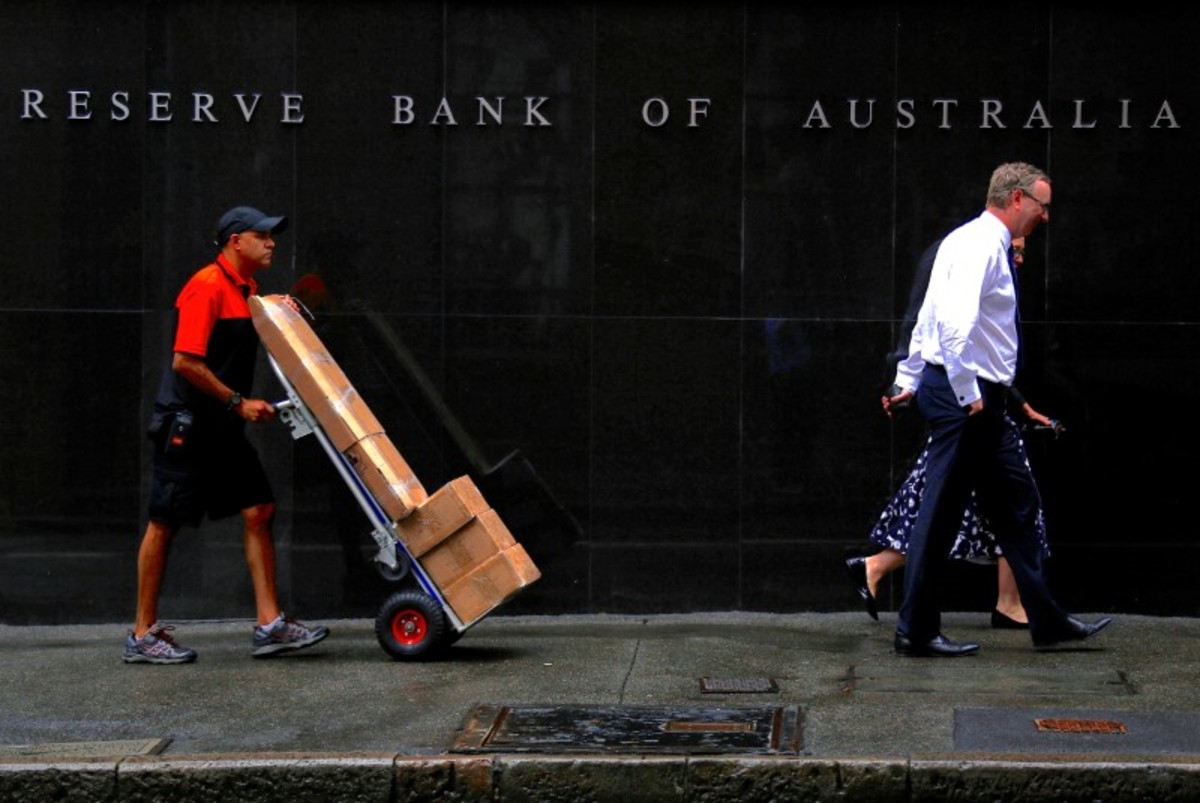
SYDNEY (Reuters) - Australia's central bank held rates at record lows for a 14th straight policy meeting on Tuesday and signs were they would stay sidelined for months to come in the face of stubbornly low inflation and caution among debt-laden consumers.
Wrapping up its monthly board meeting, the Reserve Bank of Australia (RBA) stuck with a prediction that economic growth would pick up to around 3 percent over the next few years, nudging unemployment down from the current 5.5 percent.
However, it struck a more cautious note on consumption and inflation.
"In underlying terms, inflation is likely to remain low for some time, reflecting the slow growth in labour costs and increased competitive pressures, especially in retailing," RBA Governor Philip Lowe wrote in a brief statement.
"Household incomes are growing slowly and debt levels are high."
The RBA last cut official rates in August 2016 in a largely successful attempt to head off the danger of deflation. Yet it has had less luck getting inflation back into its target band of 2-3 percent.
Consumer prices grew at an annual pace of just 1.8 percent in the third quarter and even that looks overstated.
A five-year update of household spending patterns by the Australian Bureau of Statistics (ABS) released on Monday implied inflation was actually running closer to 1.6 percent.
"It is clear is that the reweighting of the CPI will make it increasingly hard for the RBA to hit its inflation target in the medium term," said Westpac economist Justin Smirk.
"The Australian economy just does not have the inflationary impulse in the sectors that are inflating to offset the disinflationary pressures that dominate the consumer retailing space."
Fierce competition has forced retailers to slash prices, particularly in the supermarket space, yet overall sales barely added to economic growth in the third quarter.
Still, policymakers are reluctant to ease any further for fear of stoking a debt-driven bubble in the housing market. Household debt is already at an all-time peak of 190 percent of disposable income, and rising faster than wages.
As a result investors suspect this policy hiatus - what a past RBA governor termed "masterful inaction" - could linger for another year or more.
The futures market is now not fully pricing in a hike until early 2019 <0#YIB:>, a sea change from a couple of months ago when futures implied a hike by August next year.
The central bank will release its latest economic forecasts in a quarterly review of monetary policy on Friday and could well trim its inflation outlook, an adjustment that has become common in recent years.
"It's a bit of mixed bag for Australia whether you're looking at the growth story or the housing market," summed up Shane Oliver, chief economist at AMP Capital.
"It's a bit of messy picture which is the real reason the Reserve Bank is on hold. There's not enough in the data to push them in any one direction."
(Reporting by Wayne Cole; Editing by Eric Meijer)