SYDNEY (Reuters) - Australia's top central banker said on Friday the next move in interest rates could well be an increase with a steep property downturn seen as unlikely to derail domestic momentum.
Reserve Bank of Australia (RBA) Governor Philip Lowe's upbeat assessment on the otherwise slowing economy and a reaffirmed neutral stance on monetary policy contrast with the market's expectations for at least one rate cut this year.
Australia's A$1.8 trillion ($1.3 trillion) economy is in its 27th year of recession-free expansion but there are now questions over whether this dream run can continue amid a property slump, stratospheric household debt and subdued private consumption.
In response to these risks, the RBA switched to a neutral stance on policy earlier this month, although on Friday Lowe said it may be appropriate to lift rates sometime next year, if things go as planned.
The RBA has held rates at a record low 1.50 percent since last easing in August 2016. A median of 28 economists polled by Reuters, just this week, predicted this period of policy inaction to extend into early 2021.
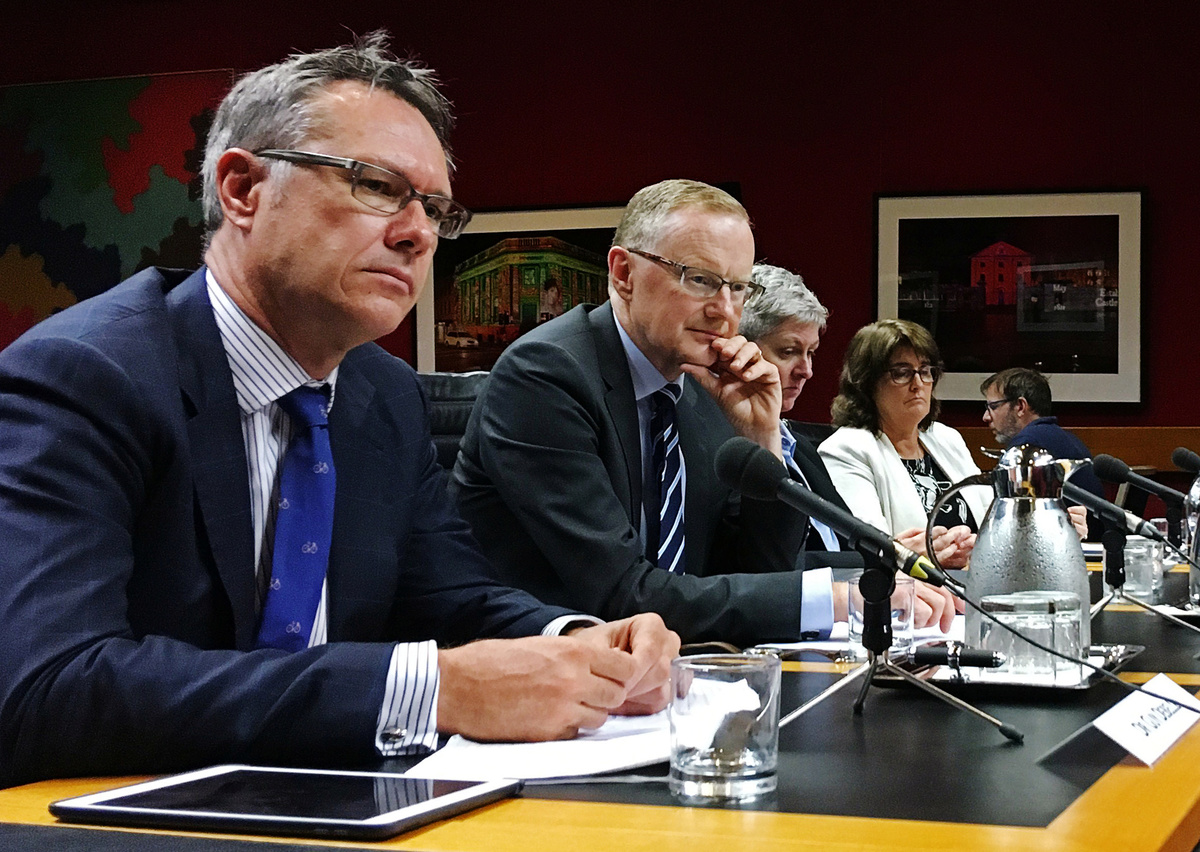
"There's a possibility that rates will need to go up," Lowe said at his biannual appearance before a parliamentary economics committee.
"I think it's unlikely that would occur this year because the inflation outlook looks so benign," Lowe added.
"But if things turn out broadly along the lines of the central scenario - the unemployment rate comes down, inflation rises - then at some point, next year, it may well be appropriate to increase interest rates."
The remarks boosted the Aussie dollar from Thursday's 10-day lows to a high of $0.7115.
"The market was aggressively pricing for rate cuts for later this year but Lowe's message gave a little bit of a lift to the currency," said Rodrigo Catril, currency strategist at National Australia Bank.
The RBA has forecast gross domestic product growth of around 2.75 percent by the middle of next year, unemployment steady at current 7-1/2 lows of 5 percent and inflation lifting slightly to the bottom of its 2-3 percent target band.
JOBS AND GROWTH
But consistent falls in home prices since late 2017 have led some analysts to forecast further policy easing, saying the diminishing wealth effect would hit household consumption. The latest call has come from Australia's No.2 lender Westpac Banking Corp, which predicted two cuts later this year to 1.00 percent.
Lowe seemed unperturbed, instead saying there was a positive side to the property downturn.
"This adjustment in the housing market is not expected to derail the economy," Lowe said in his opening remarks. "It will put our housing markets on more sustainable footings and allow more people to purchase their own home."
Home prices in Australia are now down about 8 percent to levels last seen in mid-2016 with sharp declines in key markets of Sydney and Melbourne.
Lowe said while the swings in housing prices were difficult for some, the economy and the financial system were resilient and would be able to weather the slowdown.
Having said that, the RBA did have the flexibility to move rates lower if needed, Lowe said, adding that rates were "not on a predetermined course", an indication the policy stance remains broadly neutral.
"As was the case six months ago, (the Board) does not see a strong case for a near-term change in the cash rate," Lowe said.
"With monetary policy already providing considerable support to the Australian economy, it is appropriate to maintain the current policy setting while we assess developments," he added.
"Much will depend on what happens in our labour market."
Boosting Lowe's confidence, data out on Thursday showed Australia's jobs growth surged past all expectations in January as firms took on more full-time staff while the jobless rate stayed at its lowest in 7-1/2 years.
(Reporting by Swati Pandey and Wayne Cole; Additional reporting by Tom Westbrook; Editing by Phil Berlowitz and Sam Holmes)