Get all your news in one place.
100's of premium titles.
One app.
Start reading
Reuters
Reuters
Politics

Australia, Japan committed to signing Asia Pacific trade pact by March, Turnbull says

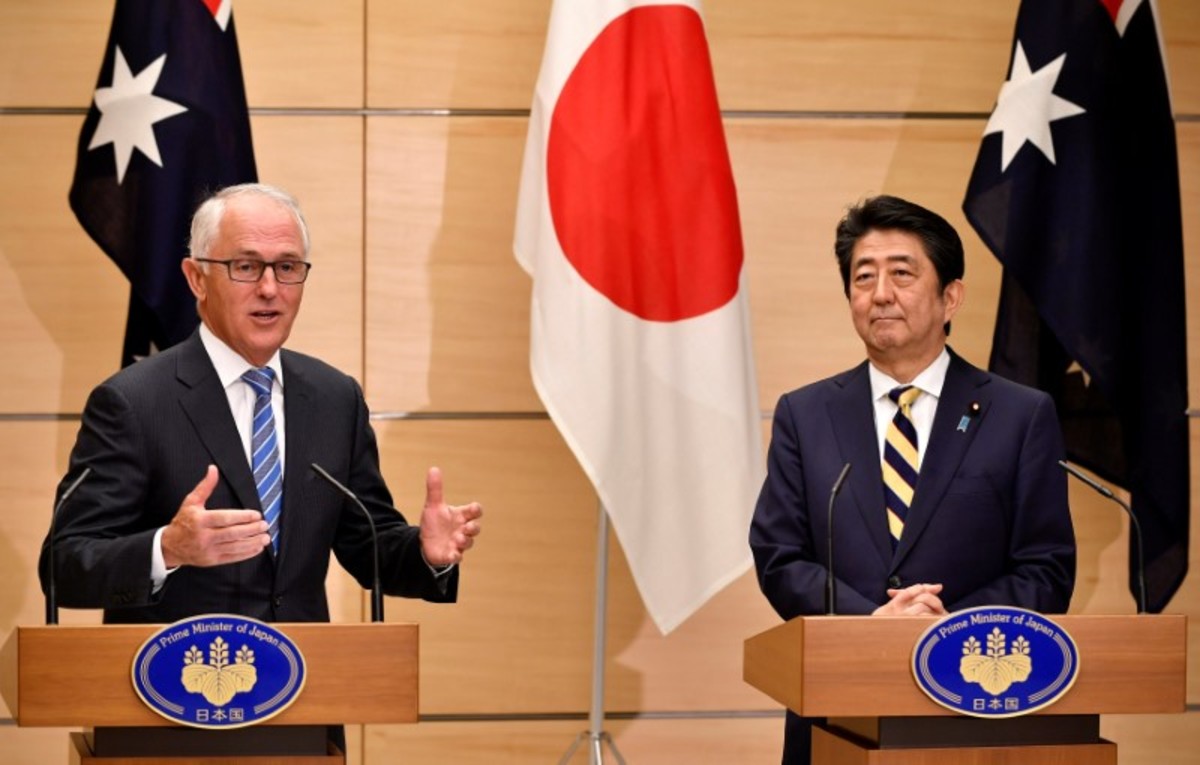
Australian Prime Minister Malcolm Turnbull speaks during a joint press conference with Japan's Prime Minister Shinzo Abe after their meeting at the Prime Minister's official residence in Tokyo, Japan January 18, 2018. REUTERS/Franck Robichon/Pool

TOKYO (Reuters) - Australia and Japan are committed to signing an Asia Pacific trade deal by March with countries in the region ready to forge a pact to replace the derailed Trans Pacific Partnership (TPP), Australian Prime Minister Malcolm Turnbull said on Thursday

"Prime Minister (Shinzo) Abe and I are personally committed to having this deal signed and sealed by March," Turnbull said in a speech in Tokyo.

Eleven countries met at an Asia-Pacific Economic Cooperation (APEC) summit in Vietnam last November to keep alive a Trans Pacific trade deal after U.S. President Donald Trump in early 2017 announced that the United States was withdrawing in the name of protecting U.S. jobs.
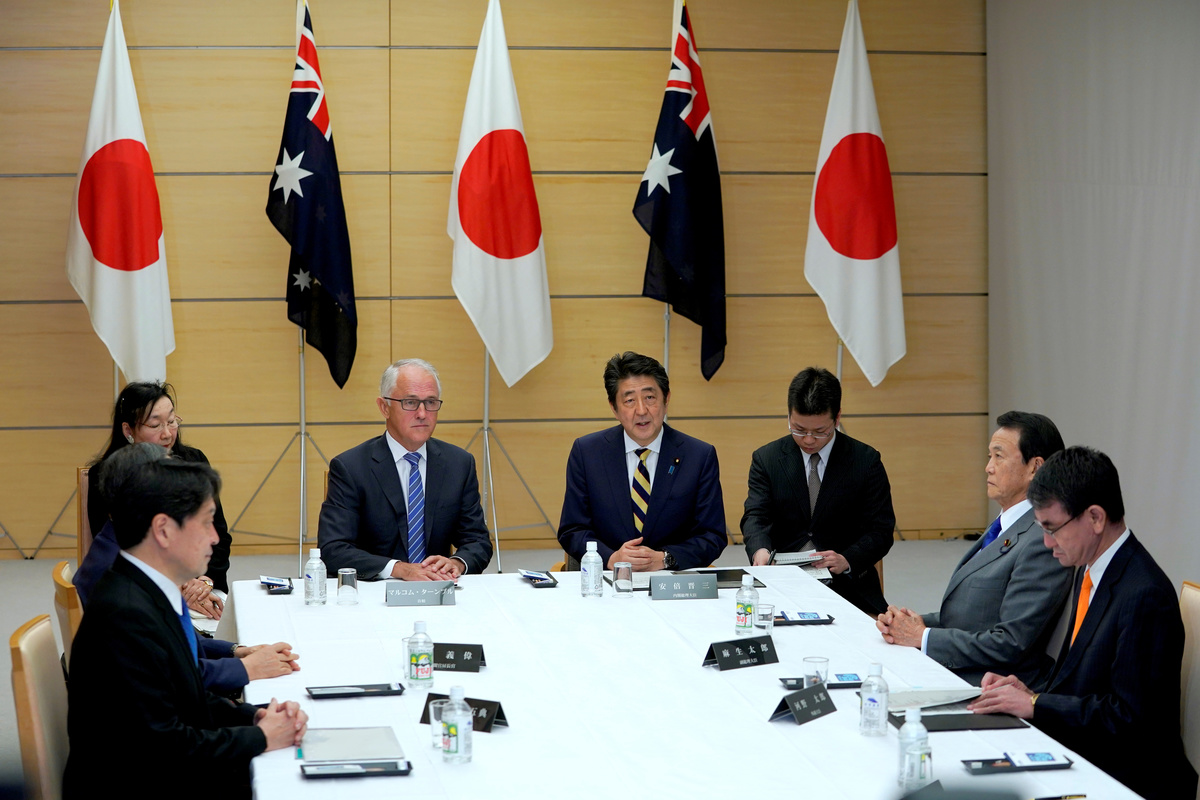
Australia's Prime Minister Malcolm Turnbull, center left, talks with his Japanese counterpart Shinzo Abe, center right, Defense Minister Itsunori Onodera, left, Deputy Prime Minister Taro Aso, second right, and Foreign Minister Taro Kono, right, during a meeting of Japan's National Security Council at Abe's official residence in Tokyo, Thursday, January 18, 2018. REUTERS/Shizuo Kambayashi/Pool

Ministers from the 11 countries including Japan, Australia and Canada agreed on core elements to move ahead without the United States, but demands by countries including Canada for measures to ensure the deal protects jobs, remain a sticking point.

"Our strong preference is for all 11 countries to join the first wave but our focus is on bringing a new TPP agreement into force as soon as possible with those who are ready to move," Turnbull said.

Negotiators will meet in Tokyo next week in the hope of smoothing out obstacles to an agreement, now known as the Comprehensive and Progressive Agreement for Trans-Pacific Partnership (CPTPP).
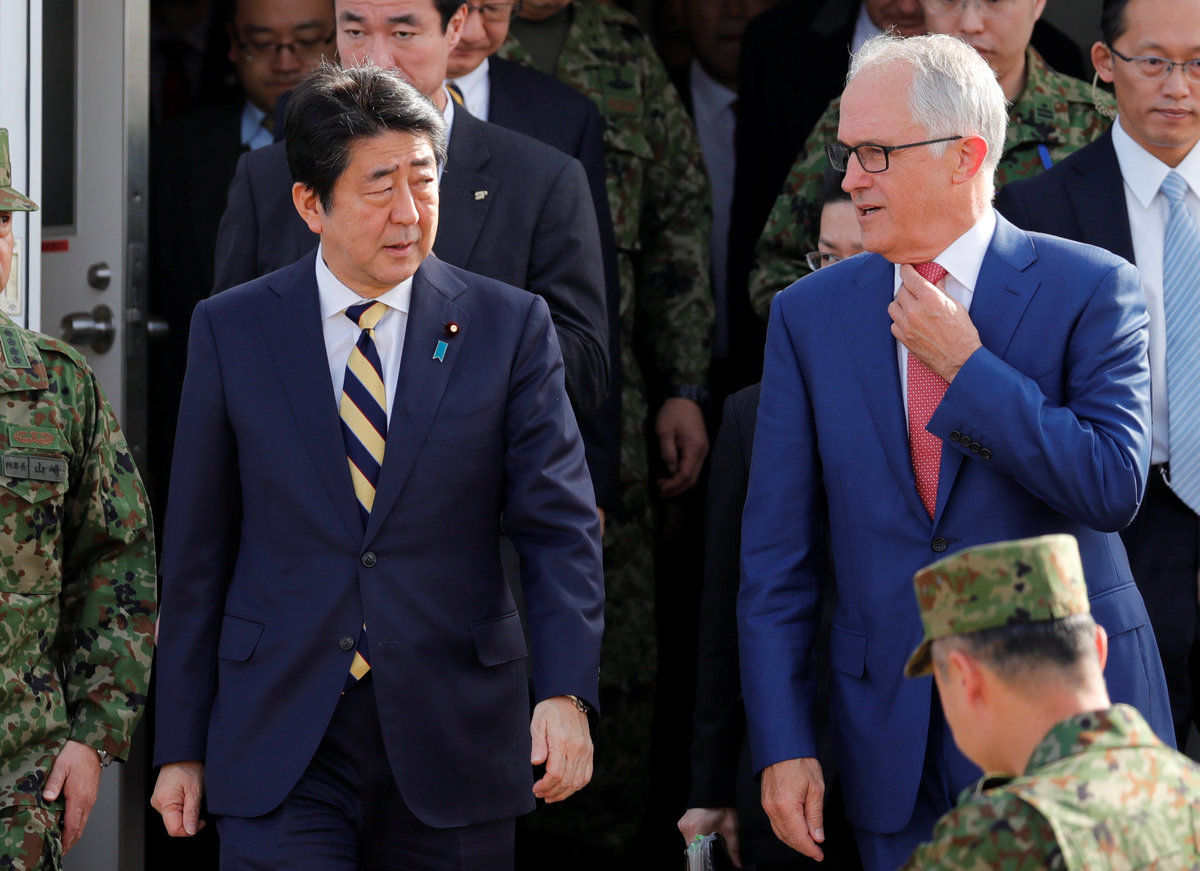
Australian Prime Minister Malcolm Turnbull (R) and Japanese Prime Minister Shinzo Abe arrive at Narashino exercise field in Funabashi, east of Tokyo, Japan January 18, 2018. REUTERS/Kim Kyung-Hoon

The agreement will leave a door open for eventual U.S. participation, Turnbull added.

"We are consciously setting it up to enable and encourage the United States to dock in should it choose to do so in the future," he said.

Turnbull and Abe later promised to work together to bolster security ties and they condemned North Korea's nuclear and ballistic missile programmes as "flagrant violations" of U.N. Security Council resolutions.
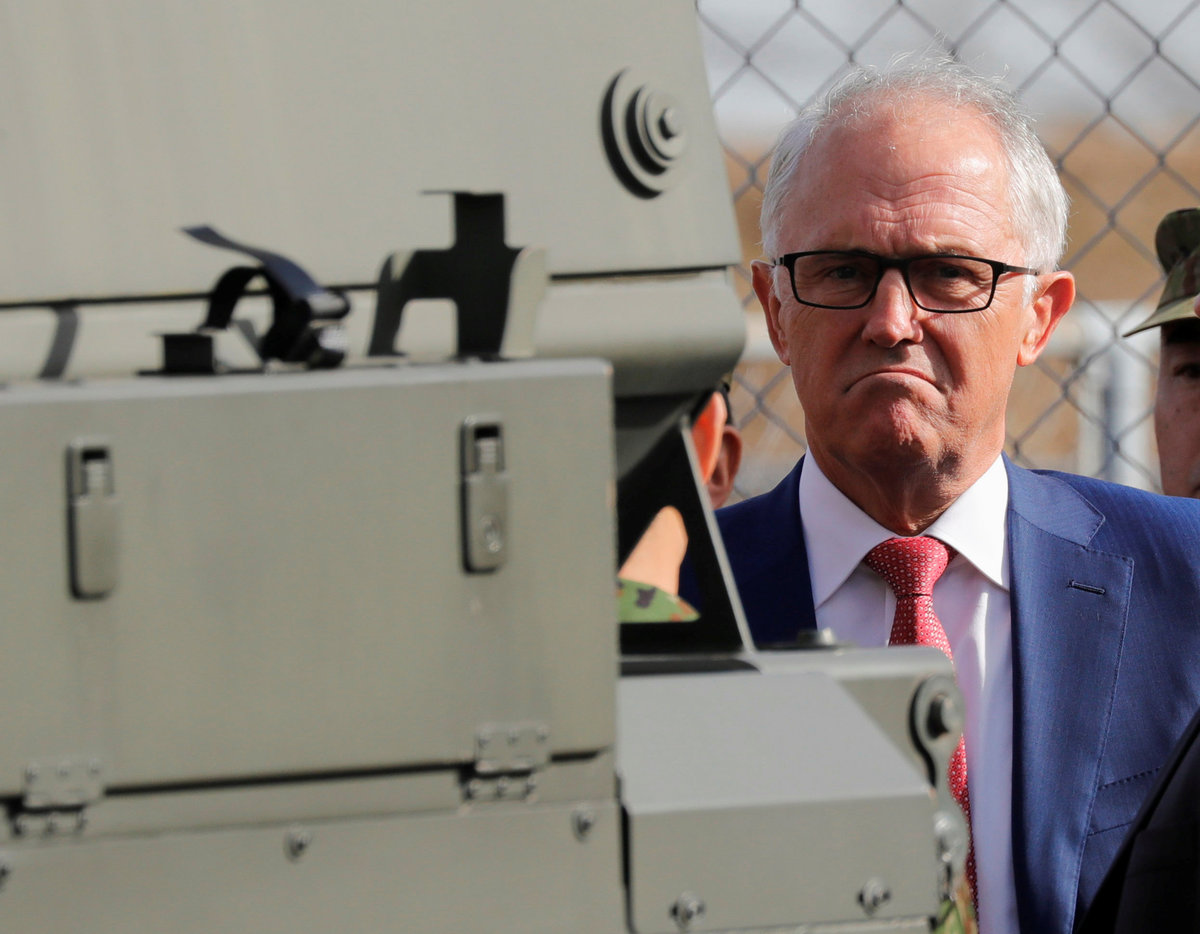
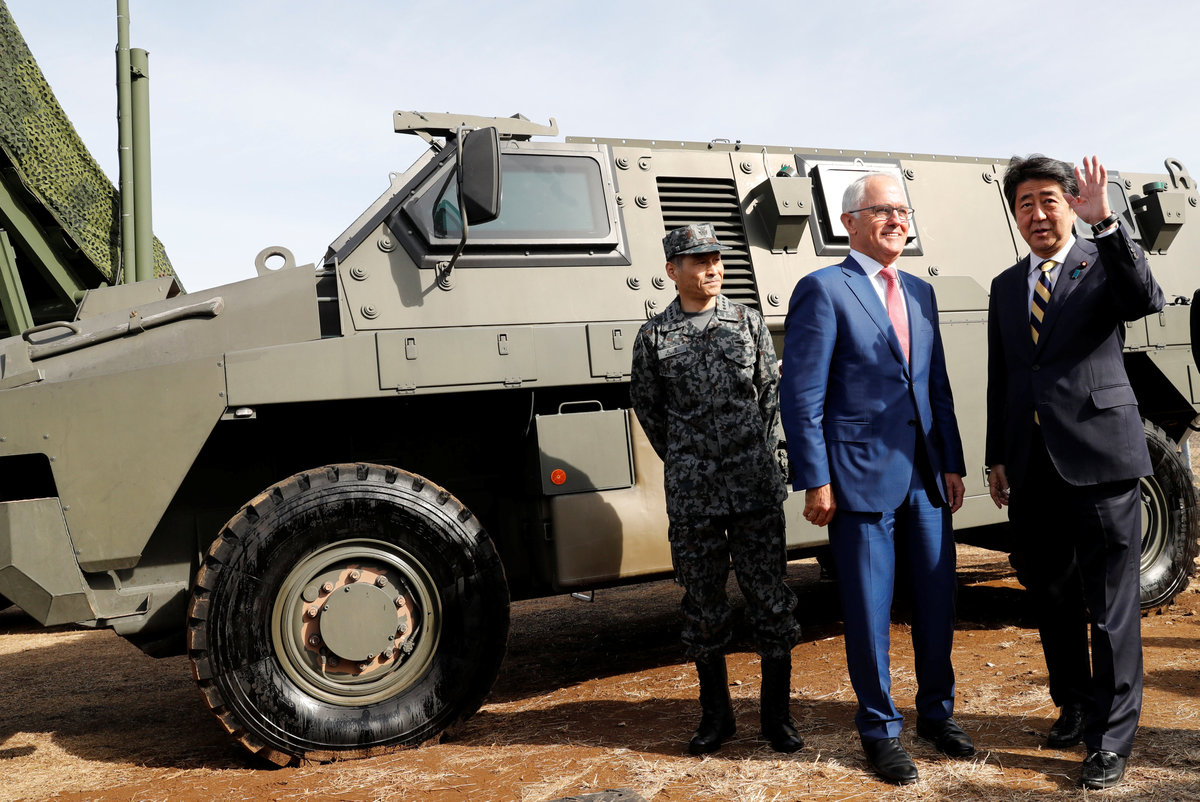
Australian Prime Minister Malcolm Turnbull looks around a Bushmaster military vehicle at Narashino exercise field in Funabashi, east of Tokyo, Japan January 18, 2018. REUTERS/Kim Kyung-Hoon

The two "reaffirmed their commitment to continuing coordination to implement strong autonomous sanctions and to bringing maximum pressure to North Korea", they said in a statement.

"North Korea presents and unprecedented imminent threat," Abe said during a joint news announcement with Turnbull.

They also directed their governments to conclude a visiting forces agreement, which would make it easier for Japanese troops to train at bases in Australia and for them to increase cooperation through joint exercises.
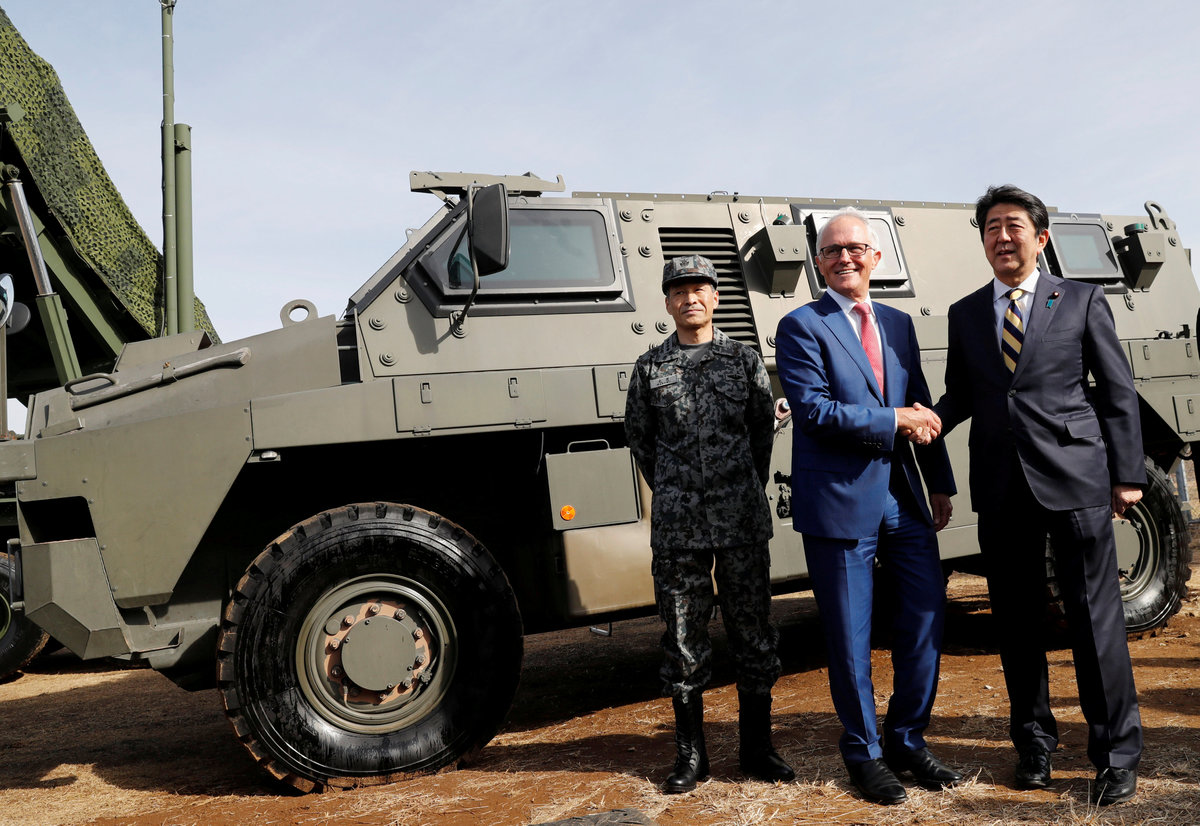
Australian Prime Minister Malcolm Turnbull (C) shakes hands with Japanese Prime Minister Shinzo Abe in front of a Bushmaster military vehicle at Narashino exercise field in Funabashi, east of Tokyo, Japan January 18, 2018. REUTERS/Kim Kyung-Hoon TPX IMAGES OF THE DAY

The two countries have been negotiating such an agreement since 2014. It would be the first such agreement that Japan has with another country apart from the United States.
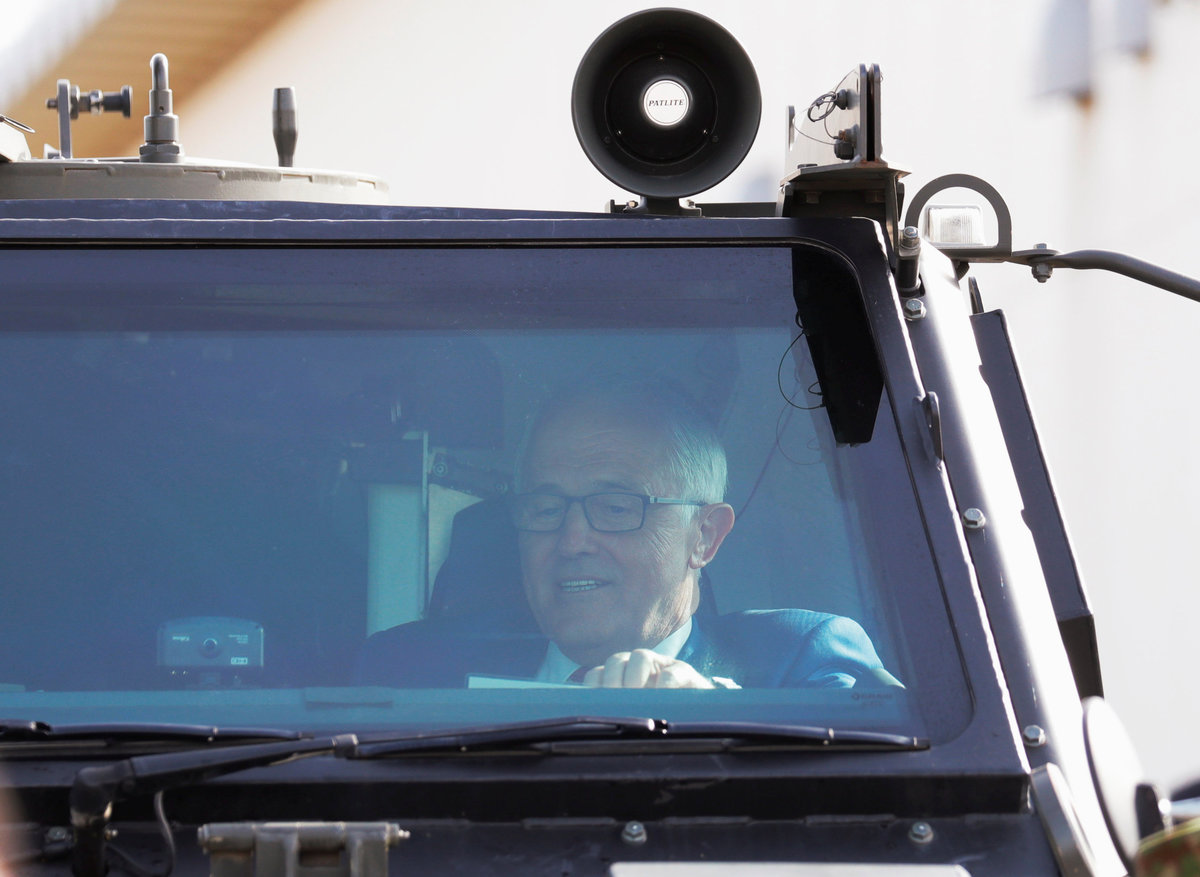
Australian Prime Minister Malcolm Turnbull rides in a Bushmaster military vehicle at Narashino exercise field in Funabashi, east of Tokyo, Japan January 18, 2018. REUTERS/Kim Kyung-Hoon

(Reporting by Tim Kelly; Editing by Michael Perry)
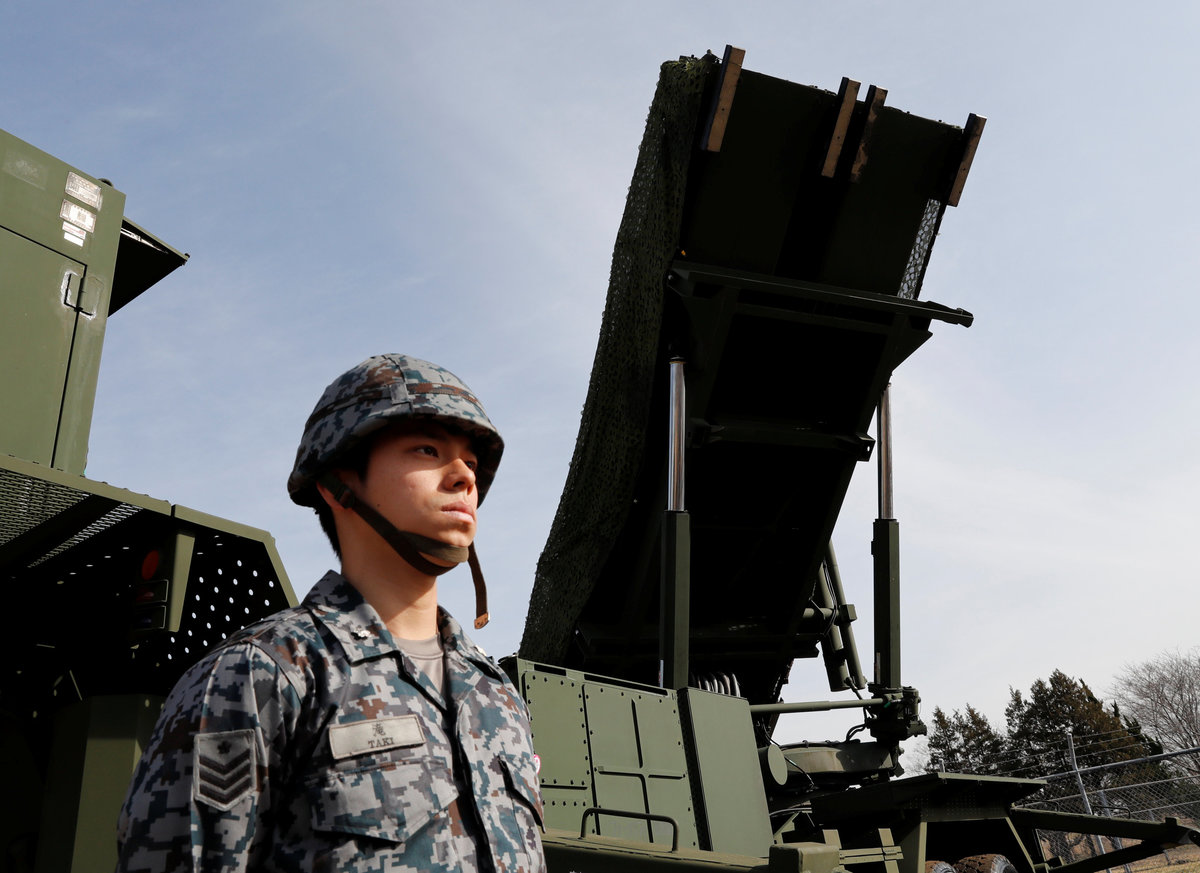
A Japanese Ground Self-Defense Force member stands in front of PAC-3 missile interceptor at Narashino exercise field in Funabashi, east of Tokyo, Japan January 18, 2018. REUTERS/Kim Kyung-Hoon
Australian Prime Minister Malcolm Turnbull and Japanese Prime Minister Shinzo Abe stand in front of a Bushmaster military vehicle at Narashino exercise field in Funabashi, east of Tokyo, Japan January 18, 2018. REUTERS/Kim Kyung-Hoon
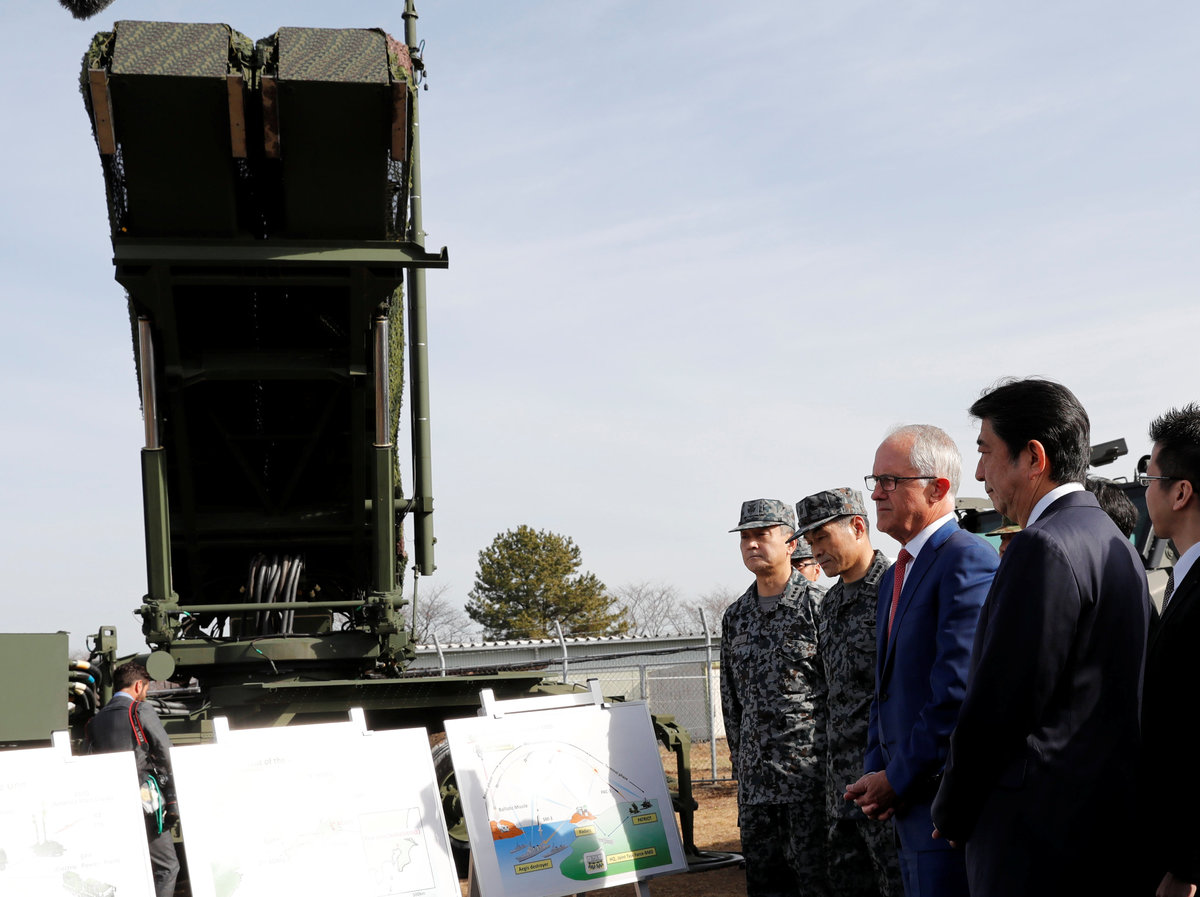
Australian Prime Minister Malcolm Turnbull (2nd R) and Japanese Prime Minister Shinzo Abe listen an explanation in front of a PAC-3 missile interceptor at Narashino exercise field in Funabashi, east of Tokyo, Japan January 18, 2018. REUTERS/Kim Kyung-Hoon
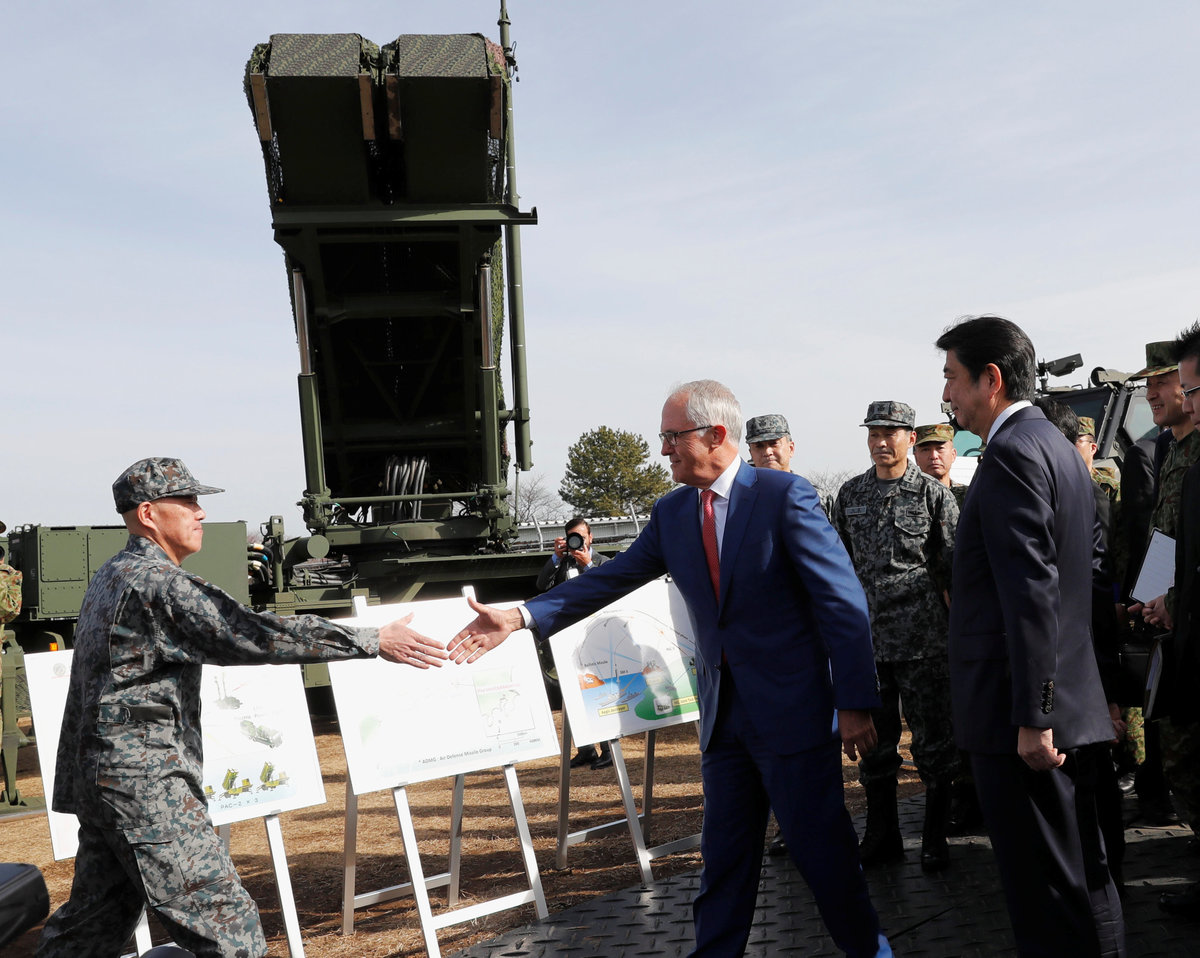
Australian Prime Minister Malcolm Turnbull (C) shakes hands with a Japanese Ground Self-Defense Force officer as he insects PAC-3 missile interceptors with Japanese Prime Minister Shinzo Abe (R) at Narashino exercise field in Funabashi, east of Tokyo, Japan January 18, 2018. REUTERS/Kim Kyung-Hoon
Sign up to read this article
Read news from 100's of titles, curated specifically for you.
Already a member? Sign in here
Related Stories
Top stories on inkl right now
One subscription that gives you access to news from hundreds of sites
Already a member? Sign in here
Our Picks
Fourteen days free
Download the app
One app. One membership.
100+ trusted global sources.