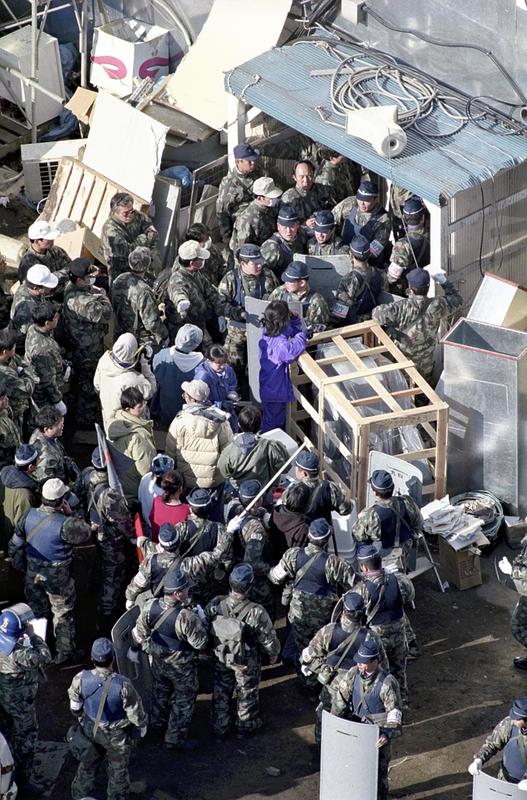
Friday's executions of Chizuo Matsumoto, former leader of the now defunct Aum Supreme Truth cult, and six other death-row inmates was the outcome of a series of unprecedented crimes that claimed the lives of 29 people, injured more than 6,500 others, and came to be seen as defining events of the Heisei era.
The Justice Ministry's timing of the executions was meant to strongly demonstrate that "These cases, which symbolize crime in the Heisei era, must be resolved before the era comes to a close," according to a senior ministry official. The name of a new era will be announced in May next year.
Before Friday, the largest number of people executed on a single day was four, according to ministry statistics dating back to November 1998, when the ministry began releasing figures immediately after executions.
Some within the ministry argued that all 13 accomplices should be executed simultaneously, citing the gravity of the cases involving the cult.
However, the ministry rejected the idea mainly because of a lack of sufficient facilities and security problems at detention houses where the death-row inmates are housed.
The seven inmates executed Friday were apparently chosen based on the number of crimes they had been involved with and their positions within the cult, among other factors.
The next major issue to resolve is when to execute the six remaining death-row inmates.
The ministry is believed to be debating the timing of their executions in light of the idea that they may become psychologically unbalanced following Friday's executions.
Read more from The Japan News at https://japannews.yomiuri.co.jp/