
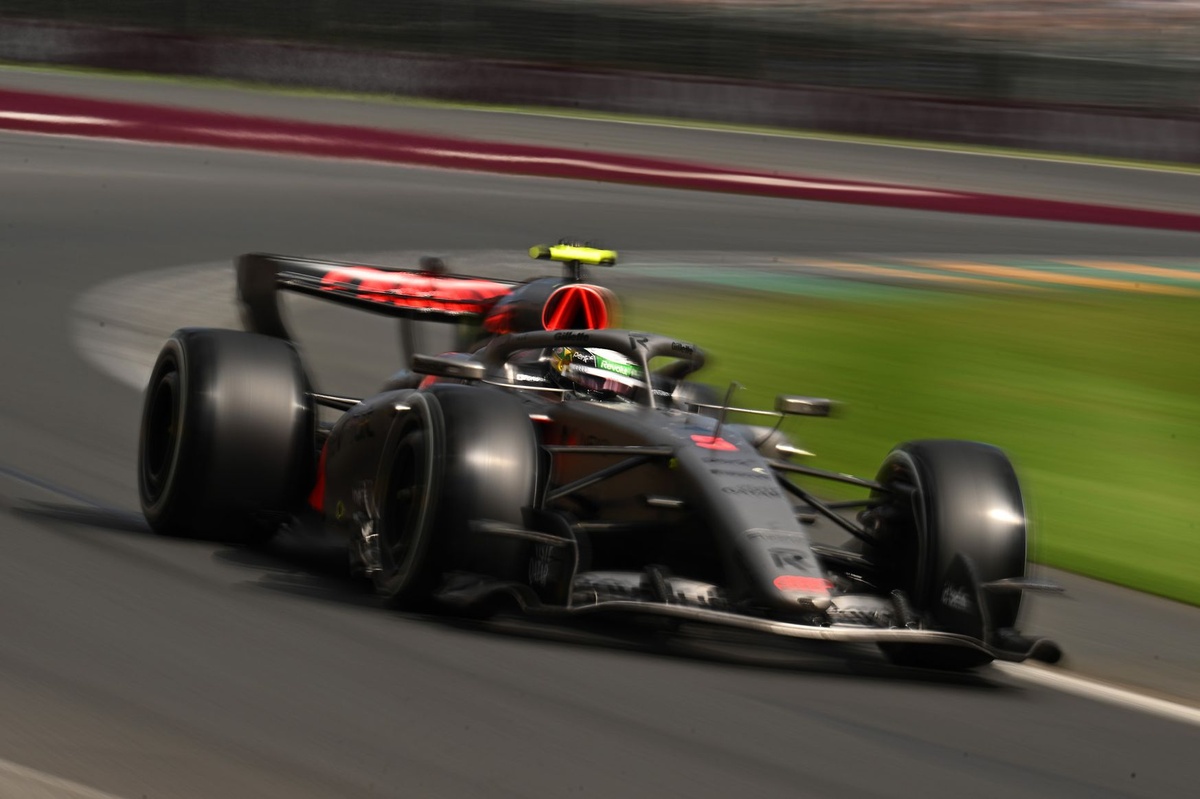
Gabriel Bortoleto has “full confidence” that Audi will be able to overcome its current power deficit and become one of Formula 1’s leading engine manufacturers in the future.
The German marque made its F1 debut at the Australian Grand Prix last weekend after taking over ownership of the erstwhile Sauber operation, with Bortoleto guiding the R26 to a solid ninth-place finish.
While the result itself was encouraging, the Albert Park Circuit exposed certain weaknesses in the powertrain, which Audi had designed in-house at its heavily-renovated facility in Neuburg. Further, Nico Hulkenberg was unable to start the race due to technical problems, while Bortoleto was also consigned to the garage in Q3 with mechanical gremlins.
The debut followed some teething issues for the brand during the Barcelona shakedown, which it managed to resolve to a large extent ahead of the two full-fledged tests in Bahrain.
Bortoleto said Audi is aware of the shortcomings of its 2026 powertrain, but believes the team will eventually be able to catch up with rivals that have been running hybrid engines since the introduction of the previous regulations in 2014.
“I have no doubt,” he said when asked if Audi can improve its V6 engine. “I can't tell you when we're gonna be there, but I can tell you that we're gonna be there. If it's this year, if it's next year, I don't know, but I have full confidence that we're gonna be one of the top engine manufacturers in the future.
“We understand the reasons why we miss [power], and it's just about working and learning things. There are teams doing this for 15 years, and we are in the first year of building an engine, so it's not easy.”
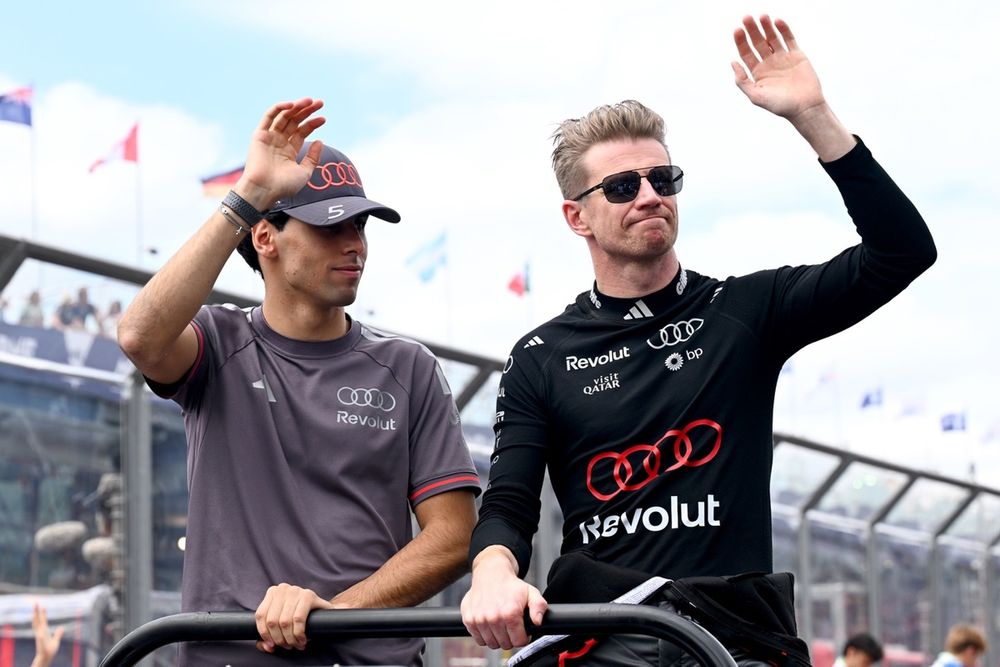
Audi team principal Jonathan Wheatley previously served as the sporting director at Red Bull, whose engine partner Honda made significant strides after a difficult start to become F1’s benchmark power unit supplier in the 2020s.
Wheatley stressed that the current hybrid engines are still in their infancy and will continue to evolve over the coming years.
Asked when Audi might be able to deliver engine upgrades, he said: “If you look at all the teams, we're at the very early stages of this set of technical regulations, which is the biggest change in technical regulations in my time in this sport - perhaps ever.
“The sophistication of the cars at Race 1 [of 2026] is going to be very different to Race 1 in 2030, or 2027, 2028, 2029. As the cars get more sophisticated, the engines become more efficient and the racing becomes closer.
“I think we're just at the early set of these regulations, and it's just a case of developing our cars all the way through it, including the power unit.”
The 2026 engine rules have been designed to give struggling manufacturers a chance to close the gap to the front. Under the Additional Development and Upgrade Opportunities (ADUO) system, the performance of every engine is assessed every six races in the season. Manufacturers whose internal combustion engines are between 2% and 4% down on power compared to the benchmark are allowed an additional engine upgrade, while those more than 4% behind receive two extra upgrades.
The sixth round of the 2026 season is currently scheduled to take place in Miami on 3 May, but the calendar could see a major shuffle if the Bahrain and Saudi Arabia races in April are cancelled due to the ongoing conflict in the Middle East.
Such a scenario could complicate Audi’s plans to introduce upgrades under the current system.
“At the moment, those two races are happening, and that's our focus,” he said. “After each batch of six races, the ADUO is revisited by the FIA. It's a little too early to say at the moment.
“It's fascinating to see the way the cars are using their energy around the lap, trying to overtake. Gabby commented post-race that it was exhausting, not just physically but mentally, because of how you use the power and how you recover.
“I think we're a little way away from really understanding if that's something that we'll be able to take advantage of.”