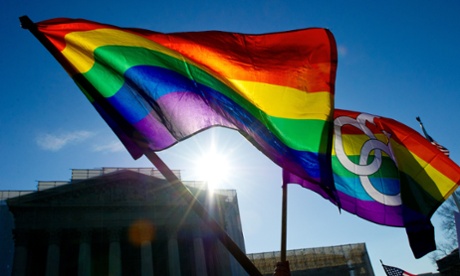
Attorneys on Friday asked the US supreme court to review two same-sex marriage cases in Ohio as advocates on both sides of the marriage equality debate push for the nation’s highest court to rule on its legality once and for all.
The petition filed on Friday asks the court to review two cases that call into question the constitutionality of Ohio’s same-sex marriage ban.
One case, Henry v Hodges, asks the state to recognize marriages so same-sex couples can have the same rights as heterosexual couples, especially the right to have both their names on the birth certificates of adopted children. The Ohio department of health has refused to issue birth certificates with the names of same-sex parents.
The other case, Obergefell v Hodges, also seeks recognition of same-sex marriage and is particularly interested in allowing the surviving spouses on death certificates.
The petitions were filed by Lambda Legal, the American Civil Liberties Union and private law firm Gerhardstein & Branch.
“These cases are about love, from birth to death,” lawyers wrote in the petition. “Relationships at the heart of each case involve the love spouses share.”
The supreme court in October declined to take up the seven petitions that had been filed for review. This decision to not take action allowed rulings in favor of same-sex marriage to stand and saw it become legal in several states.
Last week, the sixth circuit court of appeals became the first circuit court to rule against same-sex marriage since the Defense of Marriage Act was overturned in June 2013. Justice Ruth Bader Ginsburg has hinted that a circuit split would compel the supreme court to take up a same-sex marriage case.
“We have reached a tipping point, and the lives of thousands of same-sex spouses and their families hang in the balance,” said Susan Sommer, director of constitutional litigation for Lambda Legal, in a statement. “The sixth circuit court of appeals’ ruling shines a spotlight on our divided country, where married same-sex couples are either respected or discriminated against, depending on where they live or even where they travel.”