The government’s most senior legal adviser acted unlawfully when he overrode a court and blocked the publication of secret letters written by Prince Charles, the supreme court has been told.
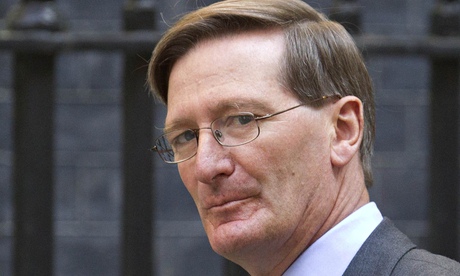
Dinah Rose QC, for the Guardian, said Dominic Grieve, when he was attorney general, had behaved “contrary to fundamental constitutional principle”. She said Grieve could not override a court simply because he disagreed with its verdict.
Three judges in a court had ordered the publication of the prince’s letters to government ministers on the grounds that the public should see how the heir to the throne had sought to influence official policies.
In 2012, Grieve overrode the court, saying the letters had to be kept confidential as their contents would seriously damage his future role as monarch by compromising the position that the sovereign was politically neutral.
The prince’s letters to government ministers have over the years been dubbed the “black spider memos” because of his scrawled handwriting. Rose was speaking on the closing day of a supreme court hearing that could be the final stage of a nine-year battle over publication of the letters.
The prince exchanged 27 letters with ministers in seven departments between September 2004 and April 2005. The Guardian has been seeking copies of these letters under the Freedom of Information Act, but the request has been rejected since 2005 by the government, with the backing of the prince. The supreme court is due to give its verdict at a later date, probably next year.
The dispute has reached the highest court in the land after a series of hearings in the lower courts. In March the court of appeal ruled that Grieve acted unlawfully two years ago when he issued a veto to override the verdict of the three judges in a freedom of information tribunal.
On Tuesday, Rose said the freedom of information tribunal was an independent and impartial court that had come to its conclusion after hearing extensive legal arguments from the government and the Guardian.
The attorney general had chosen not to appeal against the tribunal’s decision, she said. “By contrast, [the attorney general] is neither independent nor impartial but is a member of the government which is seeking to prevent disclosure of the documents. He has not conducted any hearing, or heard representations by [the Guardian].”
Rose said Grieve had “identified no error” by the tribunal. Grieve “simply disagreed with the conclusions of the tribunal, for reasons which had already been advanced by the government departments, considered and rejected by the tribunal,” she said.
She said the use of veto by Grieve “significantly undermines the rule of law and the principle of the separation of powers” between the courts and the government.
She highlighted how the tribunal had accepted that the prince “has expressed strong views on matters of political controversy, including as to legislation being introduced”.