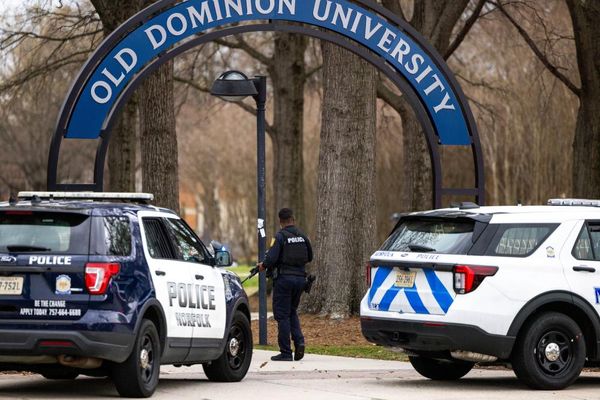
What does that depressed looking young man whose face adorns the Charleston massacre reports have in common with those young British Muslims whose defection to the Islamic State “caliphate” so worries David Cameron? Quite a lot, I imagine, including the adolescent belief in purification through slaughter.
At a pretty easy stretch we could probably place members of the Syriza youth wing demonstrating outside the Athens parliament building last night against compromise with the wicked EU in a similar mindset. “A choice between more austerity and chaos? Chaos,” one demonstrator told reporters.
That’s the authentic voice of angry and alienated youth too, isn’t it? Things couldn’t be worse than they are, could they? In the case of Greece, where youth unemployment is around 50% and the economy has collapsed by a quarter, we may be about to find out. Both Brussels and Athens will regret their brinkmanship if no deal is done.
It’s not hard to see why such people – poor white Americans, teenage Muslims and unemployed Greeks – feel so cross. A lack of hope for the future or uncertainty about their place in society makes them prey to seductive remedies that will probably make things worse in pretty short order.
David Cameron’s speech to a security summit in Slovakia is a more direct attempt to address such alienation and therapeutic violence than a world-weary Barack Obama managed on Thursday. The president noted that yet again an American had killed Americans with a gun – the 14th massacre of his presidency – and that they really must face up to residual racism and the US’s peculiar folly over guns. No sign of it happening soon, he seemed to be saying. Not good enough.
In the wake of the latest defection of young British Muslims – three sisters and their nine kids from Bradford – to the illusion that is Isis the newly re-elected prime minister sounded perkier. He challenged the Muslim community and internet service providers over their ambivalence towards complicity in terrorist recruitment.
The PM has some cover from Muslim community leaders brave enough to say that it’s not good enough to blame society, the cops and the security services or radical Muslim preachers. Parents, friends and family have responsibilities too and often seek to disown them. Who can remember the father who blamed the police for his daughter’s flight, but turned out to have flag-burning Islamist form himself.
None of us is free of hypocrisies in this sort of discussion. The cerebral and anti-war Obama is a keen user of drones as a tool of political assassination, something the late Duke of Wellington would have thought caddish. The latter denied an officer’s request to kill Napoleon when the emperor was briefly in his sights at Waterloo.
But families are uniquely intimate structures where the personal is often intertwined with the political, for both good and ill. So the rebellious teenage offspring who rejects his parents and upbringing often embraces a political identity radically different to their own. The Tory banker’s son who becomes a leftie and the secular Muslim engineer’s daughter who rejects her western education for the burka are contemporary cliches, but none the less true for being that.
It’s nearly a year since I offended some readers here by likening young Muslim runaways to the Harry Enfield character Kevin the Teenager. Confused adolescents most of them, who would soon regret their decisions - too late for this week’s Dewsbury suicide bomber in Iraq or the Somali firefight victim from High Wycombe - most jihadi Kevins should be treated lightly if they get safely home, I argued. Some experts were saying the same thing and still do.
As with most criminal ventures, it’s always worth making a distinction here between organisers and foot soldiers, between the ringleaders and fiery clerics (safe in London) and the cannon fodder or suicide bombers, between the ones who get the money and the girls and those who get caught or killed. At least Obama’s drones even up the odds a bit there.
Isis’s appeal cuts across class and gender. Profiles suggest that some runaways had thwarted dreams of being rappers or footballers and took the Syrian shortcut to “being someone”. But middle class kids with good prospects, medical students even, but uncertain cultural identity have flown south too. In the case of the Bradford sisters there are even some suggestions of a feminist dimension. Were they rebelling against unhappy arranged marriages?
Yet this passage in Cameron’s pre-delivery text could surely apply to Dylann Roof growing up in racially divided South Carolina with poor personal prospects: “A troubled boy who is angry at the world or a girl looking for an identity, for something to believe in, and there’s something that is quietly condoned online or perhaps even in parts of your local community, then it’s less of a leap to go from a British teenager to an [Isis] fighter or wife than it would be for someone who hasn’t been exposed to these things.”
Debate has already begun in the US over whether or not Roof’s actions should be described as terrorism. I am disinclined to endorse that view. Dreadful and frightening though it was, as Gary Younge explains there is no reason yet to suppose it was other than the action of an unstable loner. More like Norway’s mass killer, the sinister but sad Anders Behring Breivik in 2011 than the Ku Klux Klan. Society has to react firmly to lawlessness, but it must also keep its nerve and sense of proportion.
That might still be the best response for irate EU leaders as they face the endgame in their test of wills with the Syriza government and angry young supporters in the streets of Athens who would prefer chaos to compromise with Greece’s creditors.
Alexis Tsipras, Greece’s prime minister, Yanis Varoufakis, his engaging game theory expert and finance minister, and many senior Syriza colleagues are from privileged backgrounds, more public school lefties than proletarian radicals. It shelters them from the harsh realities facing some of their supporters, dependent on grandpa’s pension in many cases, as Jon Henley explains, if things go wrong with their hunch that the EU creditors will blink first.
There’s a touch of Kevin the Teenager game theory to their cheeky tactics, prompting the IMF’s Christine Lagarde pointedly to ask for some adults to negotiate with. But the awkward fact is that there is no way EU banks and taxpayers, the Wonga payday lenders in the tale, will get their money back now. It can’t be done.
As Nils Pratley points out, a Greek exit from the eurozone will be awful for Greece, which lacks are the prerequisites to make a success of a devaluation-and-start-again policy of retrenchment and reform.
But a breach in the eurozone will be awful for its member states too, whatever the insouciant optimists claim to the contrary in Berlin and Brussels. That indirectly means bad for us too, economically as well as in security terms.
The Syriza team may be tempted to make economic suicide bombers of their supporters, but Angela Merkel must play the grownup, forgive them and let them come home to the family. The clock is ticking and failure will only give hope and opportunity to much nastier people than Syriza, the kind who believe in purification through blood.