Welcome to At the Races! Each week we bring you news and analysis from the CQ Roll Call campaign team. Know someone who’d like to get this newsletter? They can subscribe here.
By abruptly announcing his retirement minutes before the filing deadline, Republican Sen. Steve Daines essentially cleared the way for his chosen successor, Kurt G. Alme, the U.S. attorney in Montana.
The gambit has become something of a trend.
Here’s how it works: A retiring lawmaker waits until the last possible moment to withdraw their candidacy. Coincidentally, a handpicked successor files before the deadline elapses. By the time news leaks that the seat is open, it’s too late for anyone else to enter the race.
When the Daines news went public, Alme was ready to roll out endorsements from top Republicans, including President Donald Trump.
“This is bullshit. A Montana Senator is rigging an election and it’s miles beneath the dignity of our democracy,” Rep. Marie Gluesenkamp Pérez, a Washington Democrat, posted on X.
Gluesenkamp Pérez has been consistent. She led an effort last year to rebuke Rep. Jesús “Chuy” García, D-Ill., over a similar move in the House. As Nina Heller reported for Roll Call at the time, 23 Democrats joined members of the House GOP in disapproving of García’s conduct.
Montana Republican Rep. Ryan Zinke also swiftly endorsed radio host and veteran Aaron Flint after announcing his retirement earlier this week, although Zinke did so days before the deadline. And back in 2024, then-Rep. Bill Posey, a Florida Republican, did essentially the same thing, allowing Rep. Mike Haridopolos to get his name on the ballot at the last minute and effectively blocking other contenders.
But “the optics of Daines engineering a coronation for Alme could backfire” and provide an opening for newly launched independent candidate Seth Bodnar, writes Jacob Rubashkin of Inside Elections with Nathan L. Gonzales.
Bodnar, the former president of the University of Montana who is running a Dan Osborn-style race in a ruby-red state, said Daines’ ploy is emblematic of the “disgusting arrogance of Washington politicians and their party bosses who trade power back and forth like candy.”
Starting gate
Noem out: Trump announced Thursday that he would move to replace embattled Homeland Security Secretary Kristi Noem with Sen. Markwayne Mullin. The Oklahoma Republican, who is up for reelection this year, will need to be confirmed by the Senate to serve in the role permanently. Under state law, Gov. Kevin Stitt is empowered to appoint a replacement to serve the rest of Mullin’s term, but that person is precluded from running for a full term. Possible contenders to seek a full term in November include Reps. Stephanie Bice and Kevin Hern.
Ushering Gonzales out: House Republican leadership is urging scandal-plagued Rep. Tony Gonzales to forgo his reelection bid, even though he qualified for a May runoff against fellow Republican Brandon Herrera. Gonzales on Wednesday admitted to an affair with a staffer who died by suicide. “We have encouraged him to address these very serious allegations directly with his constituents and his colleagues,” Speaker Mike Johnson and other House leaders said in a statement. “In the meantime, Leadership has asked Congressman Gonzales to withdraw from his race for re-election.”
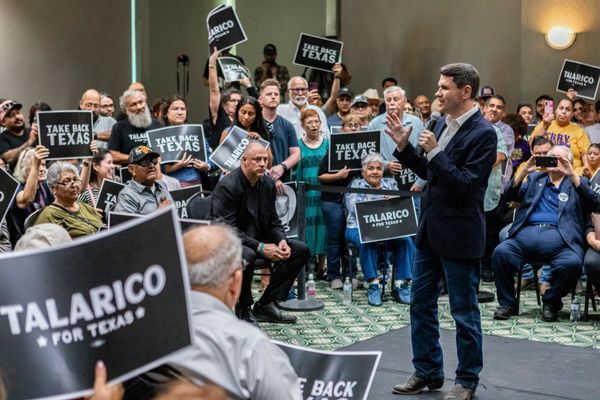
Primary recap, Texas edition: Sen. John Cornyn and state Attorney General Ken Paxton advanced to a May 26 runoff after neither candidate secured 50 percent of the vote in Tuesday’s GOP primary. Democratic voters, meanwhile, picked state Rep. James Talarico over Rep. Jasmine Crockett as their Senate nominee. Also Tuesday, Rep. Daniel Crenshaw, a four-term Republican, lost a primary by double digits to Steve Toth, an ultraconservative state lawmaker. Other incumbents, including Democratic Reps. Al Green and Julie Elizabeth Johnson, were forced into runoffs.
Primary recap, North Carolina edition: Voters finalized the November ballot for the state’s high-profile Senate race, pitting former Republican National Committee Chairman Michael Whatley against former Gov. Roy Cooper. In the battleground 1st District, retired Army Col. Laurie Buckhout won the Republican nomination to once again take on Democratic Rep. Don Davis. And in the deep-blue 4th District, Rep. Valerie P. Foushee appears to have narrowly defeated progressive challenger Nida Allam. As of Thursday afternoon, The Associated Press has yet to call the race, but Allam conceded Wednesday night.
New York map on pause: The Supreme Court blocked a New York state court-mandated redrawing of a Staten Island-based House seat while an appeals process plays out, Michael Macagnone reports. The decision clears the way for GOP Rep. Nicole Malliotakis to seek reelection in a Republican-leaning district, while Democratic Rep. Dan Goldman seems likely to stick with his current district, where he faces a primary challenge from former New York City Comptroller Brad Lander.
#MAHAmoment: The MAHA PAC is seeking to exert its influence in this year’s midterm elections, including in Louisiana’s Republican Senate primary, where Rep. Julia Letlow is challenging Sen. Bill Cassidy, who has had a tense relationship with Health and Human Services Secretary Robert F. Kennedy Jr., Lia DeGroot reports.
Partisanship record: With Trump back in the White House and the GOP leading the House and Senate, 2025 was the most partisan year for Congress in the history of CQ Roll Call Vote Studies — and, as we report with Ryan Kelly, it wasn’t even particularly close.
Owens retires: Rep. Burgess Owens on Wednesday announced that he would not seek reelection amid redistricting woes in Utah, our colleagues Savannah Behrmann and Jacob Fulton report. With Owens’ departure, all the incumbent Black Republicans currently serving in the House will not return next Congress: Byron Donalds of Florida and John James of Michigan are running for governor, and Wesley Hunt of Texas lost his bid for the Senate.
ICYMI
Endorsements: Arizona Sen. Ruben Gallego endorsed Maine Democrat Graham Platner, who is seeking to challenge Sen. Susan Collins. In Pennsylvania, the Working Families Party endorsed firefighter union chief Bob Brooks in the five-way Democratic contest to take on GOP Rep. Ryan Mackenzie in the 7th District. EMILY’s List is backing Kristina Knickerbocker, a veteran and nurse practitioner, in Ohio’s 10th District. On the Republican side, the Club for Growth PAC endorsed Georgia Rep. Mike Collins to be the party’s Senate nominee.
Kiley seeks the 6th: Republican Rep. Kevin Kiley will run in California’s newly drawn 6th District, which includes counties where he was born and raised. “I was fully prepared to run in the new 5th. … But doing what’s easy and what’s right are often not the same,” Kiley said on social media.
Running against Khanna: Tech entrepreneur Ethan Agarwal is abandoning his run for California governor and will instead challenge fellow Democrat Ro Khanna. Agarwal has attacked Khanna’s family stock trades while in office — he has dubbed Khanna “Trader Ro” — and accused him of ignoring the district while burnishing his national profile.
#MNSEN: Minnesota Rep. Angie Craig said she regrets her vote last year for the Laken Riley Act, writing in a Minnesota Star Tribune commentary that it has “become clear that supporting any bill that gives ICE new authority in this administration was the wrong decision.” Her rival for the Democratic Senate nomination, Lt. Gov. Peggy Flanagan, had criticized Craig for the vote and said in a statement that “no amount of regret can reunite families, save children from indefinite detention, or make our communities whole again.”
Please leave: California Democratic Party leader Rusty Hicks has a message for the crowd of low-polling Democrats running for governor: get out of the race. Hicks expressed concern that the two leading GOP candidates, Steve Hilton and Chad Bianco, could effectively lock out all of the Democrats under the state’s top-two primary rules. But Hicks’ call was rejected by some Black, Latino and Asian candidates, who denounced it as undemocratic.
Nathan’s notes
Tuesday’s primary elections set up a key Senate matchup in North Carolina, but time will tell whether one candidate could have benefited from a more competitive primary as a sharpening act, Roll Call elections analyst Nathan L. Gonzales of Inside Elections writes as one of his takeaways.
What we’re reading
Who is Steve Toth? The Texas Tribune profiles the pool maintenance company owner and conservative legislator who knocked off Rep. Crenshaw in Tuesday’s GOP primary.
Kean’s balancing act: Politico looked at how New Jersey Republican Thomas H. Kean Jr. is approaching reelection in a swing district that went for Trump in 2024 but backed Democrat Mikie Sherrill in last year’s gubernatorial election.
Big money: Spotlight PA dug into campaign finance filings in Pennsylvania and found that Democratic Gov. Josh Shapiro had a 15-to-1 cash advantage over Republican challenger Stacy Garrity: Shapiro brought in $23 million last year to Garrity’s $1.5 million.
Key race: #IL09
Candidates: Fifteen Democrats are running to succeed retiring Rep. Jan Schakowsky in a district that includes parts of Chicago and its northern suburbs. They include Kat Abughazaleh, a progressive content creator; Evanston Mayor Daniel Biss; state Sen. Laura Fine; Skokie school board member Bushra Amiwala; state Sen. Mike Simmons; state Rep. Hoan Huynh; and former FBI agent Phil Andrew, among others. Four Republicans are also running for the deep-blue seat.
Why it matters: The seat is open for the first time since 1999, when Schakowsky was sworn in to her first of 14 terms. The March 17 primary is one of a handful in Illinois that have drawn large fields of candidates for safe and open Democratic seats. A super PAC reportedly aligned with the American Israel Public Affairs Committee has also spent heavily in the race, as the group’s role in Democratic primaries has been a focal point in recent weeks and became a flash point in a recent debate.
Cash dash: Abughazaleh, Biss and Fine had been the top fundraisers in the race as of the end of last year. Abughazaleh had raised $2.7 million, but had been spending at a fast clip, and had $811,000 on hand at the end of December. Biss had raised $2 million and had $1.4 million available at the end of 2025, while Fine had raised $1.9 million and had $1.4 million available.
All candidates are set to file their pre-primary reports with the Federal Election Commission by the end of the day Thursday.
But outside groups have also gotten attention for spending here. The group Elect Chicago Women, which hasn’t yet had to disclose its donors but is reportedly aligned with AIPAC, has spent at least $4.2 million supporting Fine and opposing Biss. Elect Democratic Women Action Fund announced a $500,000 ad buy this week to boost Fine’s campaign.
Rep. Pramila Jayapal’s leadership PAC spent $50,000 to boost Biss, while the Congressional Progressive Caucus PAC spent $389,000 to support him. The group 314 Action Fund, which supports candidates with science backgrounds, spent $410,000 supporting Biss. Chicago Progressive Partnership spent $166,000 opposing Abughazaleh.
Backers: Schakowsky has backed Biss, who is also endorsed by Illinois Sen. Tammy Duckworth and Illinois Reps. Jesús “Chuy” García, Sean Casten and Bill Foster. Fine is endorsed by Illinois Rep. Brad Schneider, while the group Justice Democrats endorsed Abughazaleh.
What they’re saying: Much of the focus in the primary has been on Fine, Biss and Abughazaleh, who polls have shown are leading the race. Fine’s closing ad pushes back on attacks from her opponents while highlighting how she fought back against her health insurance plan after her husband was in a near-fatal car accident. Biss’ campaign released a state of the race memo this week, saying that he “built a coalition of support from local and national progressive leaders and institutions.” Abughazaleh, who gained attention last year when she announced her campaign before Schakowsky’s retirement announcement and has been indicted for allegedly blocking federal agents while protesting ICE, has said she’s a new kind of candidate while staking out a lane as a progressive.
Terrain: The 9th District stretches from Chicago’s north side up to Evanston and the city’s northern suburbs. It includes parts of Cook, Lake and McHenry counties. Schakowsky won reelection in 2024 by 37 points, while Kamala Harris carried the district by the same margin. Inside Elections rates the race as Solid Democratic.
Wild card: Democrats have held the seat since 1949, other than when it was vacant for about a month from December 1964 into January 1965.
Coming up
Seventeen candidates, including a dozen Republicans, are set to face off in a special election on March 10 to fill the vacancy created by the resignation of Georgia Republican Rep. Marjorie Taylor Greene in the 14th District. Under Georgia law, a runoff is likely given the crowded field. Our colleague Victor Feldman offers a look at the contenders.
Photo finish

Subscribe now using this link so you don’t miss out on the best news and analysis from our team.
The post At the Races: How to pass the torch in two easy steps appeared first on Roll Call.