
Welcome to At the Races! Each week we bring you news and analysis from the CQ Roll Call campaign team. Know someone who’d like to get this newsletter? They can subscribe here.
Editor’s note: Tuesday’s newsletter was mistakenly sent again on Wednesday. The version below has the latest information.
By Mary Ellen McIntire and Daniela Altimari
This week’s primaries in Wisconsin and Minnesota brought mixed results for the Democratic Party’s left flank.
While progressive Minnesota Lt. Gov. Peggy Flanagan decisively won the primary for her state’s open Senate seat, Francesca Hong, the Wisconsin assemblywoman and self-described democratic socialist, narrowly lost her gubernatorial bid to the more moderate Milwaukee County Executive David Crowley.
The results suggest that support for progressives can still vary from place to place and that individual candidates and their operations play a significant role. And while several races this year have shown Democrats’ preference for a Washington outsider, incumbents have held on across the country.
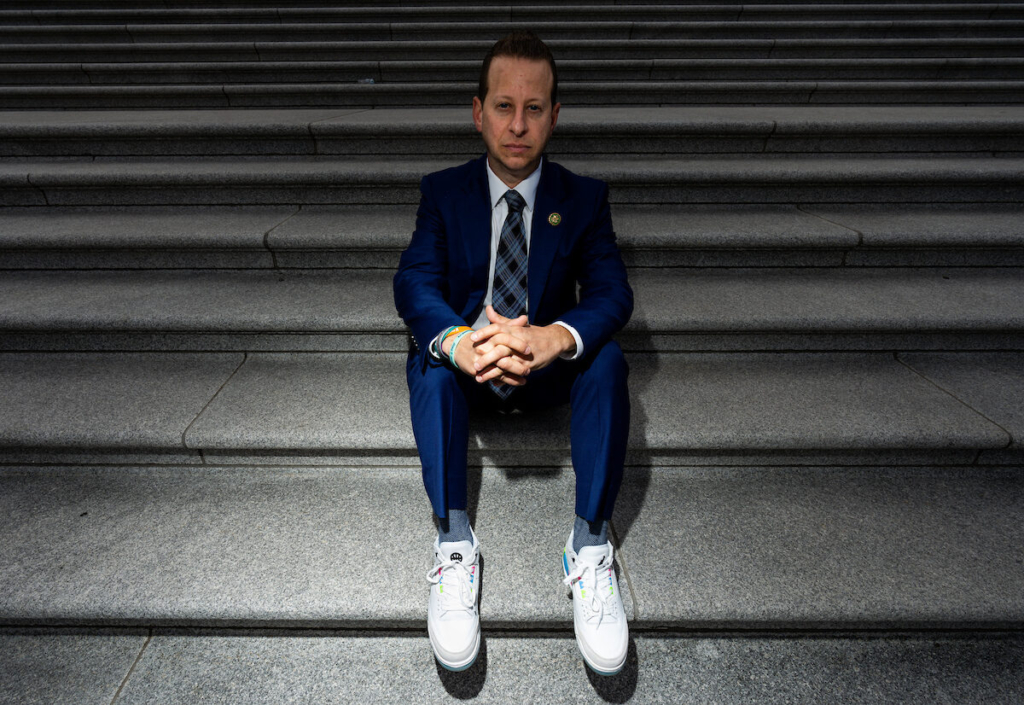
That’s what Florida Rep. Jared Moskowitz is hoping to do Tuesday against activist Oliver Larkin in one of the final tests of a Democratic incumbent being challenged from the left this primary season.
That test is coming in South Florida’s newly redrawn 25th District, which Donald Trump would have carried by 9 points in 2024. A quarter of the district’s population is Jewish, while another quarter is Hispanic. Inside Elections with Nathan L. Gonzales rates the race a Toss-up.
Larkin said progressive wins elsewhere have inspired his supporters, and he’s counting on a robust field operation to win over undecided voters in the campaign’s final days.
“Democrats are not really buying the electability argument that we need to moderate or kind of split the difference between Republican and Democratic points of view on issues,” Larkin, a self-described “proud Democratic Socialist,” said in an interview Wednesday. “What we’re seeing in these states all across the country is that Democrats are really ready to not just be the anti-Trump party, they want an affirmative vision for which side the Democratic Party is on.”
But Larkin’s campaign hasn’t won endorsements from national progressive figures like Bernie Sanders or Alexandria Ocasio-Cortez, who’ve backed successful primary challengers this year, although he’s set to campaign Friday with Michigan Rep. Rashida Tlaib. He’s also significantly trailed Moskowitz in fundraising, according to the latest federal filings. While most outside spending in the district has been on the Republican side, the center-left New Democrat Majority dropped $250,000 earlier this month on ads to support Moskowitz.
It’s not clear how Larkin’s views on Israel will play in a district with one of the largest Jewish constituencies in the country. He has called for an end to U.S. military aid to Israel, and the Miami Herald editorial board recently criticized him for describing himself as “anti-Zionist.”
Moskowitz, who is Jewish, has reportedly avoided engaging with his primary rival, accusing him in an interview last month of “running against me solely on my religion.” The congressman declined to comment through a spokesman for this report.
Starting gate
Primary night recap: In addition to the statewide races in Minnesota and Wisconsin on Tuesday, voters picked nominees for a handful of key House races. In Wisconsin, Rebecca Cooke heads to a rematch against GOP Rep. Derrick Van Orden in the 3rd District, while in the 7th District, Republican Michael Alfonso, Transportation Secretary Sean Duffy’s son-in-law, is likely to succeed Rep. Tom Tiffany, who won the Republican nomination for governor. And in Minnesota, former state Sen. Matt Little won the Democratic nod to succeed Rep. Angie Craig in the 2nd District.
Another Palmetto State sprint: South Carolina Sen. Darline Graham will face off against Rep. Ralph Norman in the Aug. 25 Republican special primary runoff to replace her late brother, Lindsey Graham, on the November ballot.
Then there were seven: Connecticut Rep. John B. Larson this week joined six other House Democrats from blue districts who’ve lost primaries this year. But unlike many of the other contests, the race between Larson, 78, and former Hartford Mayor Luke Bronin, 47, broke along generational, not ideological, lines. And in Hawaii, moderate Democratic Rep. Ed Case, 73, bucked the trend by handily turning back a primary challenge from state Sen. Jarrett Keohokalole, 43.
Eleventh-hour replacement in NC11: The Republican committee in North Carolina’s 11th District has selected state Rep. Jennifer Balkcom to replace embattled Rep. Chuck Edwards as the party’s nominee. Balkcom will face Democrat Jamie Ager in November.
Seeing blue: The DCCC added ironworker Brian Poindexter of Ohio and former special victims prosecutor Christina Hines of Michigan to its “Red to Blue” program, which offers additional resources to promising recruits seeking to win GOP-held seats.
RIP: Former Georgia Rep. Ben Jones, best known for playing friendly mechanic “Crazy” Cooter on “The Dukes of Hazard,” died Sunday at the age of 84. Our colleague Nick Eskow has more.
ICYMI
Ad watch: New Hampshire’s John E. Sununu still has a Republican Senate primary to win next month, but that’s not stopping Rep. Chris Pappas, the likely Democratic nominee, from running an attack ad against him.
2028 incoming: 314 Action Fund, which supports candidates with science and medical backgrounds and is becoming a major spender in Democratic politics, is urging Arizona Sen. Mark Kelly to run for president.
Tax messaging: American Action Network, the nonprofit arm of the Congressional Leadership Fund, has announced a $22 million ad campaign that touts “no tax on tips” and other components of the sprawling tax and spending measure Republicans approved last year. The ads are set to run across 41 House districts.
Targeting swing voters: The conservative super PAC Americans for Prosperity Action is kicking off a $5.6 million national advertising campaign in seven Senate battlegrounds. The effort includes a seven-figure ad buy supporting North Carolina Republican Michael Whatley aimed at winning over swing voters, according to The News & Observer.
Democratic endorsements: Voting rights group Defend the Vote is backing several House candidates, including Mike McGuire, Richard Pan and Randy Villegas in California; Manny Rutinel in Colorado; Bale Dalton in Florida; Jasmine Clark in Georgia; Zach Dembo in Kentucky; Jeremy Moss in Michigan; Bob Brooks in Pennsylvania; and Chaz Molder in Tennessee. The moderate Blue Dog PAC is also endorsing Dembo, as well as Brian Poindexter in Ohio, JoAnna Mendoza in Arizona, Leela Gray in Florida, Sam Forstag in Montana and Blake Gendebien in New York.
#LA05: Louisiana state Sen. Blake Miguez, who had Trump’s endorsement in his bid to succeed Senate nominee Julia Letlow in the 5th District, switched to the redrawn 6th District before the candidate filing deadline last week. Democratic incumbent Cleo Fields is vacating the seat for a state Senate run after state Republicans redrew it as a deep-red bastion.
#MIGOV: Michigan Rep. John James, the Republican nominee for governor, named state Rep. Jay DeBoyer as his running mate. James will next face Democratic Secretary of State Jocelyn Benson, who is yet to name her ticket mate.
Nathan’s notes
The Ohio and Michigan Senate delegations could be in for some awkwardness next year if Sherrod Brown and Mike Rogers are elected this fall, writes Roll Call elections analyst Nathan L. Gonzales of Inside Elections. That’s because they would then serve with senators who defeated them previously.
It’s not that rare a phenomenon, Nathan observes, with more than a dozen such odd Senate pairs serving in recent memory.
What we’re reading
Untangling a web: Inside Elections’ Jacob Rubashkin delves into the world of left-leaning dark-money groups funding independent candidates in Republican territory. According to Rubashkin, the most expensive effort has been in Montana, where Seth Bodnar, a former Green Beret and erstwhile president of the University of Montana, is running as an independent in a three-way race against Republican Kurt Alme and Democrat Alani Bankhead.
#MSSEN: Democrat Scott Colom sees a rare opportunity to flip a Mississippi seat this year, The Associated Press reports, as his party looks to expand the Senate map. But while the state has a larger share of Black voters than any other state, Republicans largely scoff at the notion that incumbent Sen. Cindy Hyde-Smith may be vulnerable.
San Francisco fault line: Both Democrats running for the House seat of retiring former Speaker Nancy Pelosi share progressive views on most topics. But San Francisco Supervisor Connie Chan and state Sen. Scott Wiener are divided on housing policy, a key issue in an area where the median rent for a one-bedroom apartment has surpassed $4,000, CalMatters found.
A bridge too far: Rhode Island Gov. Dan McKee is fighting for his political survival against fellow Democrat Helena Foulkes. McKee is among the nation’s most unpopular governors and a key reason for that is voter anger over the partially closed Washington Bridge. “Almost everybody says the bridge is the No. 1 issue in the race and voters’ perception of McKee’s tenure,’’ Politico writes.
The count: 19
That’s the maximum number of states and territories that could have a former member of Congress serving as governor by early next year.
Six states – Alabama, Arizona, California, Michigan, Tennessee and Wisconsin – and the U.S. Virgin Islands have an opportunity this fall to elect a governor with congressional experience to succeed one without.
Four states currently have term-limited former lawmakers in their governor’s mansions and could elect successors with similar backgrounds. It’s virtually guaranteed to happen in Florida, where Republican Byron Donalds and Democrat David Jolly are favored to face off in November. Minnesota and New Mexico are likely to elect Democrats Amy Klobuchar and Deb Haaland as their respective next governors. And former GOP Rep. Greg Lopez is running a long-shot independent bid in Colorado.
Two governors seeking reelection this year are former members themselves — New Hampshire Republican Kelly Ayotte and New York Democrat Kathy Hochul.
Meanwhile, six states and one territory have former members as governors who aren’t up for reelection in November — Indiana, Louisiana, Montana, New Jersey, North Dakota, Virginia and Puerto Rico.
And one state has a term-limited governor — former Ohio Sen. and Rep. Mike DeWine — who will be succeeded by someone who hasn’t represented the state in Washington.
– By Roll Call’s Ryan Kelly
Key race: #AKSEN
Candidates: Sixteen candidates are competing in Tuesday’s all-party primary, with the top four finishers moving on to the November ballot. Two-term Republican Sen. Dan S. Sullivan is locked in a close race with Democratic former Rep. Mary Peltola. Complicating the task for Sullivan: the entrance of Daniel J. Sullivan Jr., a retired teacher and a Republican Trump critic. Sen. Sullivan and his supporters sought to remove him from the ballot, calling his candidacy a scheme by Democrats to confuse voters and give Peltola an edge. Last month, the state Supreme Court ruled that the other Sullivan could remain, though he won’t be identified as a Republican.
Why it matters: Democrats have won exactly one Senate election in Alaska in the past five decades, and that was against a Republican who had just been convicted on corruption charges. But the party landed a prize recruit in Peltola, a moderate who lost her at-large House seat by 2 points in 2024, even as Trump was carrying the state by 13 points.
Cash dash: Peltola has consistently outraised the incumbent, bringing in $18.5 million to his $11.8 million through July 29, though Sullivan had $7.3 million banked to Peltola’s $4.6 million. Both candidates are getting plenty of outside help: Senate Leadership Fund, the main super PAC backing Senate Republicans, recently announced that it would spend an additional $2 million to boost Sullivan, bringing its total commitment in The Last Frontier to $17 million. Meanwhile the group’s Democratic counterpart, Senate Majority PAC, has already reserved $10 million in ads to back Peltola. In the run-up to the primary, a number of pop-up super PACs whose donors are not yet public have begun running ads seeking to boost some of the lesser-known candidates on the ballot, the Alaska Beacon reports.
Backers: Before the 2024 election, Peltola would not say whether she would vote for Kamala Harris. But this year, she picked up Harris’ endorsement. (In a twist, Peltola’s campaign unveiled a new ad this week slamming Sullivan for voting for two Biden administration nominees.) Sullivan has Trump’s endorsement and the backing of the National Rifle Association and several veterans and labor groups.
What they’re saying: Peltola, the first Alaska Native to serve in Congress, supports abortion rights and other mainstream Democratic positions. But she has broken with the party over gun policy, and her campaign slogan – “fish, family, freedom – reflects her independent streak. In a state where the cost of living outpaces the national average, she has focused on affordability concerns. Sullivan and his GOP allies have cast Peltola as a liberal, trying to tie her to her party’s democratic socialists. While Sullivan has generally backed the president, he voted for a measure that sought to ban funding for the White House ballroom that wasn’t approved by Congress and against Trump’s plan to establish a compensation fund for people he views as victims of political prosecution.
Terrain: A state as red as Alaska should be safe GOP territory, but Peltola’s fundraising prowess, confusion over the two Dan Sullivans and a midterm environment that favors Democrats have combined to put the Senate seat in play. Inside Elections rates the race Lean Republican.
Wild card: Under the state’s ranked choice voting system, voters arrange candidates in order of preference. If the leader does not get more than 50 percent in the first tally, the fourth-place finisher is eliminated and his or her votes are added to the voters’ second choice. The process may be repeated until one candidate gets a majority. The system helped Peltola notch her first House win in 2022, when she emerged from a crowded primary field of 48 candidates, including Republican former Gov. Sarah Palin, to win a special election following Republican Rep. Don Young’s death.
Coming up
Alaska, Florida and Wyoming are holding primaries on Tuesday. The same day, voters in California’s 14th District will elect a successor to disgraced former Rep. Eric Swalwell.
Photo finish
Subscribe now using this link so you don’t miss out on the best news and analysis from our team.