BALTIMORE _ At the first public court hearing on the Baltimore Police consent decree since the reform agreement went into effect last spring, city officials and their federal overseers expressed confidence they are headed in the right direction but also concerns about obstacles to success _ including a lack of technology.
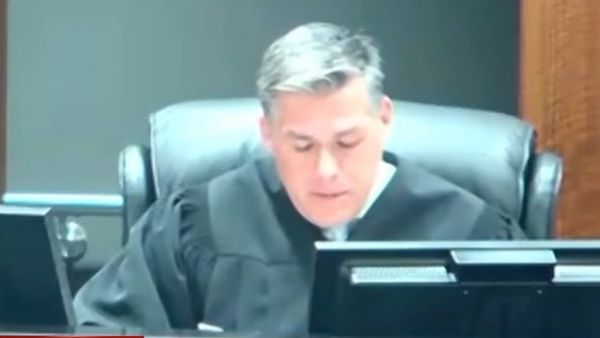
U.S. District Judge James K. Bredar compared the city Police Department to a dilapidated home that does not need a "coat of paint," but a top-to-bottom overhaul and new foundation.
Mayor Catherine Pugh agreed, and said "getting the house in order so that the house operates effectively and efficiently is our No. 1 priority."
City Solicitor Andre Davis said the city Police Department is "broken," but is making progress.
He also said the city can't do what the consent decree requires or collect data needed to show compliance until it gets a completely new technology platform in place that integrates systems from across the Police Department in a streamlined way _ and will therefore be hiring a technology consultant, to the tune of $200,000 to $500,000, to help build such a platform.
Bredar said he is confident city leaders want change, but remains concerned about their capacity to bring about the full scope of reforms required.
He said it can be difficult to understand the full consent decree and the best path forward, as "everything in it seems to be a priority, and there's this challenge of how to move forward on all fronts simultaneously."
But in broad terms, the deal is "about integrity, it's about staffing and resources, it's about technology," he said _ and the city would be wise to focus on those areas.
The hearing Friday morning in Baltimore's downtown federal courthouse was scheduled to provide specific updates to the judge _ and the public _ on progress by the department in a number of key areas for reform, including in the transportation of detainees, misconduct investigations and officer discipline, and the use of force by officers.
Problems in all three areas were raised after the arrest and death of 25-year-old Freddie Gray in April 2015 and the subsequent, unsuccessful prosecutions of several officers involved. Gray's case, and the rioting that followed his death, spurred the city to invite the Justice Department in to investigate the Police Department.
The Justice Department arrived in May 2015, and issued a scathing report in August 2016 in which investigators determined the Baltimore police engaged in widespread unconstitutional and discriminatory policing practices, particularly in poor, predominantly black neighborhoods.
It found officers violated people's rights during stops, searches and seizures; lacked adequate training; and interacted poorly with minorities, youths, people with mental illness and others.
The consent decree was negotiated by the parties for months, and then entered as an order of the court by Bredar in April 2017.
The court-enforced agreement mandates the department take steps to tackle racial bias in its ranks, and restricts how officers can interact with individuals on the street, including in stops and searches. It orders increased supervision of officers, enhanced civilian oversight of the department, more training in de-escalation tactics, and more transparency. It also requires new investments in technology and equipment.
Bredar opened the hearing Friday by sharing thoughts on the process for the first time since he entered the consent decree as an order of the court last spring. City officials then presented on a range of areas where they felt they had made progress in the past year. Attorneys for the Justice Department then began a presentation about the city's compliance to date.
"We have really just begun and we are in the very, very early stages of this consent decree," said Puneet Cheema, a trial attorney in the Justice Department's special litigation section.
Police Commissioner Darryl De Sousa appeared at the beginning of the hearing to express his support for the consent decree.
He also apologized for the actions of the Gun Trace Task Force _ a team of police detectives indicted and convicted in the last year on charges of robbing residents, stealing and reselling guns and drugs on the streets, filing false court paperwork and making fraudulent overtime claims.
"The GTTF and rogue cops set our Police Department back 30, 40, 50 years," De Sousa said.
"I agree with that," Bredar said.
Bredar noted the January trial of two of the Gun Trace Task Force officers had occurred in the exact same courtroom in which Friday's hearing was occurring.
"I hope that we are going to accomplish something far more productive in this space in the coming weeks and months than went on here, at least was on display here, in January, which was just truly awful and appalling," he said.
In addition to transportation of detainees, misconduct and use of force, the hearing on Friday touched repeatedly on technology needs, and the potential associated costs.
The Police Department has an annual budget of about a half billion dollars, and some in the community believe the city overinvests in the police force. But that was clearly not a belief shared by the officials at Friday's hearing.
At one point, Pugh said, "This has been an underinvested Police Department for decades."
"Underinvested?" Bredar asked.
"Underinvested," she said.
"I'm so encouraged to hear you say that," Bredar said.
Davis, the city solicitor, expressed the city's commitment to the consent decree, at one point saying the Pugh administration had "rejected opportunities to get out from under" the Justice Department amid the Trump transition. While the Obama administration outwardly supported the consent decree process in Baltimore, Trump administration Attorney General Jeff Sessions has criticized it _ suggesting the deal makes Baltimore less safe.
Davis also took a shot at the local police union in Baltimore, saying the Fraternal Order of Police has the city, the mayor and the City Council in "a chokehold" with its collective bargaining agreement, and suggested he would be willing to challenge aspects of the union contract he feels prevent the city from coming into compliance with the consent decree.
He also said the Law Enforcement Officers' Bill of Rights, which is state law and protects officers in a range of ways, including during misconduct investigations, "has made it very difficult for accountability and appropriate discipline to be imposed."
Union officials could not immediately be reached Friday.