The very name of the Kumano Kodo pilgrimage routes in Wakayama Prefecture lured me to travel there. In bygone centuries, Kumano was thought of as the farthest barbaric land, when viewed from the then capital, Kyoto.
What naturally came to my mind is that a kodo, or an ancient road, must lead to a different world. This place is also known for the "Sacred Sites and Pilgrimage Routes in the Kii Mountain Range," which is registered as a UNESCO World Cultural Heritage site.
"In Kumano, there are three Kumano Sanzan grand shrines -- Hongu Taisha, Hayatama Taisha and Nachi Taisha. From the late Heian period [late eighth century to late 12th century] to the Kamakura period [late 12th century to 1333], retired and cloistered emperors and empresses, dowager empresses and grand empresses frequently visited the shrines. Kodo is a pilgrimage to the shrines," said Sadako Komatsu, 78, a member of Kumano Hongu Kataribe no Kai storytelling group.
I joined a weekly storytelling event on a Sunday in mid-January.
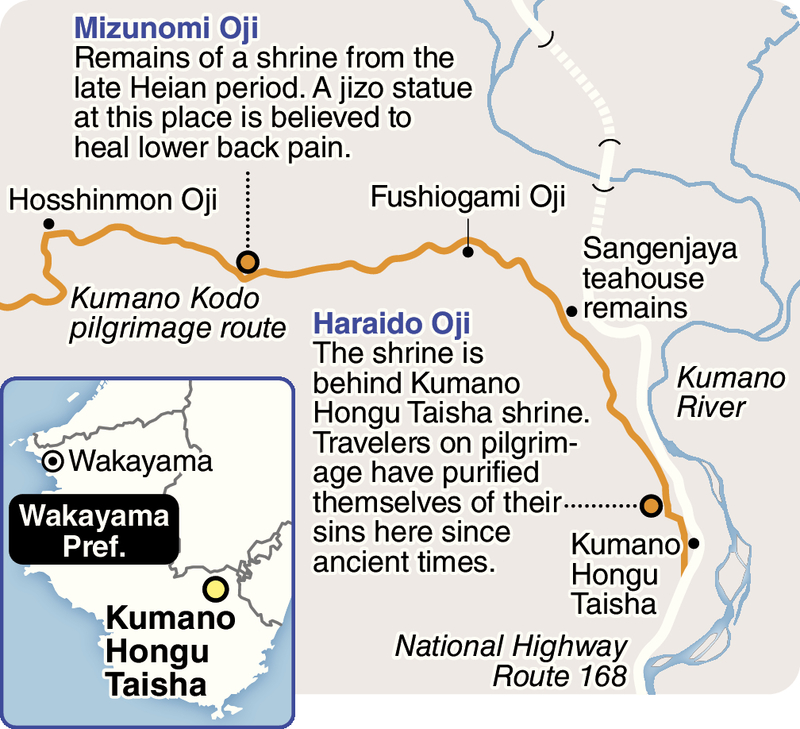
There are a total of about 1,000 kilometers of Kumano Kodo routes. I undertook part of the Nakahechi course, which retired and cloistered emperors walked. I treaded the seven-kilometer section from Hosshinmon Oji to Hongu Taisha shrine in about four hours.
"Hosshinmon is a gate to Buddhism, and Oji means an enshrined child deity. From here, we'll go into the sacred area of Hongu Taisha shrine. Let's walk through the torii archway," Komatsu said.
During the Insei period, when the government was ruled by four retired and cloistered emperors, Shirakawa, Toba, Goshirakawa and Gotoba, from the 11th to 13th centuries, Buddhism was regarded as being in decline, with enlightenment and right practice widely expected to die out.
Meanwhile, in a syncretistic convergence of Shintoism and Buddhism, the Buddhist image of the Shinto Kumano Gongen deity came to be considered the Amitabha of the Western Pure Land.
In this period filled with anxiety, even influential persons who ruled the cloistered government must have earnestly wished to be reborn in the Pure Land.
"The cloistered Emperor Goshirakawa visited Kumano 34 times, the most often, followed by the retired Emperor Gotoba, at 28 times," Komatsu said.
The retired Emperor Gotoba was defeated when he tried to topple the Kamakura shogunate government in the Jokyu Rebellion of 1221, and consequently former emperors lost their influence, and the practice of their visits to the Kumano shrines gradually disappeared.
Instead, samurai families and common people began to flock to Kumano, praying for divine favor in this world. The heyday of the Kumano pilgrimage was seen at the end of the Muromachi period (1336-1573), and after that, the Ise Jingu shrine pilgrimage became the main route.
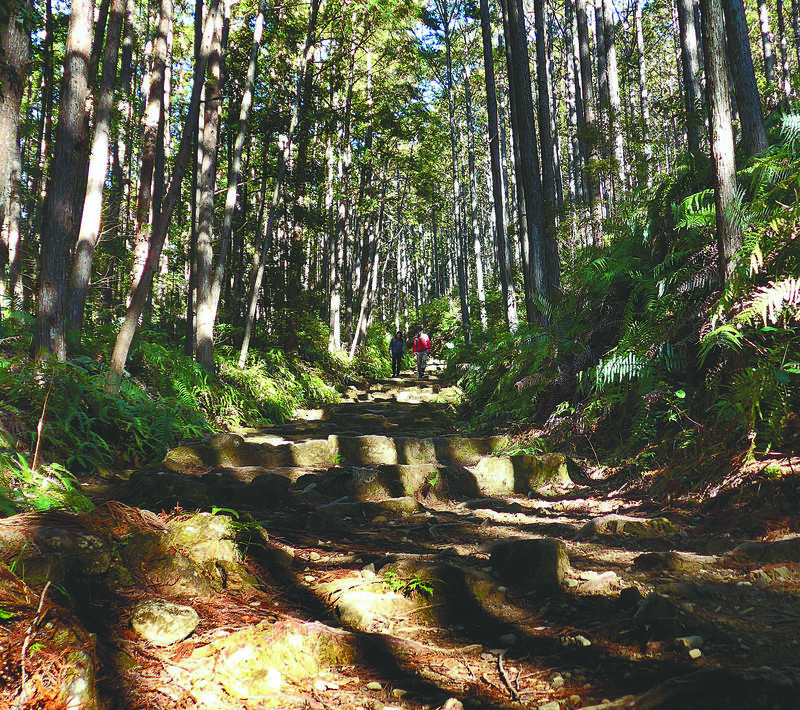
I walked for about two kilometers on a paved trail surrounded by Japanese cedars and hinoki cypress rising to the sky, with fern varieties such as urajiro and koshida growing below.
"Winter is a bit bleak-looking as flowers do not come out in this season," Komatsu said. She explained each of the jizo stone statues we encountered, saying: "Jizo worship is said to have started in the Edo period [1603-1867]. This is a jizo statue that watches over the growth of a child. It might be called a pediatrician in the present day ... This jizo is a dentist. And this one is effective for low back pain. It's an orthopedic surgeon."
An earthen road started after I passed through Mizunomi Oji along the Nakahechi route. The earthen road -- the core of the World Heritage site -- evokes ancient times. Though the daytime weather was clear, it was cool in the shade.
"There also were people who tried to reach Hongu Taisha shrine without having enough food. They were offered food in surrounding villages, but some people died of starvation," she said. "They risked death, as they believed that Kumano is a place of resuscitation."
I reached Fushiogami Oji on the route, where I could take in a broad view of Hongu Taisha shrine. The shrine was originally located at a place now called Oyunohara, but it was swallowed up by a flood there 130 years ago and rebuilt in its present location. Travelers on pilgrimage to the shrine dropped to the ground and worshiped with emotion, she said. The gentle downward slope went on, and birdcalls sounded out.
"It is said that supernatural creatures appeared every night, and brought anguish to local residents. According to a legend, a passing high priest used the power of Buddhist dharma and trapped them," she said.
I descended the mountain path, went down stone steps, then approached Hongu Taisha from behind the shrine -- which was relocated and reconstructed there two years after the flood.
"After the Meiji Restoration, the Meiji government issued an ordinance to separate Shinto from Buddhism, which led to a movement to abolish Buddhism," she said. "And then Shintoism came. Its main enshrined deity is Susano no Mikoto. Would you like to pray at the shrine?"
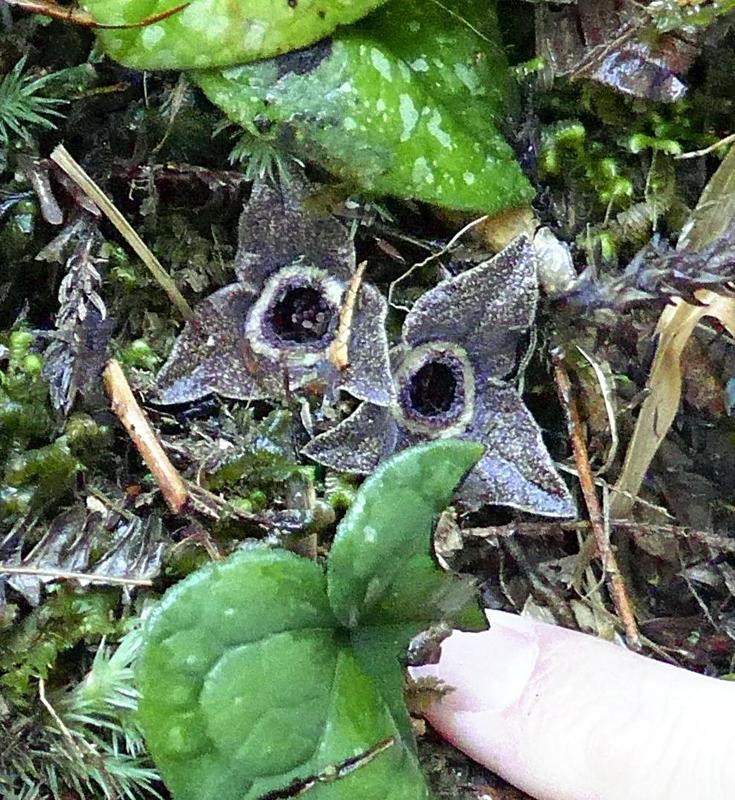
About a kilometer from Hosshinmon Oji, Komatsu made her way over to the grass along the Kumano Kodo trail, and said: "This is wild ginger, and its leaves are beautiful all year round. Simple and sober flowers come out in winter."
I turned over the leaves of the wild ginger, checking the stems one by one. Then I found the flower, which I had never seen before. It truly was simple and sober.
After that, I also saw ancient lotus, Asian jasmine and other plants as she told me where they were. It may have been too early for blooming flowers, but the Kodo trail was filled with the energy of wild grasses.
Access
About 80 minutes from Haneda Airport to Nanki-Shirahama Airport by JAL plane. From the airport, there is a direct bus making one daily run to Kumano Hongu Taisha shrine. The bus leaves the airport at 9:28 a.m. and takes about 2-1/2 hours to reach the shrine.
For more information, call the Kumano Hongu Tourist Association at (0735) 42-0735.
Read more from The Japan News at https://japannews.yomiuri.co.jp/